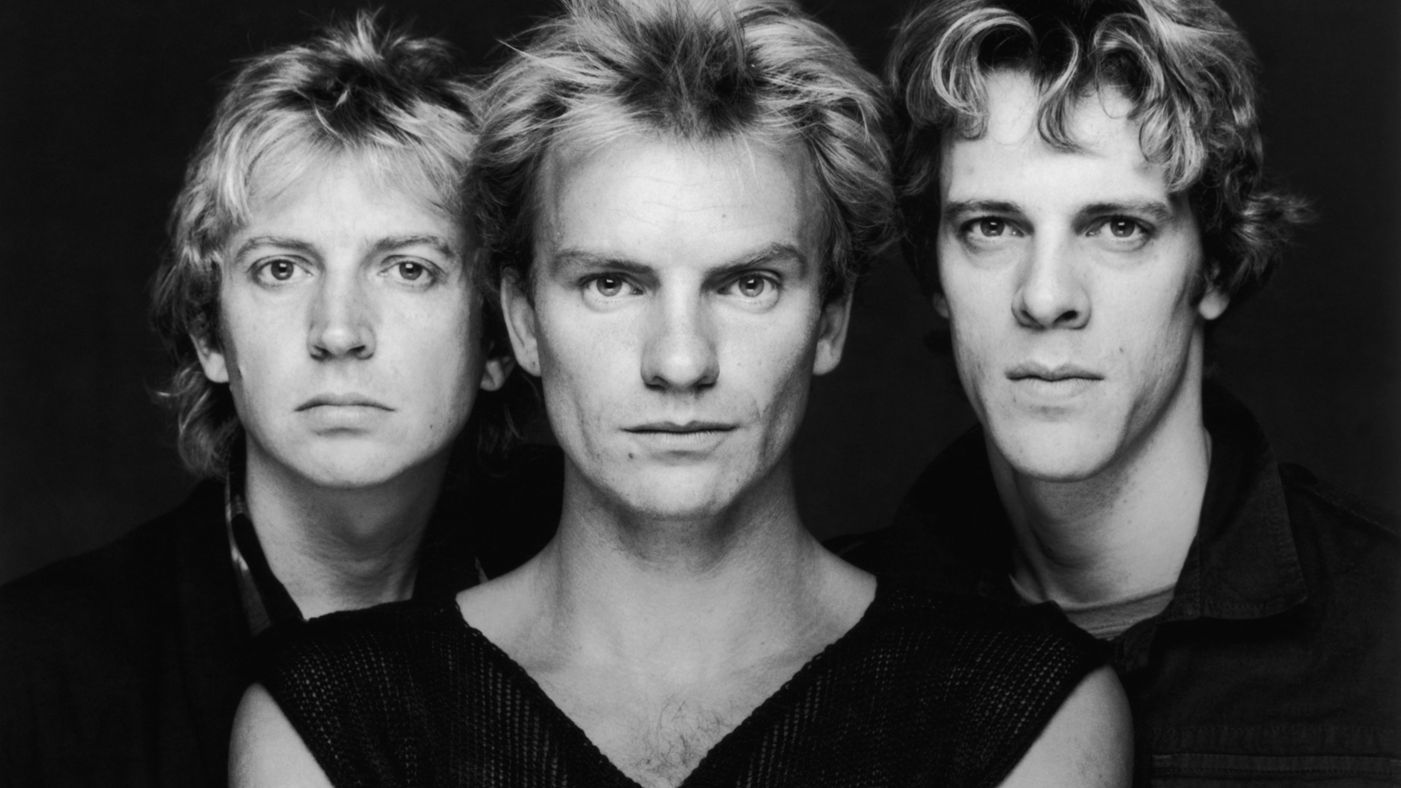
LONDON – The legendary rock trio’s decades-old partnership has erupted into a bitter legal dispute over streaming revenue
Singer-songwriter Sting found himself in London’s High Court on Wednesday, defending against a $2 million (about R16.4 million) lawsuit filed by his former Police bandmates over unpaid streaming royalties – a legal battle that threatens to overshadow the iconic band’s musical legacy.
Guitarist Andy Summers and drummer Stewart Copeland are demanding what they claim is their rightful share of performance royalties from streaming platforms, arguing that a nearly 50-year-old verbal agreement entitles them to 15% of royalties generated by compositions written by other band members.
The preliminary two-day hearing began without any of the three musicians present in court, but the stakes couldn’t be higher for the trio whose relationship has been strained for decades.
The heart of the dispute
At the center of the legal battle is how streaming revenue should be classified for royalty distribution purposes. The plaintiffs argue they are entitled to “in excess of two million US dollars” in performance royalties from songs recorded as The Police between 1978 and 1983.
Sting, whose real name is Gordon Sumner, composed all of the band’s major hits—from “Roxanne” to “Message in a Bottle” to “Every Breath You Take”—and consequently receives the largest share of the group’s royalties. However, the original 1977 verbal agreement acknowledged the crucial contributions of his bandmates, such as Summers’ distinctive guitar arpeggios on “Every Breath You Take.”
Complex legal history
The dispute traces back through multiple agreements spanning nearly five decades. The original verbal agreement reached in 1977 establishing the 15% royalty share was later formalised in writing in 1981. The terms were reiterated again in 1997, though vaguely, before streaming platforms existed. In 2016, the terms were reaffirmed in what was intended to be a final settlement of all financial disputes between the band members.
The crux of the current lawsuit lies in this 2016 agreement, which explicitly mentions only “mechanical” royalties – payments for each reproduction of a composition – but makes no reference to “performance” royalties paid for broadcasts and streaming. According to court documents, “the term ‘streaming’ was not explicitly mentioned” in the earlier agreements, creating the legal gray area that has sparked this costly dispute.
The streaming revolution
Streaming revenue from platforms like Spotify, Apple Music, and Deezer is traditionally divided between mechanical royalties and performance royalties. Summers and Copeland argue that excluding performance royalties from their share contradicts the spirit of the original 1977 agreement and demand their share of all streaming revenue.
The classification of streaming revenue has become increasingly important as traditional record sales have given way to digital platforms. The Police’s catalog, featuring hits that defined the late 1970s and early 1980s, continues to generate substantial revenue through these modern channels.
Sting’s defense
Representatives for Sting, who sold his entire catalog to Universal Music in 2022 for a reported $250 million, have dismissed the lawsuit as an “illegitimate” attempt to reinterpret existing agreements. They argue that some payments made to his former bandmates may have actually constituted overpayments under current terms, suggesting the legal action lacks merit.
The timing of the lawsuit, coming after Sting’s lucrative catalog sale, has not gone unnoticed by legal observers who note that streaming royalties have become increasingly valuable as physical sales continue to decline.
Legacy under pressure
The Police recorded five albums during their brief but incredibly successful run, becoming one of the world’s biggest rock bands before disbanding in 1983. Despite their commercial success and occasional reunions, the relationship between the three musicians has remained notoriously difficult, with previous collaborations marked by tension and conflict.
This latest legal battle serves as a stark reminder that even rock legends are not immune to the complex realities of modern music economics, where streaming has fundamentally changed how artists earn from their creative work. The case could set important precedents for how legacy artists’ streaming revenue is distributed, particularly when original agreements predate the digital revolution.
As the legal proceedings continue, fans of the iconic band may find themselves wondering whether the group that once sang “Every Breath You Take” will now be remembered more for fighting over every cent they make.
The hearing is expected to conclude on Thursday, though the full resolution of this high-stakes dispute may take considerably longer to reach.