
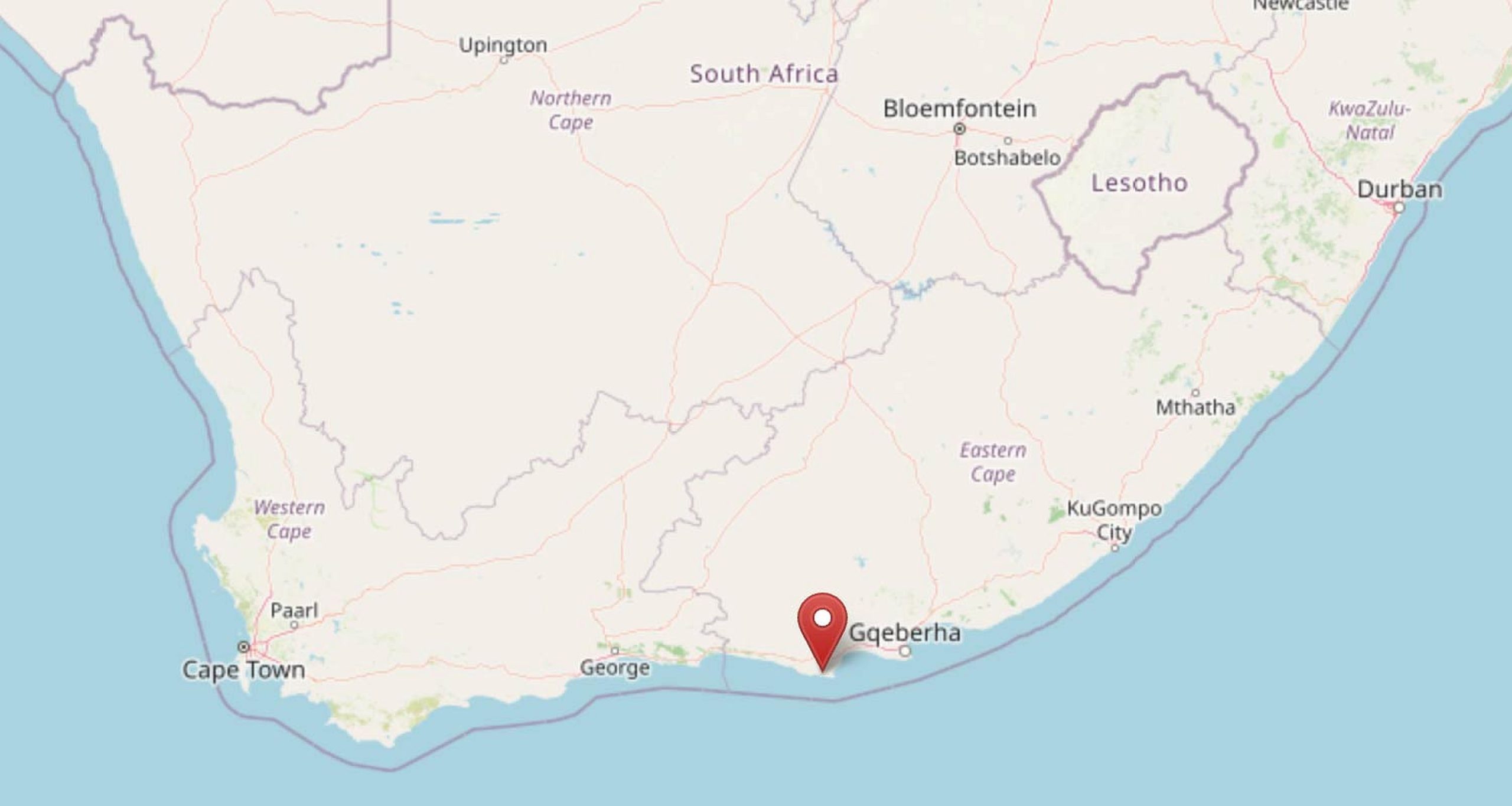
Eskom’s population projections for its proposed Thyspunt nuclear power station differ across two safety assessments, raising questions about how the figures inform evacuation planning.
The 2026 Site Safety Report projects 21,803 people within 16km of the proposed site by 2036. This includes permanent residents and peak-season tourists. However, a separate transport assessment uses 14,101 people for its evacuation modelling in the same zone.
The demographic report estimates 17,314 permanent residents within 16km by 2036. Its cumulative projection, which includes tourists, rises to 21,803. Within 35km, the projected cumulative population reaches 116,117.
The transport assessment estimates that authorities could evacuate 14,101 people from the 16km zone within two-and-a-half hours by 2036. The exercise would require approximately 3,505 vehicles. The modelling assumes planned road infrastructure improvements.
Although the assessments use different methodologies, their published sections do not explain how the evacuation figure relates to the demographic projections.
Alliance questions tourism figures
The Thyspunt Alliance has challenged Eskom’s demographic assessment, arguing that it does not adequately reflect the Kouga region’s population, particularly during peak holiday periods.
Alliance coordinator Trudy Malan said the consultant responsible for the assessment had not considered the correct tourism figures.
“Anyone that lives in this area would look at those numbers and it wouldn’t take them long to see that the numbers are wrong,” she said.
However, Eskom’s demographic report does include seasonal tourism estimates. It identifies November to April as the high season, with December and January attracting the most visitors.
The report estimates 4,524 tourists within 50km of the proposed site on a peak-season day in December 2024. It projects this figure to rise to 5,521 by 2036.
Researchers based these estimates on a survey of formal tourist accommodation establishments. They interviewed 100 of the 201 eligible establishments in April 2024.
The survey excluded informal accommodation, apartments and one-room studios. Eskom states that the survey had an estimated margin of error of about 7% at a 95% confidence level.
The report also explains that researchers could not obtain tourism figures for smaller geographical areas. They therefore distributed the estimated visitor population across sectors in proportion to their permanent populations.
It acknowledges that sectors containing tourism destinations could attract more visitors than residential areas.
Evacuation planning remains outstanding
The Alliance has also questioned whether Eskom has demonstrated that authorities could evacuate communities safely during a nuclear emergency.
Eskom’s transport assessment states that a detailed evacuation plan still needs compilation as part of the site emergency plan.
“How do they plan something which is not there?” Malan asked.
“They haven’t managed to prove they are able to evacuate,” she said.
The Alliance has made several submissions to the National Nuclear Regulator (NNR). Malan said communities had not received adequate information about how the regulator considered their previous submissions.
“The NNR needs to step up and force Eskom to provide information that is correct for everyone in the Kouga,” she said.
She described the consultation process as a “tick-box exercise”. Malan argued that Eskom, as a state-owned enterprise using public money, had a responsibility to understand affected communities and take their concerns seriously.
Authorities approached for comment
Kouga Express approached Eskom, the NNR, the Department of Forestry, Fisheries and the Environment (DFFE) and Kouga Local Municipality for comment.
The enquiries covered the population projections, tourism survey, differences between the demographic and transport figures, evacuation modelling and emergency-planning responsibilities.
Eskom had not responded by the time of publication.
The NNR acknowledged receipt of the enquiry and said it was considering the questions. The DFFE also acknowledged the enquiry but said it could not respond by the requested deadline because it needed input from officials.
Kouga Municipality had not responded by the time of publication.
The Alliance will hold a community briefing at The Links in St Francis Bay on Wednesday, November 25. A second briefing is scheduled for Cape St Francis Resort on December 3.
ALSO READ: Thyspunt nuclear proposal faces united community opposition