The inquest has begun.
Ellis Genge stood in the wreckage of Twickenham on Saturday evening, his England side dismantled 42-21 by a rampant Ireland, and delivered a brutal verdict that cut straight to the bone: “We probably believed the hype from the first week too much.”
It was the kind of honest admission that strips away the usual sporting platitudes and exposes the raw truth beneath. England, riding high after that intoxicating 48-7 annihilation of Wales in the tournament opener, convinced themselves they’d turned a corner. They hadn’t. They’d simply run into a Welsh side in freefall, and when the quality opposition arrived, first Scotland, now Ireland, the illusion shattered spectacularly.
For the second consecutive week, Steve Borthwick’s men were carved apart in the opening exchanges, shipping points at an alarming rate and digging themselves into a hole so deep that all the second-half fight in the world couldn’t rescue them. Ireland surged into a commanding 22-0 lead with barely half an hour on the clock, leaving England chasing shadows and Maro Itoje’s 100th cap celebration feeling more like a wake than a milestone party.
ALSO READ: England’s grand slam dream shattered as Townsend celebrates century
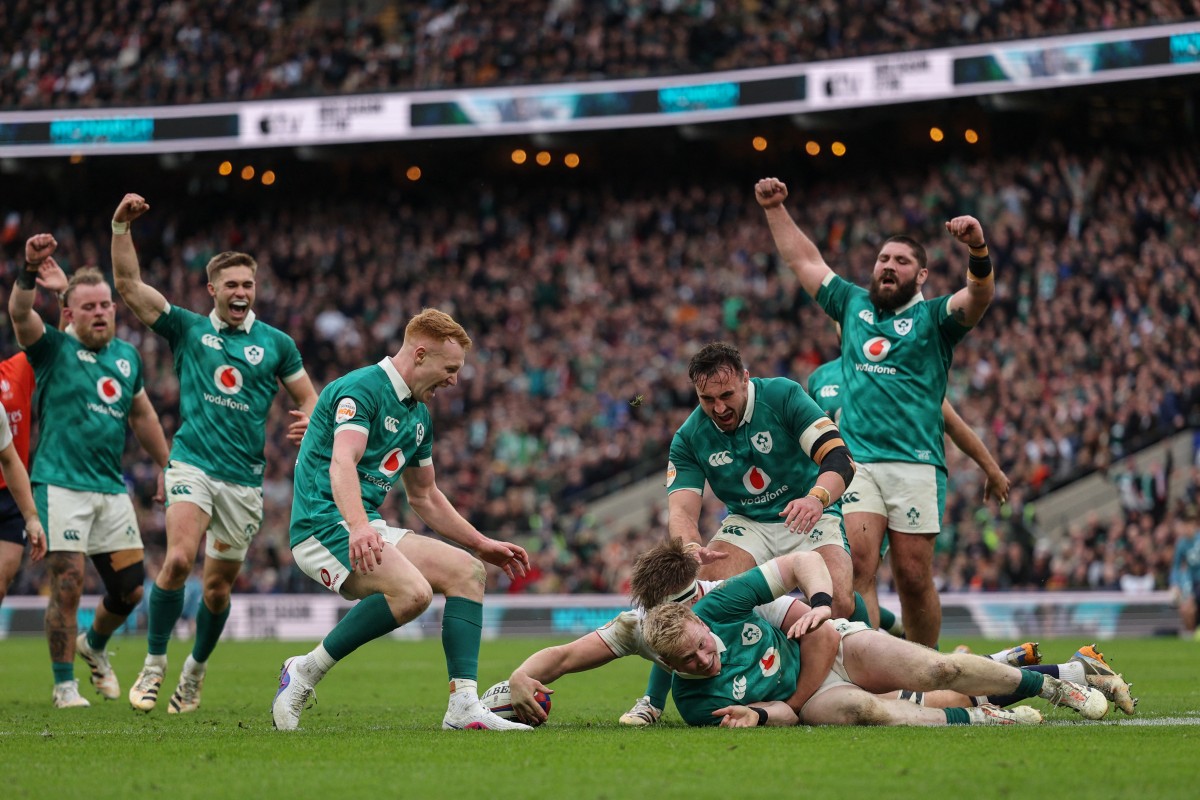
The tries flowed with ominous ease. Scrumhalf Jamison Gibson-Park, who would later claim Man of the Match honours, opened the floodgates with a score that exposed England’s defensive frailties. Robert Baloucoune added a second, then Tommy O’Brien made it three, and suddenly Twickenham felt like a crime scene.
When hooker Dan Sheehan crossed for Ireland’s bonus-point try early in the second half, followed by fullback Jamie Osborne adding a fifth, the margin of superiority was humiliating.
Genge’s post-match interview with the BBC painted a picture of a team struggling to diagnose its own illness. “Two weeks in a row conceding so many points in the first 15 minutes,” the prop lamented. “There is no mountain to climb after that and everyone has to take a look at themselves. No one knows what the answer is right now or we would have sorted it out.”
The reference to “scar tissue” was particularly telling. Last week’s 31-20 defeat to Scotland at Murrayfield, a result that ended a 12-game winning streak, should have been a wake-up call. Instead, it appears to have opened psychological wounds that Ireland gleefully exploited. When a team starts doubting itself at the highest level, the opposition can smell it, and Ireland’s performance reeked of predators circling wounded prey.
“It opened up scar tissue from last week,” Genge continued. “We have to be better at managing that period and stop turning the ball over. It’s brutal, professional sport because if you get five percent wrong, it’s gone. We can’t let the noise in now.”
But the noise is deafening. England’s hopes of a first Six Nations title since 2020 have effectively evaporated, replaced by the grim reality of back-to-back defeats and a defensive structure that’s leaked 73 points in two matches. This was England’s first loss at Twickenham since November 2024’s defeat to world champions South Africa, but the manner of it felt far more concerning.
Borthwick, while offering “huge credit” to Ireland, couldn’t hide his dismay. “Unfortunately for two weeks now we have given ourselves a mountain to climb, given the opposition too many points and we have not got scoreboard presence,” the England coach admitted. “We will be looking closely at that and how I set the team up to make sure it doesn’t happen again.”
The question gnawing at English rugby is whether Borthwick can find those answers before the pattern becomes entrenched. With a fallow week now intervening before England travel to Rome to face Italy on 7 March, there’s time for soul-searching and tactical tinkering.
The cruel irony is that Ireland arrived at Twickenham under their own cloud of doubt. After back-to-back Six Nations triumphs in 2023 and 2024, Andy Farrell’s side finished third last year and opened this campaign with a humbling 36-14 thrashing by champions France. Last week’s unconvincing 20-13 home victory over Italy did little to silence the critics questioning whether Ireland’s golden era had passed.
Saturday’s performance provided the perfect riposte. This was a record victory for Ireland at Twickenham, surpassing their 32-15 triumph in 2022, and it was delivered with a swagger and precision that made England look thoroughly ordinary.
“It’s a special day, it 100 per cent is, to come here and perform like that,” said Farrell, a former England international who knows exactly what beating the old enemy at headquarters means. “I thought the respect that the lads showed for one other out there on the field was immense, the respect they showed for the jersey and what it meant to them, and the respect for the Irish people.”
Ireland captain Caelan Doris was equally bullish, declaring: “This will now be a reference point we look back on as a proper performance that has given us belief.” With struggling Wales next up at the Aviva Stadium, the Welsh having been edged out 26-23 by Scotland in Cardiff , Ireland’s championship credentials are suddenly back on the agenda.