

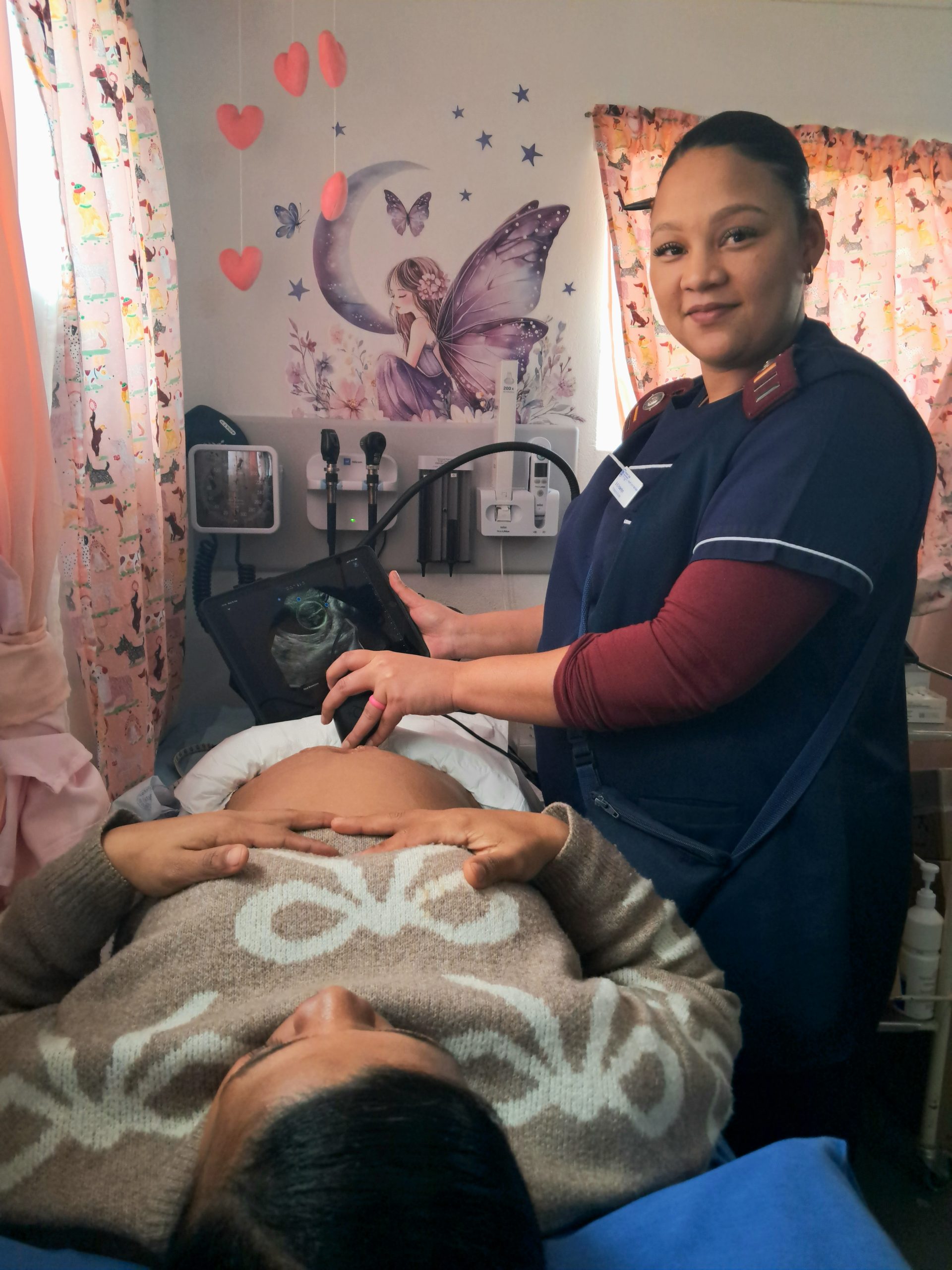
CAPE WINELANDS – A small device in the hands of specially trained nurses is making a significant difference to maternity care in the Cape Winelands, bringing innovative diagnostic technology directly to patients at clinic level.
Recognising the need for faster access to ultrasound services, the Western Cape Department of Health and Wellness partnered with the University of Pretoria last year to introduce point-of-care ultrasound technology in 25 primary healthcare facilities in the Cape Winelands.
Through this initiative 25 nurses received handheld ultrasound devices and specialised training, enabling them to perform basic pregnancy scans closer to where women live and receive care.
Using the devices, nurses can assess important aspects of a pregnancy, including how far along the pregnancy is, the position of the placenta, whether there is enough amniotic fluid, whether there is more than one baby, and whether the baby or babies have moved into position as delivery approaches. This information enables earlier clinical decision-making, timely referrals when needed and a more personalised care experience for expectant mothers.
For many women, the innovation provides reassurance and strengthens confidence in their healthcare journey.
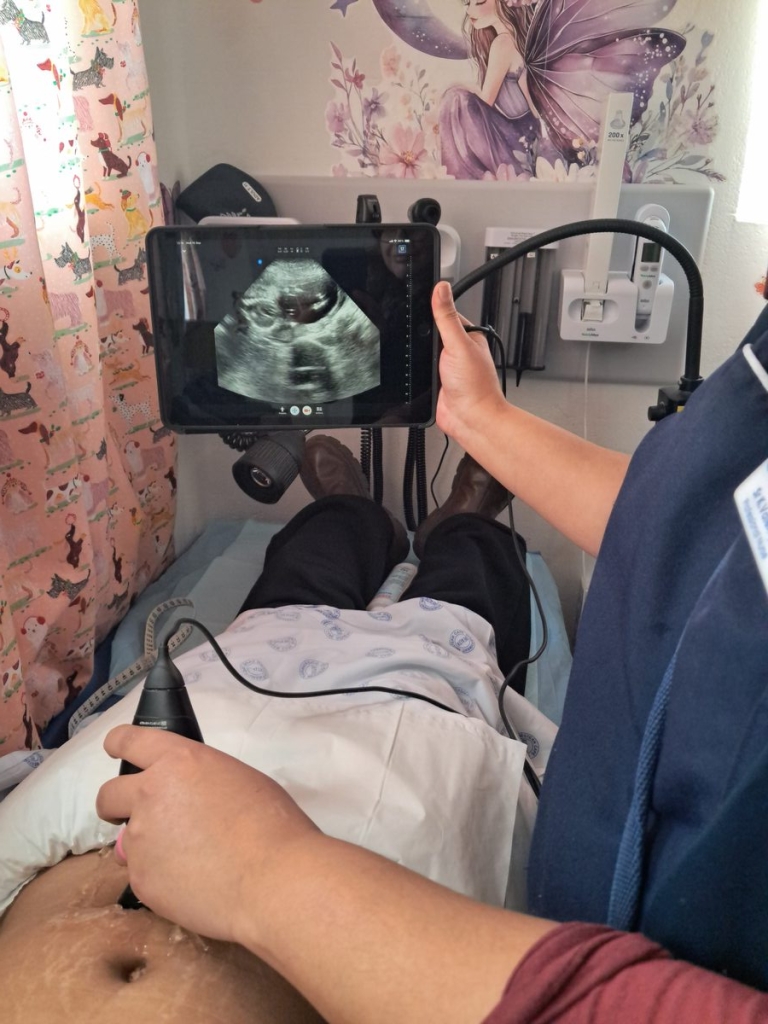
Sr Kyle Valentyn of Bergsig Clinic in Robertson is proud to offer the service to her patients. “One of my patients had three miscarriages in the past. When she was pregnant thereafter, she was obviously very concerned, but this time I could show her on the ultrasound that everything was fine,” said Sr Valentyn. “It is a fantastic device, and it is great to have the skills to use it. Even though you have limited knowledge about ultrasounds, you can render a better service to the patient.”
Traditionally, nurses at clinics and community day centres would rely on a Doppler device to detect the baby’s heartbeat and then refer women for a formal ultrasound, ideally before 24 weeks of pregnancy. However, access to sonography services can be challenging due to capacity constraints and shortages of qualified sonographers.
According to Sr Jeanette Meiring, Coordinator of Women’s Health Services in the Cape Winelands, the introduction of handheld ultrasound technology is helping to bridge this gap while improving the quality and accessibility of maternal healthcare. “The addition of this equipment and training on the use thereof adds a lot of value to services,” says Sr Meiring. “Staff can now make a more accurate diagnosis and patients get the right care at the right time. This aspect of our services makes it irreplaceable.”
The innovation is already changing the patient experience by enabling earlier identification of potential risks and complications during pregnancy. Nurses can provide more accurate pregnancy dating, support clinical decision-making and ensure patients who require specialised care are referred sooner.
The technology also plays an important role in improving access to services by reducing the burden on sonographers and extending basic ultrasound care to primary healthcare facilities. This means women can receive more comprehensive antenatal care closer to home, reducing unnecessary travel and waiting times while strengthening continuity of care.
Dr Tian van der Merwe, an Obstetrician and Gynecologist at Worcester Hospital, believes the initiative represents an important advancement in maternal healthcare.
“The extension of point of care ultrasound services to clinic level is a very important step in strengthening healthcare to moms,” says Dr Van der Merwe. “This brings ultrasound services closer to patients and communities, and it helps to identify and refer women who need further care or specialist services at an earlier stage. As with any new programme, the implementation, continued training and quality assurance, and cooperation between clinics and hospitals are needed, but, on the long run the potential to improve access to care is significant.”
By combining innovative technology, skills development and patient-centred care, the initiative is strengthening maternal health services across the Cape Winelands and helping ensure that women receive timely, quality care throughout their pregnancy journey, closer to their families and communities.
More nurses are receiving the training. “The rollout of Point-of-Care Ultrasound is a priority for our district because it directly supports our commitment to helping mothers and babies start well,” says Handri Liebenberg, the department’s Director for healthcare services in the Cape Winelands District. “In the context of a shortage of dedicated sonographers, this innovation empowers our frontline teams to provide earlier, more accessible and more responsive antenatal care.”



You must be logged in to post a comment.