

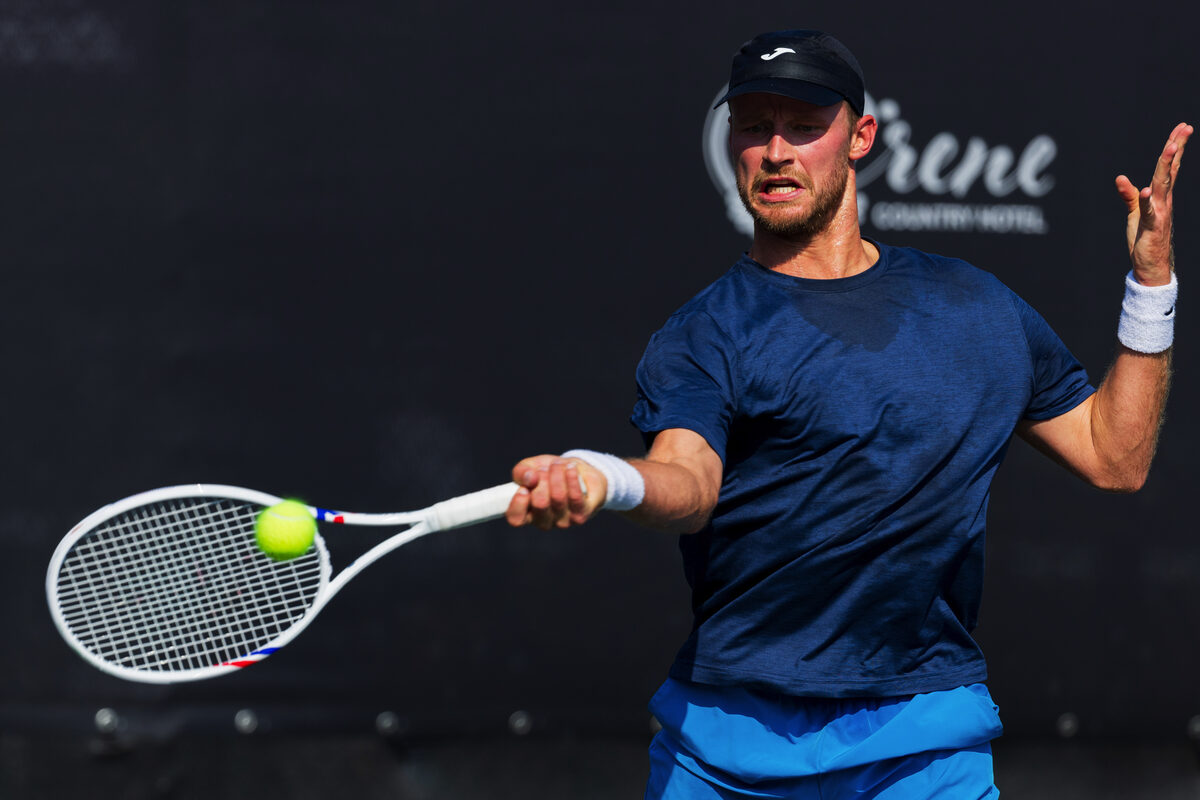
At age 31, Marc van der Merwe is living proof that some stories don’t follow the script.
After seven years away from competitive tennis, the Stellenbosch-born player has not only returned to the sport – he’s competing at ATP Challenger level, earning his first ranking points and rediscovering a passion he once believed was permanently behind him.
“I completely left tennis,” he says. “In my mind, I was completely done with it. I was completely wrong.”
The turning point came quietly, as they often do.
Three years ago, Van der Merwe agreed to be a sparring partner for ATP player Kris van Wyk, arranged by Italian coach Federico Coppini, whom he worked for in Stellenbosch. It started as a way to earn extra money, but ended up changing the course of his life.
ALSO READ: International Tennis Federation tournament in Stellenbosch
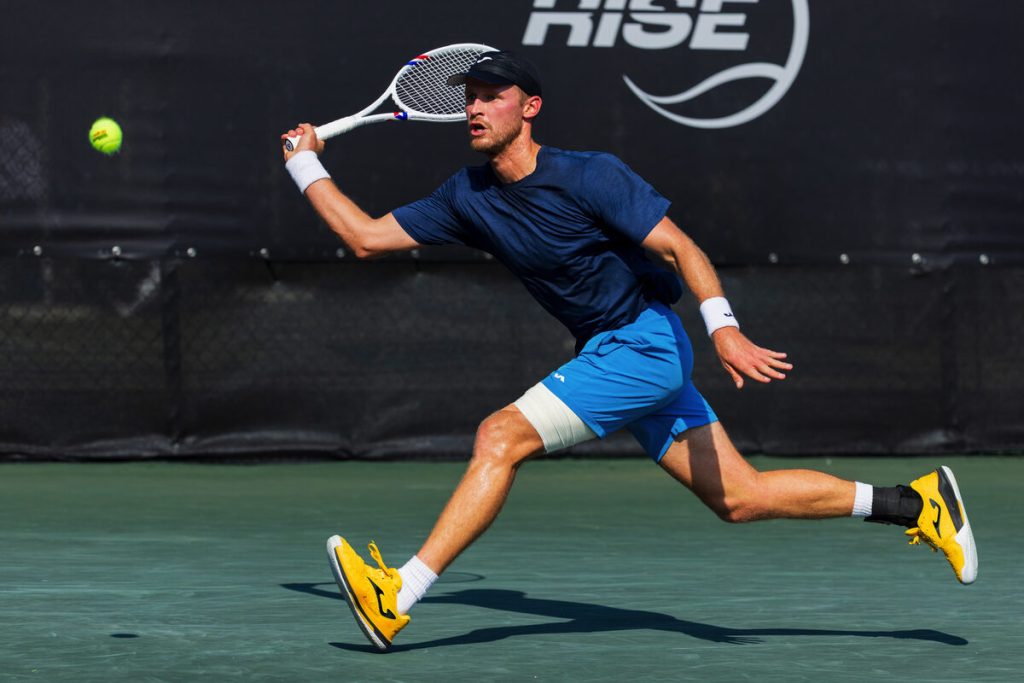
Lifestyle overhaul
“I didn’t know it at the time, but that was the turning point,” Marc recalls. “Tennis came back into my life, and from there, everything else just naturally unfolded.”
During his seven-year hiatus, Van der Merwe built a full life beyond the baseline.
He studied for a marketing degree in Cape Town, co-founded Mistifi – a water-saving company that installed mist nozzles in shopping malls during Cape Town’s Day Zero crisis, saving over a million litres of water – and ran a surfboard shaping business for five years.
Tennis was reduced to casual weekend hits with his father and brothers, sometimes twice a week, sometimes once a month.
Professionally, he had vanished from the scene.
Way of life
His family background made the break all the more striking. His father, Marcel, reached a world ranking of 400 on the ATP Tour. His mother, Nelia, was similarly ranked on the WTA circuit.
His uncle played tour-level tennis and reached the semi-finals of Wimbledon in doubles. Tennis was not just a sport in the Van der Merwe household – it was a way of life.
“We would watch every Grand Slam. On Sundays, the entire family would sit and watch. It was our ritual.”
When Van der Merwe finally began training seriously again in January last year, stepping back onto a competitive court felt strange and instinctive.
“Once I clicked into a certain gear during the match, it felt like I had never left tennis,” he recalls.
His first comeback tournaments followed in June and July, and the momentum has been building since – most recently at the Rise Irene Open and Rise Centurion Open, where he tested himself against players including Orel Kimhi, the top-ranked Israeli man in the ATP rankings.
ALSO READ: Top-class tennis action at Van der Stel
Coaching pays bills
The financial reality of his journey, however, is far from glamorous. Van der Merwe coaches tennis to fund his playing career, often coaching long hours before returning to his own training. “Coaching adds a lot of fatigue to my body,” he admits. “If I want to go further with my ranking, I have to be more focused on playing and training.”
He describes a cycle familiar to many South African players: four weeks on tour building momentum, then four months of coaching to save enough to do it again. “Sometimes it’s not sustainable,” he says plainly.
He is candid about the structural gap between South Africa and tennis nations in Europe, where the sport is woven into everyday culture and institutional support exists at multiple levels.
In SA, he argues, players are largely left to figure it out alone. But he believes tournaments like the Rise Open are exactly the kind of intervention the local game needs – exposing local players to international competition on home soil, without the crippling cost of overseas travel.
As for what drives him now? “Success for me is more of a feeling,” he shares. “It’s about following what feels right – not what feels nice. And I know that tennis is where I have to be.”



You must be logged in to post a comment.