


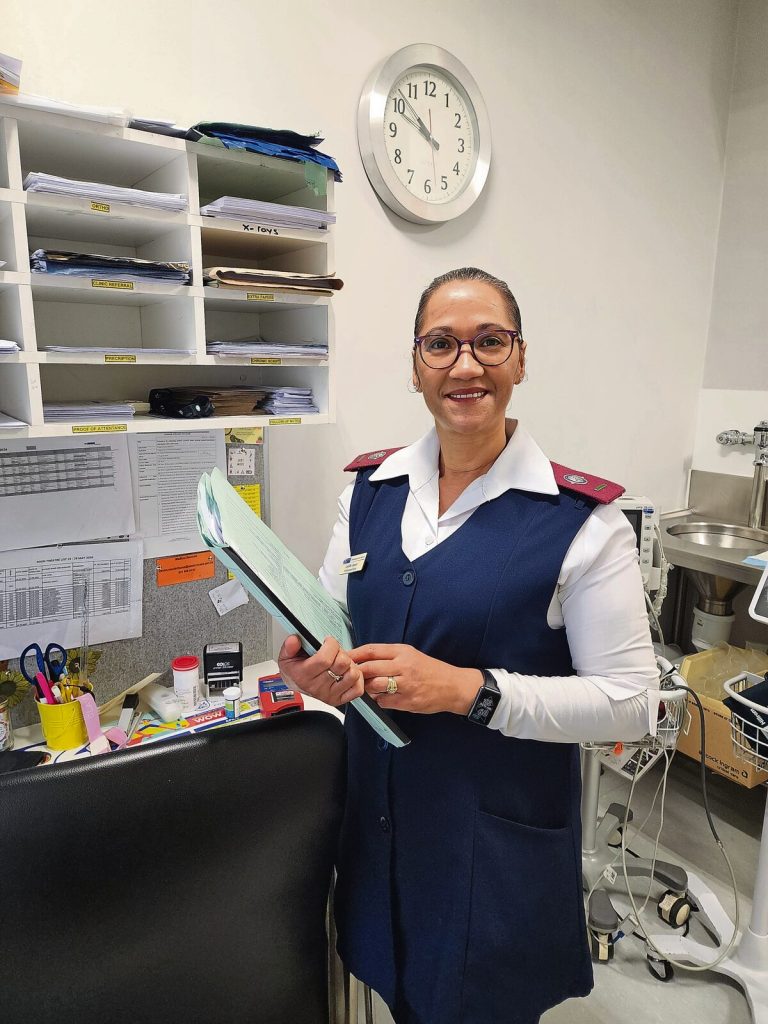
For more than three decades Stellenbosch paediatric nurse Lucille Jason has dedicated herself to her special calling, something she would do over again if given the chance.
The 56-year-old loves children, so paediatrics is a natural fit. Moreover, nursing as a profession provides much scope for knowledge and skills enhancement, she says.
“There is a great demand for nurses and the diverse career paths available within the field. My desire is to help others, to make a difference in people’s lives by contributing to their well-being.”
Jason was speaking on the wake of Nurses’ Day, celebrated annually on 12 May, the birthday of the illustrious founder of modern nursing Florence Nightingale.
ALSO READ: Verpleging gee haar lewe betekenis, vertel verpleegster van Cloetesville
Supporting patients
For Jason, the day allows her and her colleagues to celebrate what is often a thankless job, whatever its virtues, when each nurse is recognised for his or her role. “It’s a day we are honoured for our hard work and the commitment we as nurses exhibit daily. We need to be valued for the magnificent part we play in each patient’s life.”
In the profession for 33 years, Jason admits there are difficult days.
“Every situation and every day is different. The support from colleagues gives me the strength and courage in challenging moments. Personally, I feel my purpose is to make a difference in other people’s lives,” she relates,
“Being a patient or being in a hospital can be quite frightening, so being there for patients, helping them through such times brings some ease to their minds and comforts them.”
Jason admits taking care of others at their most vulnerable is a daunting task. Moreover, it is inevitable pursuing such a role will have formative and other lasting effects on those taking it on.
Interpersonal skills
In Jason’s case nursing has deepened her understanding of and compassion for others. It has also taught her to communicate effectively with people from all walks of life. “My interpersonal skills have grown, as has my ability to advocate for my patients.”
She believes being a good carer also means looking after oneself. “I try to maintain a healthy lifestyle by having a balanced diet, staying hydrated and getting enough sleep. In my free time I relax by reading books.”
On her off day Jason can be found spending quality time with her family.
For her, Sunday braais with her loved ones, mother-daughter days and date nights with her husband are a “must”.
Improve communication
“People think nursing is just about bedside care, that we are there to carry bedpans for those who can’t help themselves. People think nursing involves only direct care, which overlooks the critical role nurses play.”
According to Jason the biggest misconception is that nurses simply follow doctors’ orders, that they don’t have the capacity for critical thinking.
“Little do they know, we act as advocates for our patients,” she points out. “A patient recently told me he respected the work nurses do because he saw just how much goes into what they do, the real work that takes place behind the scenes.”
If given the opportunity to change the public healthcare system in any way, she would improve communication between the healthcare system and patients.
“If we strengthen communication, patients will have an even better understanding of their condition and the importance of adhering to treatment plans,” Jason relates.
“I would like even more work to be done in educating the public on prevention, so fewer people would need hospitalisation and be in better health.”
But if one does end up in the care of nurses, Jason believes a “thank you” goes a long way towards making nurses feel special, not just on Nurses’ Day but every day.
“If I look back from the beginning to where I am now I can just say, ‘Thank you, God.’”





You must be logged in to post a comment.