
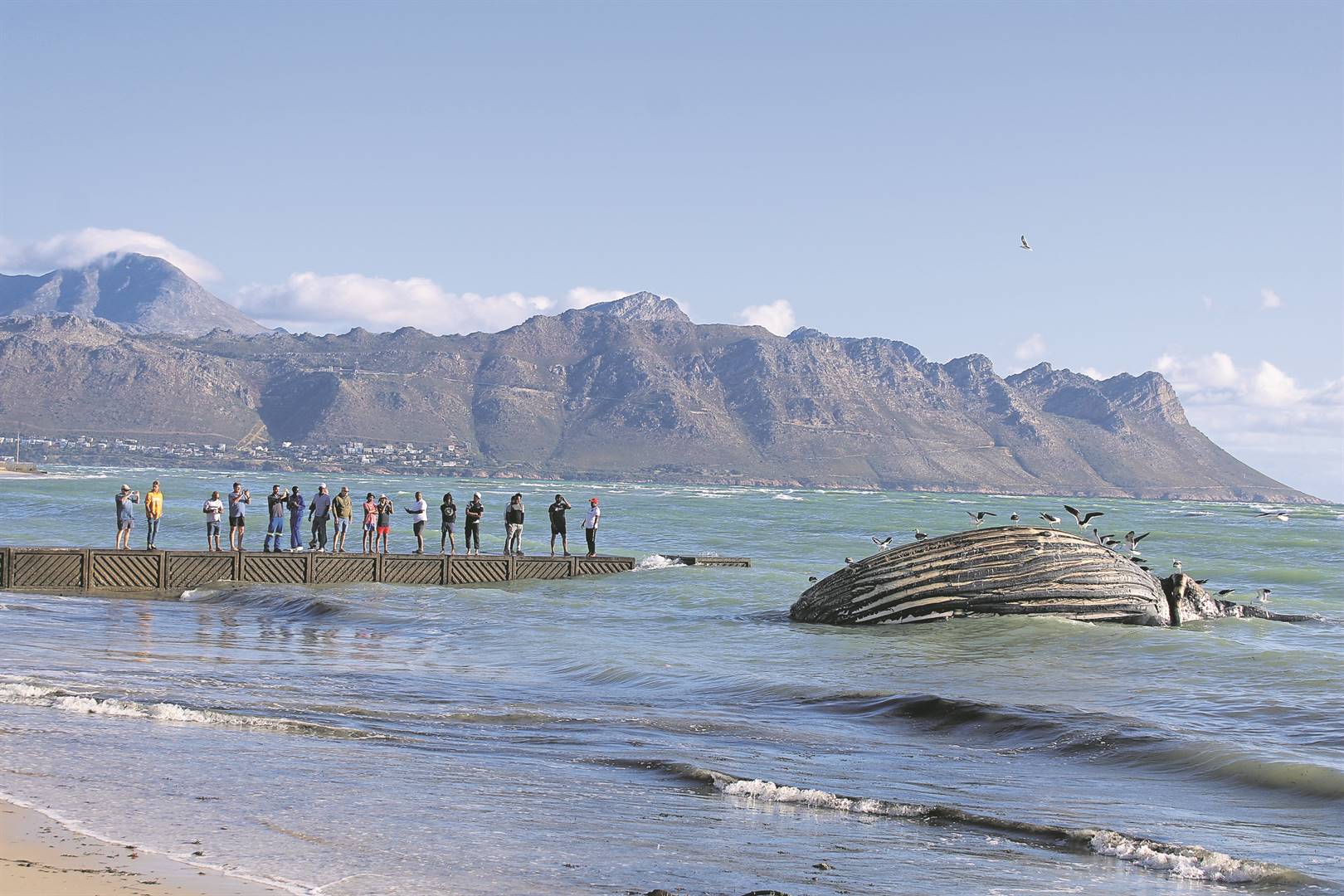
A 12-hour operation involving multiple bulldozers, dozens of municipal workers and several City of Cape Town departments resulted in the successful removal of a male humpback whale carcass that had washed ashore on Blakes Beach, Strand late last Friday afternoon (25 November).
Strong winds and a rising tide propelled the carcass towards the beach, directly behind the Strand Municipal Swimming Pool, just an hour after it had been spotted floating in the ocean about a kilometre from the shore.
The removal operation began early on Saturday morning and was quite a spectacle, attracting hundreds of curious onlookers with families in tow to catch a glimpse of the extraordinary occurrence.
Eddie Andrews, deputy mayor and Mayoral Committee member for Spatial Planning and the Environment, said the City’s coastal management and solid waste management department’s special technical services team, the National Sea Rescue Institue and Law Enforcement all responded to the report of the whale carcass that washed ashore.
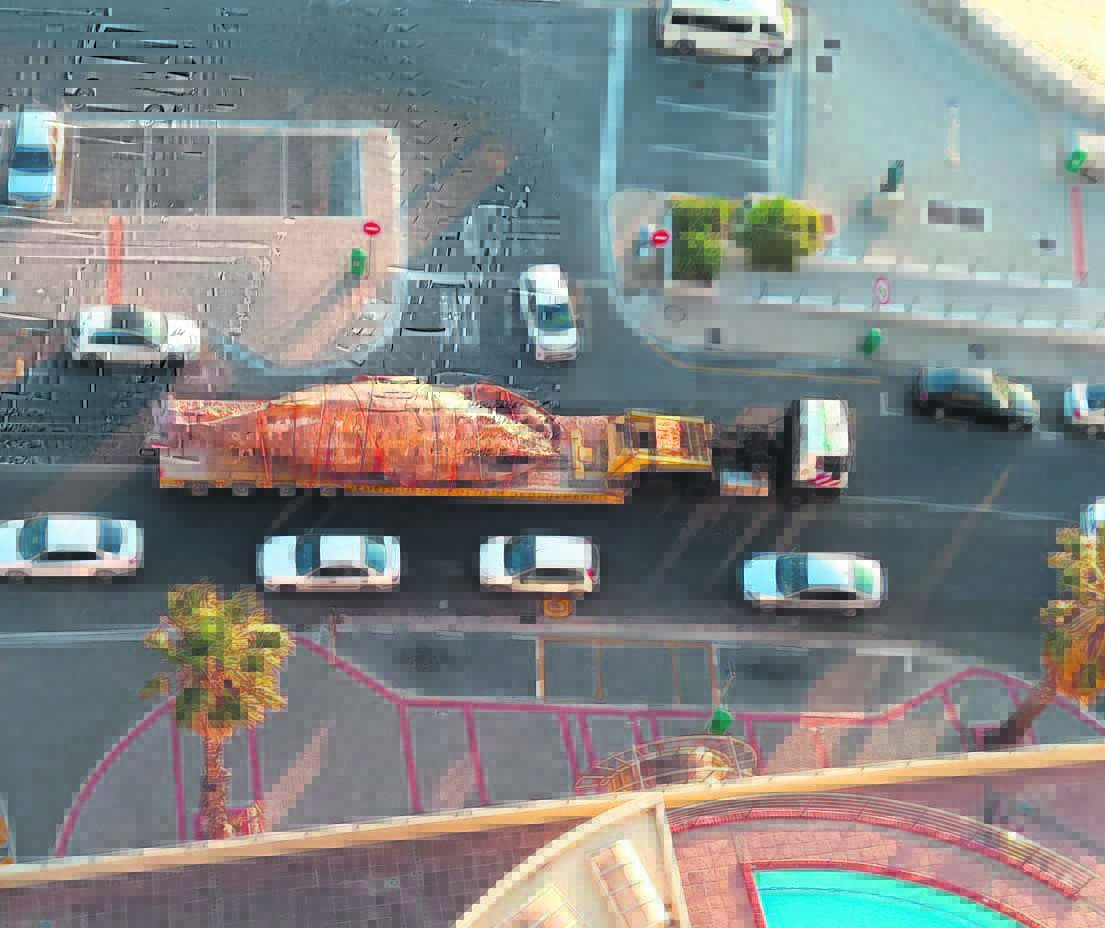
“On Friday evening the teams began preparing to remove the whale carcass according to our marine animal stranding protocol. The removal commenced at 07:00 on Saturday (26 November) and the whale was successfully loaded onto a flatbed removal vehicle around 18:00,” he detailed.
“The whale carcass was then transported to the Vissershok landfill site as per the protocol. The whale weighed in at 26,6 tons and the operation concluded around midnight when all vehicles and machinery involved in the removal returned to the respective depots.”
Despite the scale of the operation, the removal was effected quickly and with no damage to the beach or infrastructure, Andrews pointed out.
“The precautionary shark warning has now been lifted and beachgoers may return to the beach,” he confirmed.
It is difficult to determine a direct monetary cost for the operation, but expenses inclide staff’s working hours, use of vehicles and landfill space costs, Andrews further explained. Indirect costs were also incurred, which include the use of City resources such as heavy machinery unavailable for use elsewhere for the duration of the operation.
Asked to elaborate why the carcass was buried following public curiosity of whether it could have been towed back into the ocean, Andrews said there are a number of reasons the suggestion is not feasible for a whale carcass.
“The weight of the animal (in this case, around 26 tons) poses a logistical challenge and would require a large tug to effect it, and at great cost,” Andrews said.
“However, even if this were possible, the carcass would then drift and wash ashore again elsewhere and require further removal efforts.
“A floating carcass may also pose a risk to marine craft, so it would be irresponsible of the City to tow the whale into deeper water. For these reasons our protocol requires that the carcass be transferred to landfill.”
Natural causes claim whale
Lisa Starr, founder of Helderberg Ocean Awareness Movement (Hoam), confirmed the carcass was identified as a male humpback whale and measured in at 13,5m.
“We estimate that it had passed away around five days before. He had quite a few acorn barnacles, which is normal as they can carry up to 450 kg of these free riders. His eyes were closed and this makes me hope he died peacefully.”
A sample of the whale’s blubber was taken for genetic testing, Starr related. “There was no need for further testing as it’s believed his death was a natural one,” Starr added.
“It was very humbling, yet upsetting, to witness this majestic giant on our shore. The ocean is of great importance to us all. It’s in our interest to protect it and everything that resides within it.”
“To organise all the equipment and manpower to remove the whale by Saturday evening was amazing. This shows you the capacity of the solid waste department with such an unusual occurrence.”
He further acknowledged the efforts of Traffic Services and Law Enforcement in securing the area and keeping onlookers out of harm’s way. “Strand Neighbourhood Watch also assisted with crowd control on Friday evening and Saturday morning, as there were masses of people who showed up,” Punt said.