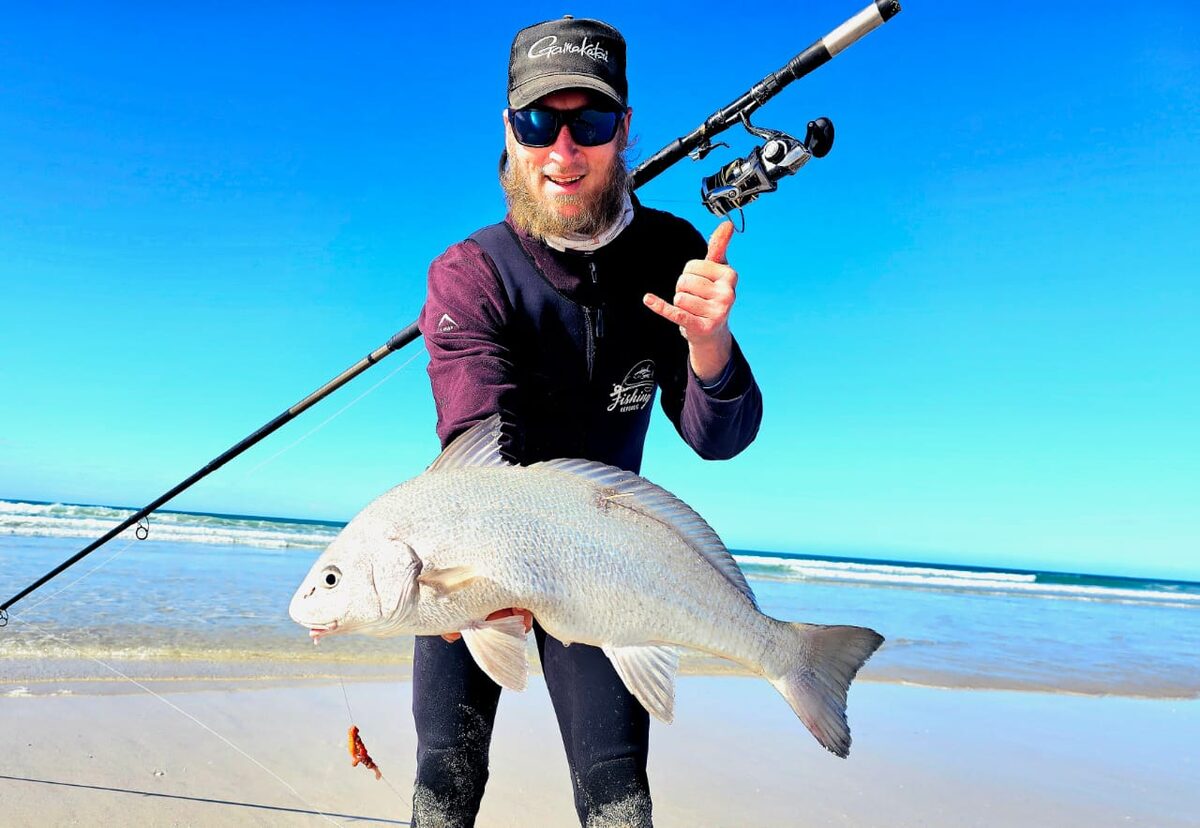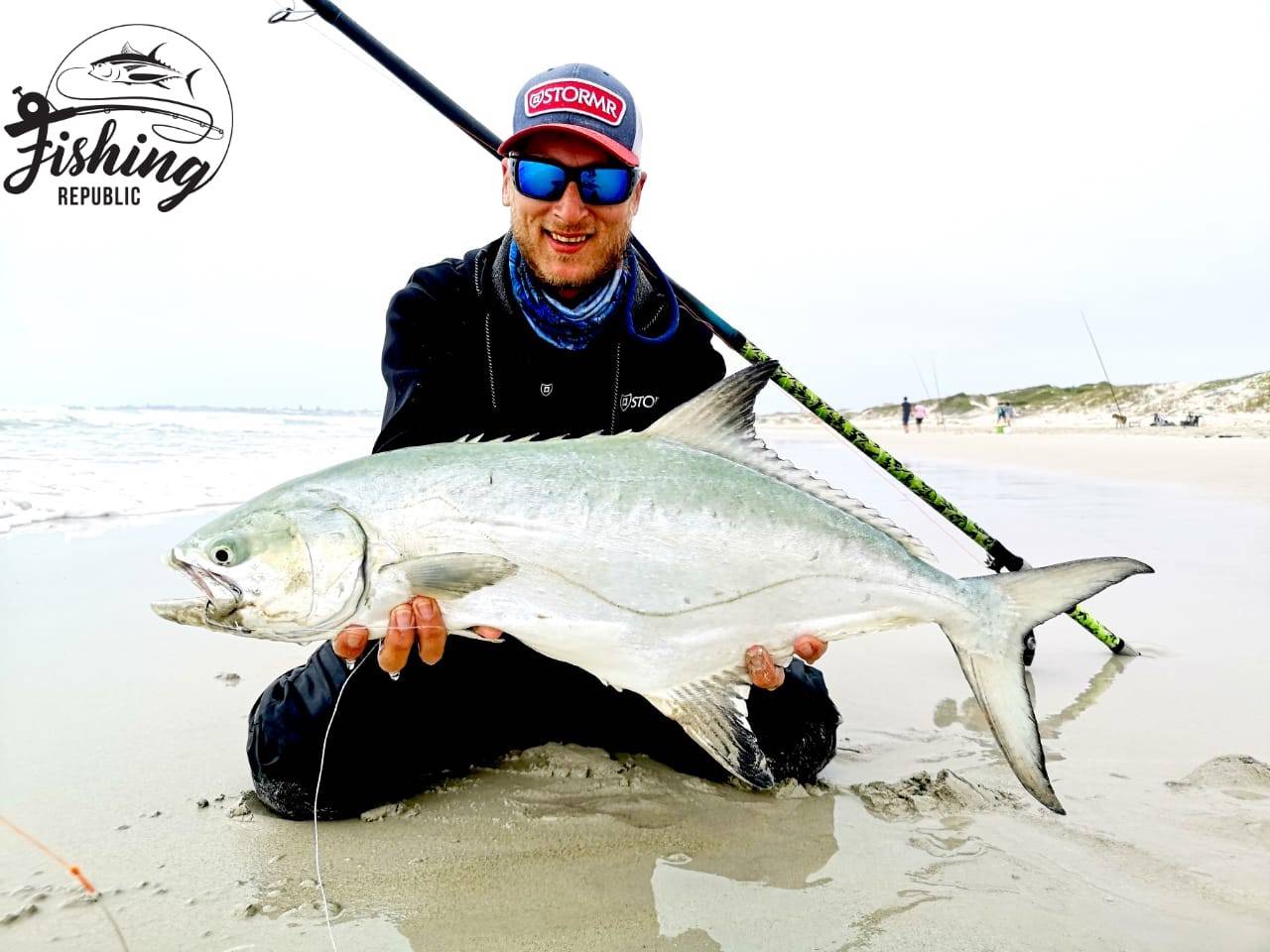


This week we are going to discuss something a little different. So many people come into the shop asking me what is better, multiplier or spinning reels? Well, there is no short answer to the question.
With the modernisation and advancements in technology, especially within the fishing industry, one can easily be confused by the different brands, specs, reel sizes, nylons and braids, and which would work for one. I will not go into the difference between a multiplier and a spinning reel, but I’ll run through why and when we use each reel type for its suited application.
You’ll always find the guys who prefer one or the other; unfortunately most who haven’t changed over from nylon to braid, and who have not experienced “grinder” fishing, are the ones saying multipliers are better. I believe you only know if you know.
I have built up a collection of multiplier and spinning outfits in my 32 years of fishing, and I use them all according to my application. I, however, have found I tend to choose a grinder setup 95% of the time. Why is this?
Most people focus on the actual reel, but the advantage of fishing with a grinder outfit is not only about the super light parabolic grinder rods, which are capable of catching monster fish, casting further and being super sensitive, or the major improvements in spinning reels themselves, improved gears super strong drags and so. The major advantage is the braided line itself.
Braid is on average two or three times thinner than nylon. For conditions in the Western Cape, especially when the busting South-Easter blows, it means better cast-ability into such a strong wind, less current and wind drag once you are in the water, so your bait stays where you want it to be instead of being dragged along the bottom. This is especially true when fishing big seas (4 m-plus) for mussel cracker and galjoen.
Less stretch and directness gives you better accuracy on casts and improved sensitivity for solid hook sets. You can literally feel the streepie eating your bait and suddenly it goes quiet, and boom – you get that solid pull on your finger and your rod hangs with a beautiful kob as he snatches your bait from the ravenous streepies and bait fish. Best of all, you feel it all happen with the sensitivity of the braid.
Braid is not just something you can put on your reel and start fishing – this is where most guys fail from the start. Set-up is extremely important. Yes, there are advantages and disadvantages but fished correctly, there is nothing more fun and enjoyable than catching big fish on a light grinder outfit.
One needs to pay special attention to the way you spool a spinning reel with braid, which needs to be wound-on super tight else it doesn’t grip on the spool and the braid turns instead of the spool under drag. (We can help you spool correctly at Fishing Republic). Secondly, one shouldn’t over or under fill your spool; an over-spooled reel always causes issues with wind knots. I suggest you leave enough space for your leaders to also fit on your spool and there must still be room to add a little more.
Leader setup is critical to fishing braid successfully. I recommend you always fish with a braided leader connected to your main braid with a fine grip (FG) knot. There are many other knots, but the FG is by far the best use, in terms of knot strength, its size and slimness, so it runs through your guides without friction, resulting in far less wind knots and break-offs especially when casting. I always put a 1 m length of nylon leader on the front of my braided leader. This small section of nylon doesn’t go into my top guide – it always stays outside the rod – and assists me greatly in terms of abrasion resistance and a little bit of stretch.
It’s also not easy for fish to spot the nylon leader, as it is with a braided leader, especially when fishing clean water for white steenbras and belman. I like using a super light fluorocarbon hook snoot and leader line.
Braid allows you to fish super light sinkers and lures, which you can’t do with a multiplier. You usually throw a 5 oz or 6 oz sinker on the multiplier to get the spool going. On the spinning outfit, I can fish a 1 oz sinker if need be. Often fishing a lighter sinker, especially between the rocks, gets you a better bite as your bait drifts and rolls around more naturally.
Braid has changed the game in the world of spinning. We are now throwing tiny 10 g and 15 g slow pitch jigs into the surf, targeting all kinds of species.
Big fish often eat small baits such as anchovy; imitating these bait fish is often difficult, and getting a small enough bait in-zone even more so. This is where the super sensitive, slow action rods and light braids allow you to cast these small baits a long distance, to get in the zone and catch fish and species on lure which we never have before.
Slow-pitch jigging is a big craze in many countries and something I started doing while guiding in Oman more than 10 years ago. We had great success and I believe it will explode in South Africa in the next few years. (More on slow pitch jigging in future articles).
When do I use my multiplier outfits? Well, I use them when fishing the reefs in Strand especially, not because they work any better, but the swimming on the reefs destroys reels.
If there is a disadvantage to a spinning reel, it’s the fact that it is susceptible to water damage. If I swim with my grinders they are completely stripped the next day and need a full service. This is not practical and it’s far easier to use a workhorse like a Daiwa sl50sh or a Shimano speed master, where one can literally dunk it in water and spray oil into the casing holes and on you go. Spinning reels require more services and care.
Some like to argue that braid doesn’t work between the rocks, but it does – you just need to set it up correctly. I recently targeted mussel cracker in a foul area, with a friend who only swears by nylon and multipliers. He fishes .77 mm, 27 kg straight maxima ultra green nylon on his multiplier for cracker.
I fished with 50 lb whiplash, which is 23 mm and three times thinner than his nylon, on my Stella 20k. The area we fished is full of submerged mussel banks and brick in the water.
At the end of the day, we both caught beautiful cracker – I got the four (biggest around 14 kg) and he got three (biggest around 12 kg). Not once was I broken off or reefed; I was able to apply maximum pressure with the grinder drag, which is far superior to multiplier drags – in most cases double as strong. The braid also allowed me to get that extra little bit of distance into the wind just to land in the hole and get that extra pull. The proof is in the pudding.
Everyone will always have their preference when it comes to fishing equipment. I suggest you give both a go and see what works for you. The advantages of braid outweigh those of nylon; the new style rods, reels and braids are epic to fish with, lighter, cast better and easier, and are just more enjoyable to catch fish in almost all circumstances.
Pop into Fishing Republic and we’ll run you through all the latest and greatest in the fishing industry as well as set you up correctly to catch more fish and make your fishing more enjoyable. The store is situated at 73 Beach Road in Strand, opposite Blake’s Beach. Also follow us on Facebook (@fishingrepublic) and Instagram (@fishingrepublicstore), or call us on 072 552 4400.