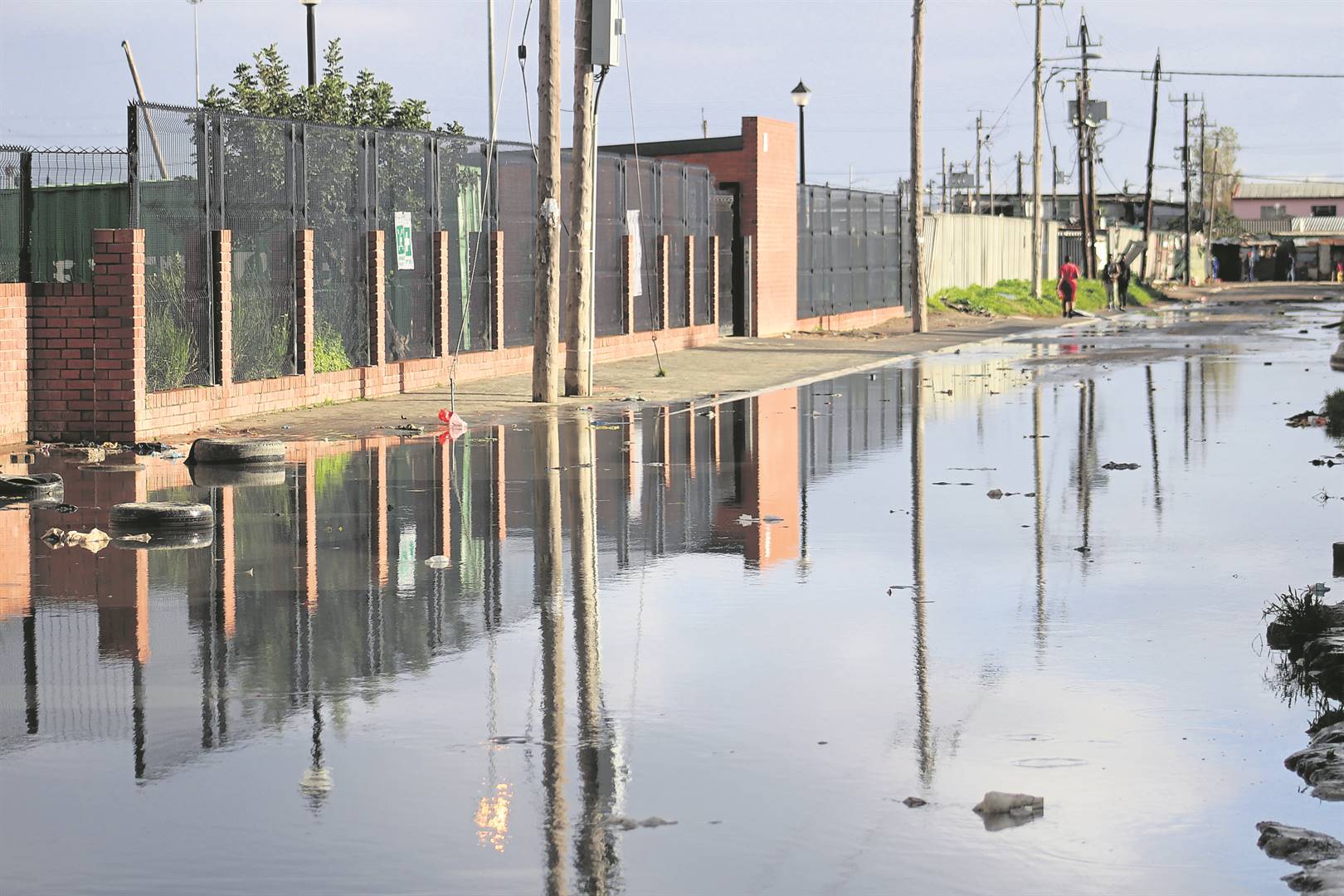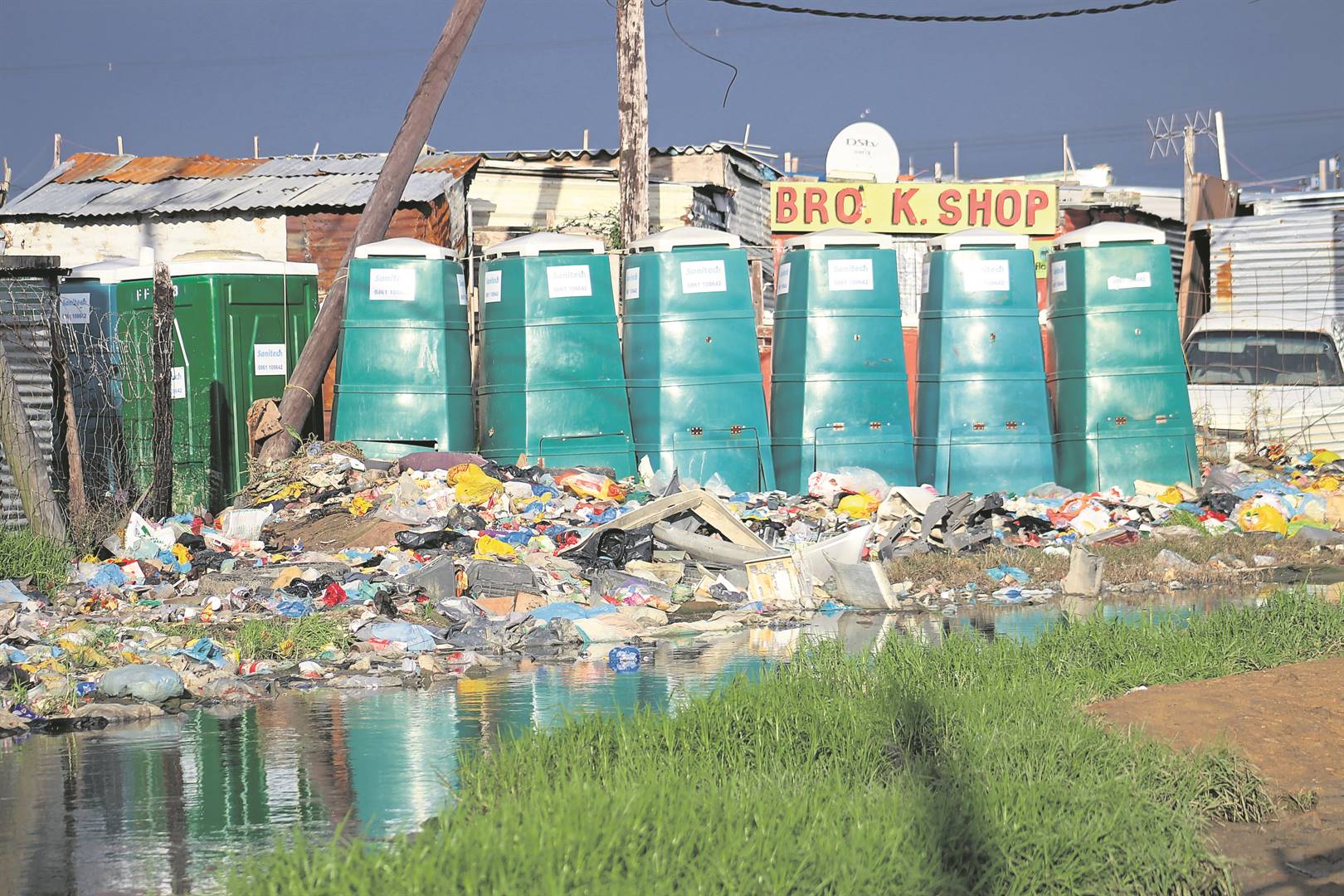

Blocked drains and streets full of sewage are issues that residents of Nomzamo face on a daily basis, but it has now become so bad that some businesses have had to temporarily close their doors and residents are tired of living like this.
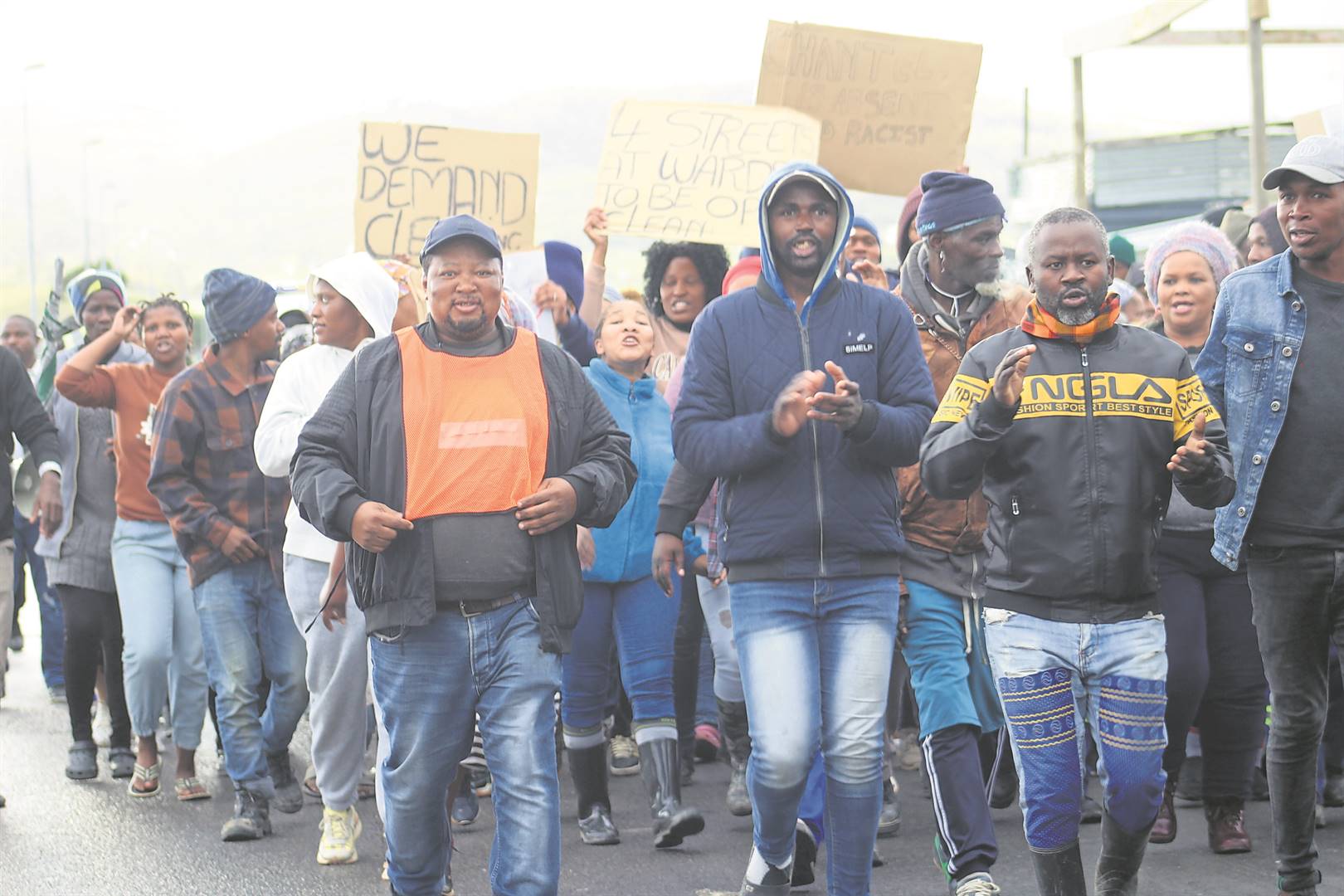
This dire situation spurred on a group of residents to take part in a peaceful march last week on Friday (30 June).
DistrictMail & Helderberg Gazette visited the area prior to the march taking place and the stench was unbearable.
Mxolisi, Joel, Simon and Selven Streets are the worst affected with water damming up in the streets, causing the stench here to be on a different level.
Pumzile Pika, a community activist, who also took part in the march, says something needs to be done to rectify these problems.
“We can’t continue to live like this. Children and adults have to hop from one stone to another to not step in the sewage water on their way to school,” says Pika.
He joined other residents in the protest which took place from Onverwacht Street in Nomzamo all the way to the municipal offices in Gordonsbay Road.
At these offices the protestors handed over a memorandum of complaints to Ward 8 Subcouncil chairperson Chantal Cerfontein.
Cerfontein says the biggest problem here is illegal squatters who are living on top of the ponds and canals where water needs an outlet but continue to be blocked.
“Our teams are there daily doing their utmost to mitigate and get some control with regards to the blockages but as soon as it’s opened the next day it is blocked again,” adds Cerfontein.
She says that this happens due to dumping which causes the blockage and this in turn leads to the overflows.
“Milling and sand has been provided for the flooding-issues but one cannot fight against the force of mother nature,” she explains.
Councillor Rob Quintas, the City’s Mayoral Committee member for Urban Mobility, says these roads were flooded due to residents constructing more homes during the Covid-19 pandemic.
“The area was filled up illegally by persons who have occupied the retention pond and who have also illegally built on the canal.
“As a result the canals cannot be maintained because the banks of the canals were also built on. This means that there is no access to these canals,” explains Quintas.
He mentions that City of Cape Town (COCT) receives regular complaints from residents about these problems, but the residents of the informal dwellings are not willing to move from the infrastructure they have occupied in order to provide access to the canals for the City to open and maintain them.
“This situation has been ongoing since the canals were filled up during the latter half of 2020,” says Quintas.
He confirms that further meetings have been held with the community, the department of education and the schools in the area surrounding these problems.
“We need to reach a mutual agreement that will ensure that such incident reports can be attended to with ease,” concludes Quintas.
The City of Cape Town has been given seven days to answer issues raised by residents in their memorandum.