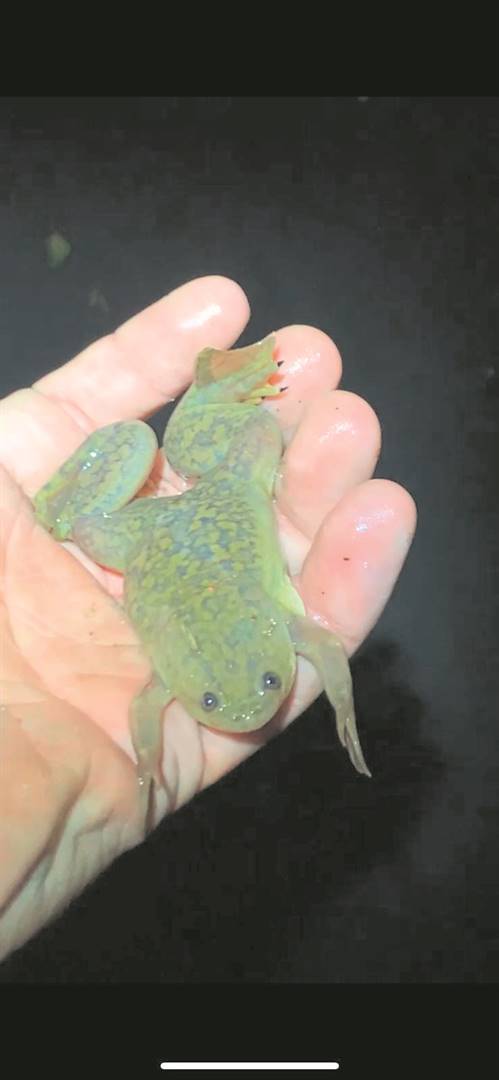

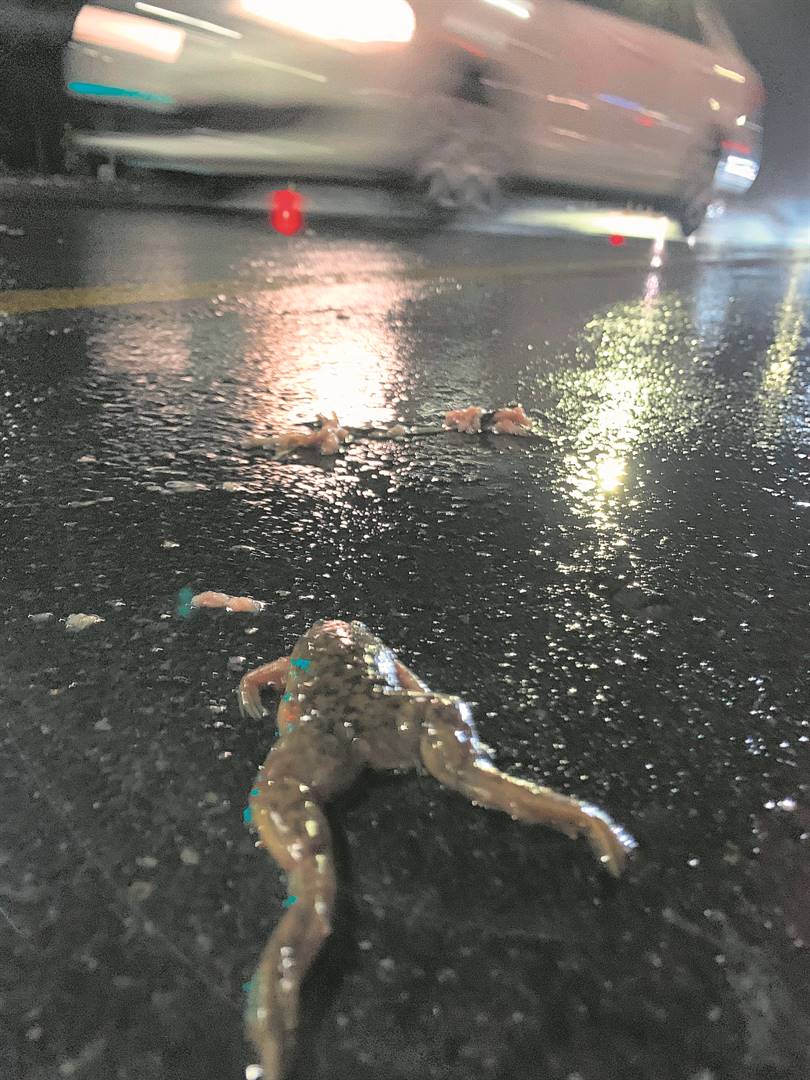
A mass frog-dispersal event occurred somewhat unexpectedly last Monday evening (30 January) during the rains, when tens of thousands of frogs crossed the R44 at Heartlands Precinct towards the dam at The Sanctuary Shopping Centre in Somerset West.
The event is usually anticipated when the first rains of the season come down around March every year, but was clearly not the case this time round. The incident resulted in thousands of frogs being squashed by passing traffic despite the efforts of a handful of concerned citizens who tried to save as many as they could.
A protocol in place, which provides early warning and ropes in the assistance of traffic officers (“Proposals to aid anticipated frog dispersal”, DistrictMail, 8 March 2023), did not appear effective as requests to law enforcement and traffic went unresponded to.
According to Don Marx, who was among the first on scene and also a marine scientist, the road was in utter chaos as cars drove over thousands of frogs.
“It was a massive swarm of frogs just hopping over the road, trying to get to the dam,” he said. “Almost like a plague, an insane amount, almost unfathomable. I’d never seen anything like it before. Even the sound of the frogs in unison was crazy. It was incredible to witness.”
The frogs were identified as Common Platanna frogs (Xenopus laevis). Marx called some friends to help, and together with some motorists who pulled over they tried to collect as many frogs as they could to safely disperse.
The rains started at about 20:00 and the frogs appeared as soon as 20:30 and continued dispersing until long after 23:30, said Marx.
According to Elma Pollard, founder of the group Frog Friends Helderberg, frog dispersals at Paardevlei can be expected at any time rain falls in summer.
She said: “We’ve been continuously engaging the City for a long-term sustainable solution, but it appears this will be costly, and any way forward will require an investment by the City.
“The frogs are also an invasive species, unlike the Cape Platanna, which are indigenous to this area.”
Previously, Deputy Mayor and Mayoral Committee member for Spatial Planning and Environment Eddie Andrews said the area in question was not a City Biodiversity Management conservation estate, and therefore it could assist only by providing advice.
He added that existing research indicated this species was able to undertake substantial migrations at different times. It is thought large-scale migrations are in pursuit of more favourable habitats (from temporary to more permanent water bodies).
“It would be recommended to assess the feasibility of a suitable underpass to allow for fauna movement across the R44, or to assess the means of removing the need for the migration (ie creating a suitable, natural waterbody within a safe precinct on the same side of the road from which the migration originates).
“The potential motivation for the migration (such as reduced water levels, increased predation and so on) would have to be determined to create a suitable alternative.” he said.