

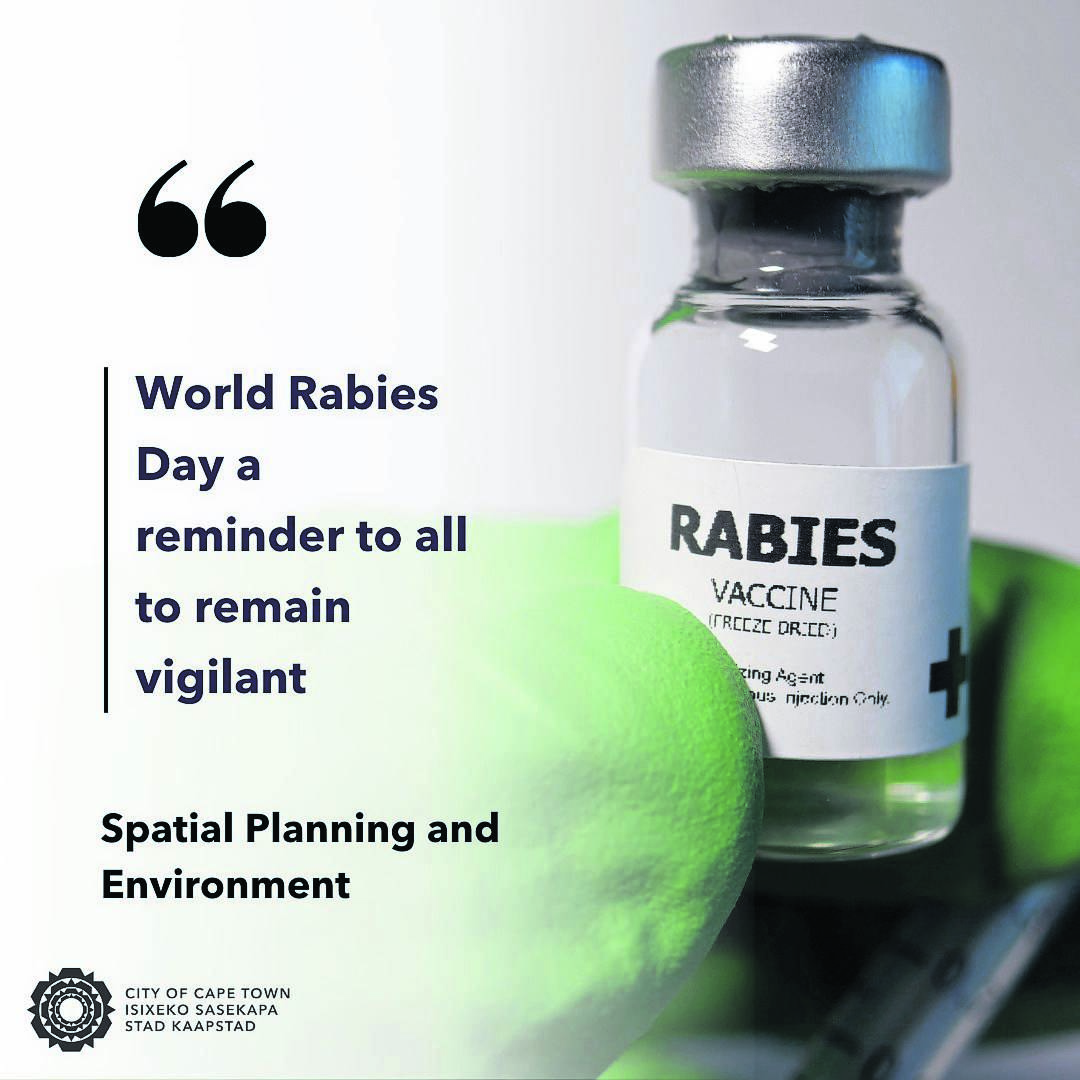
As the global community marks World Rabies Day on Saturday 28 September, the City of Cape Town wants to remind residents and visitors that the rabies virus is now considered endemic in the Cape Fur Seal population, as such, beachgoers and recreational users are advised to always be vigilant and take appropriate care.
The City, along with its partners – the Department of Forestry, Fisheries and the Environment (DFFE), SANParks, Cape of Good Hope SPCA, Two Oceans Aquarium Foundation, Sea Search and Hout Bay Seal Rescue Centre – continue to implement the Rabies in Cape Fur Seals Response Plan. This is to minimise as far as possible, the impact of the rabies virus on the Cape Fur Seal population and reduce the risk to people being potentially exposed to rabies.
While positive cases of rabies in seals continue to be confirmed across the Western Cape, the effect on the seal population remains unknown. Given that this is the first documented rabies infection in a marine mammal population, there remain many uncertainties.
Since May this year when testing commenced, a total of 24 confirmed cases of rabies have been recorded in Cape Fur Seals.
Another 14 additional positive retrospective brain samples, going back to August 2022, have been confirmed as well.
The Public Health Advisory remains that pre-exposure vaccination for rabies is not recommended for the general public at this time. However, anyone bitten or scratched by a seal must seek immediate medical attention and receive Post Exposure Prophylaxis vaccination for rabies. Additionally, all domestic dogs must be up to date with their rabies vaccination.
We remind the public that it is their individual responsibility to ensure their dogs do not have any contact with seals.
While some seals that are in regular contact with people have been vaccinated as a trial, seal feeding remains illegal.
The aiding and abetting of any seal feeders through paying or participating in this illegal act, including taking photos or shooting videos – are offences and offenders may be arrested.
The public is cautioned to stay clear of all coastal wildlife, including seals, regardless of their rabies status. It is illegal to approach, touch, handle, harass or interfere with any coastal wildlife. Seals are a healthy and normal part of our coastline and should be expected to be seen along our beaches and inshore areas.
Those who come across a seal that is behaving unusually or aggressively, are advised to move away from the animal or leave the water if they are surfing, swimming or diving.
Immediately inform the relevant authorities:
- Cape Town – City of Cape Town on 021 480 7700, Cape of Good Hope SPCA on 021 700 4140;
- West Coast – CapeNature on 083 236 2924;
- Overberg – CapeNature on 083 236 2924;
- Southern Cape – Plett Stranding Hotline on 079 463 4837 and CapeNature on 044 533 2125.
- Eastern Cape – Bay World Stranding Hotline on 071 724 2122; and
- Table Mountain National Park on 021 783 0234.

