

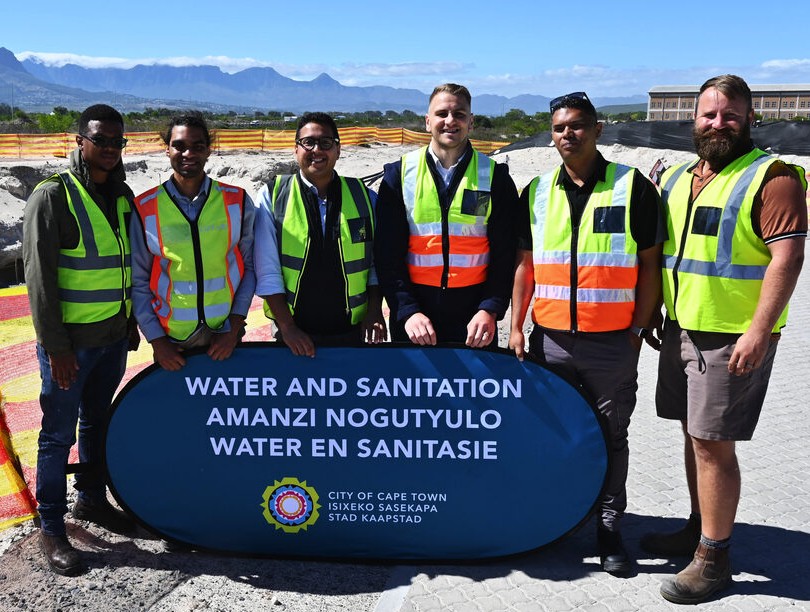
The City of Cape Town’s Water and Sanitation Directorate has started construction on the Zandvliet Treated Effluent Re-use (TER) Pump Station.
The infrastructure project will significantly improve access to treated effluent in Zandvliet and neighbouring areas, supporting the City’s drive to reduce pressure on potable water resources.
Treated effluent is a sustainable alternative water source suitable for non-potable use such as irrigation, construction and industrial processes. By increasing access to this resource, the City aims to strengthen water resilience and diversify its supply sources.
Situated at the recently upgraded Zandvliet Wastewater Treatment Works, construction of the facility began in February. The majority of the 5,32 km pipeline has already been installed, with work on the final 200 m section scheduled to start in September. It is expected to be completed by December.
The total construction cost of the project is estimated at R4,3 million.
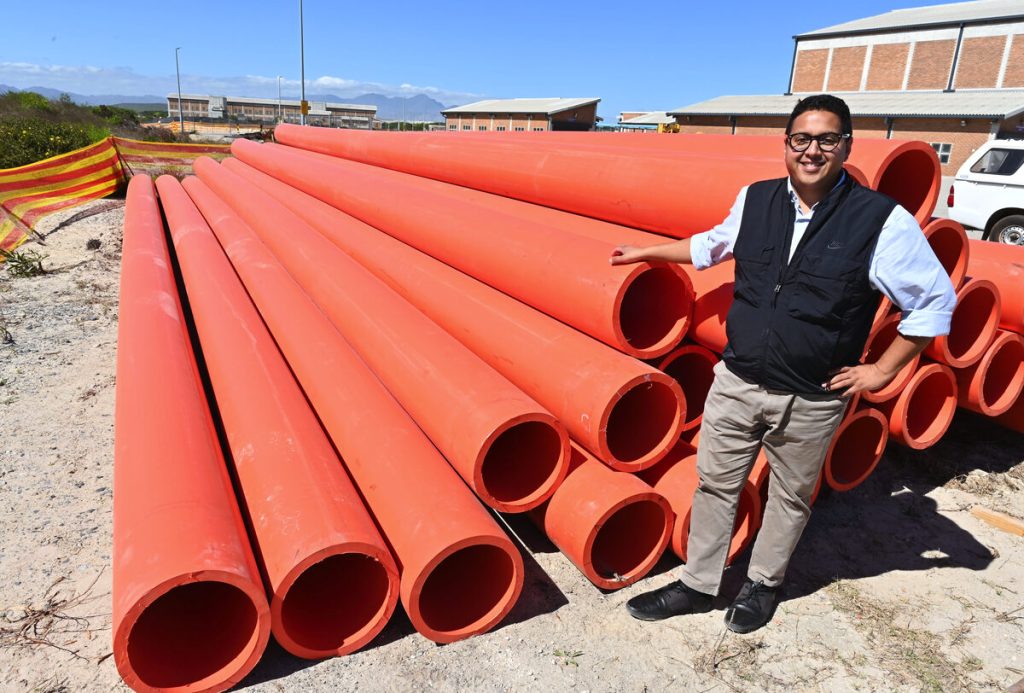
In the initial phase, the pump station will be equipped with two low-flow and two high-flow pumps. As demand grows, the low-flow pumps will be replaced with additional high-flow units. This phased-approach will more than double the station’s pumping capacity from 58 litres per second to 151 litres per second.
The scope of work includes all the pipework inside the pump station and filter building; the ventilation system; lifting equipment (electric overhead crawl beam); primary and secondary automatic self-cleaning filters; a portion of discharge main piping; flow meter chamber and flow control chamber; new Motor Control Centre complete with internal equipment and cabling; and Supervisory Control and Data Acquisition integration, telemetry and a video surveillance system.
On completion in September 2026, the pump station will be capable of supplying 5 million litres of treated effluent daily, to supplement end-users in the Macassar network.
Over the next 15 years, further expansion covering 52,8 km of pipelines will be done to supply treated effluent end-users in Khayelitsha and surrounding areas.
For more details on how to access treated effluent, visit https://bit.ly/48ZUbck.



You must be logged in to post a comment.