

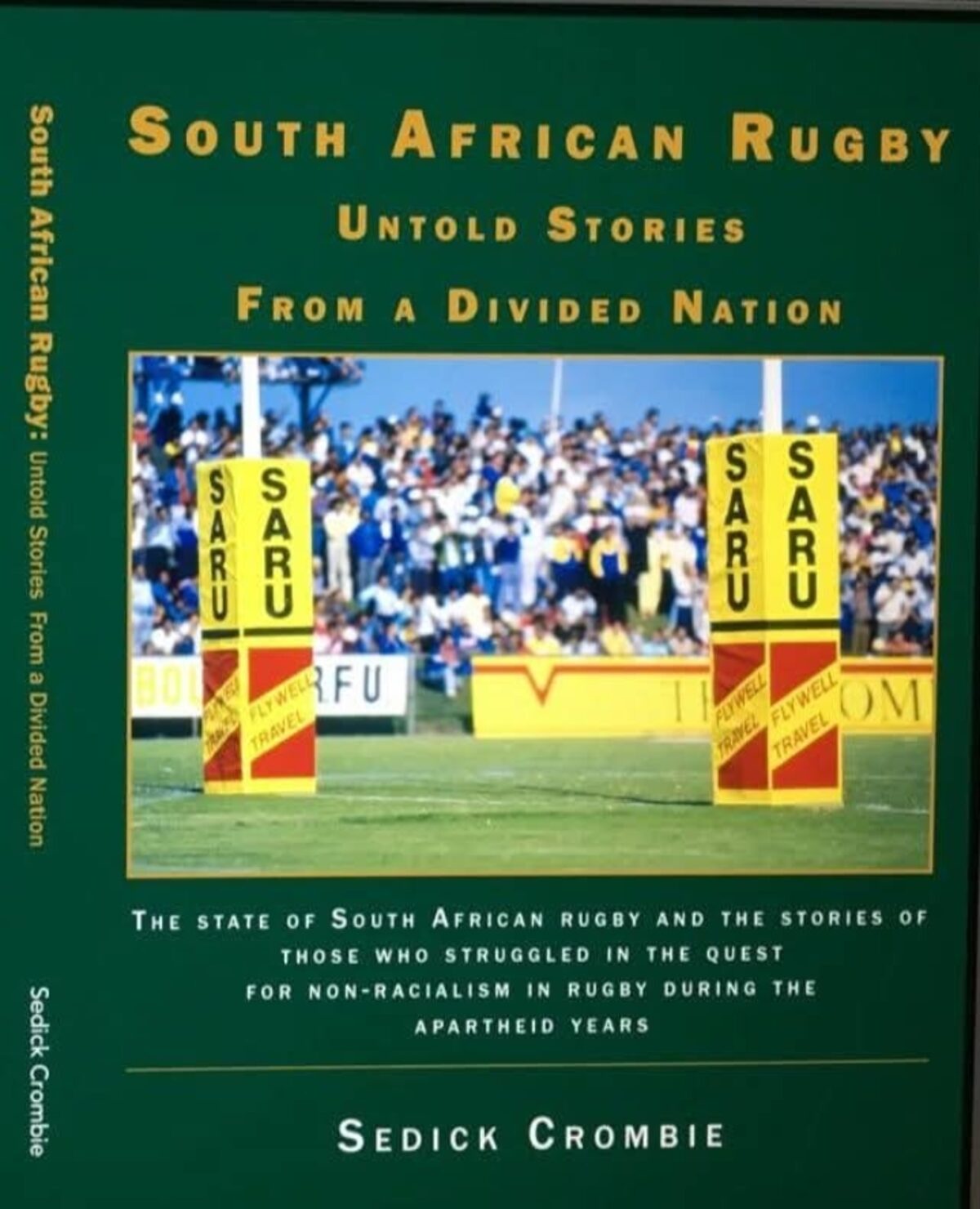

A powerful new book, South African Rugby: Untold Stories from a Divided Nation, seeks to correct the omissions of history by finally giving voice to the 45 former national non-racial rugby stars who sacrificed personal glory for principle under apartheid.
Authored by Strand local Sedick Crombie, the book is the culmination of years of painstaking research, travel and interviews, designed to ensure the lived experiences of these forgotten giants are recognised as foundational to the integrated sporting landscape enjoyed today.
His work opens by charting the interwoven relationship between sport and politics in South Africa, a dynamic that persisted from the apartheid era into the democratic dispensation. However, the bulk of the book is dedicated to the raw, personal testimonies of the non-racial rugby stalwarts themselves.

“The literature or research in this respect was sparse, or the stories are never told,” explains Crombie. “After more than two decades into the new democracy very little of the sacrifices, trials and tribulations of people who suffered the most under oppression and apartheid in sport and rugby (in particular) were not related at all.”
Many of the stories are harrowing, deeply emotional and distressing. One striking example of the sacrifice involved a teacher, employed by the then-Department of Coloured Affairs, who was explicitly told he would never see promotion to principal or deputy principal solely because he chose to play non-racial sport instead of race-based sport.
A warder in the prison services experienced the same career stagnation. But they remained true to their beliefs, foregoing professional advancement for non-racial principles.
Crombie highlights that the current success of Springbok stars like Siya Kolisi, Cheslin Kolbe and Bryan Habana was paid for by the sheer tenacity and principled doggedness of previous generations.
“It is only through the resilience of such people who sacrificed their abilities and talents to breakdown the barriers in sport to make the world sit up and take notice,” Crombie notes, adding it is critically important for recognising names such as Salie Fredericks, Cassiem Jabaar and Piet van Wyk.
The privileges and benefits reaped today occur on the shoulders of these giants who were denied the opportunity to represent SA due to the colour of their skin.
The compilation process faced significant challenges, including poor health and the availability of interviewees, stretching the research over several years. Sadly, five of them died during the book’s final stages.
Crombie says the potential loss of opportunity induced a heightened sense of urgency, ensuring a “speeding up of the finalisation of producing the book…”
He asserts sport and politics remain intertwined. Further to the apartheid past, its divisions and lack of national representation, today the political manifests as legislation designed to ensure opportunities are afforded to all in line with the Constitution.
The book ensures the true, inclusive and representative narrative of SA rugby is written and archived, incorporating the history and contributions of the marginalised into the story, Crombie explains.



You must be logged in to post a comment.