

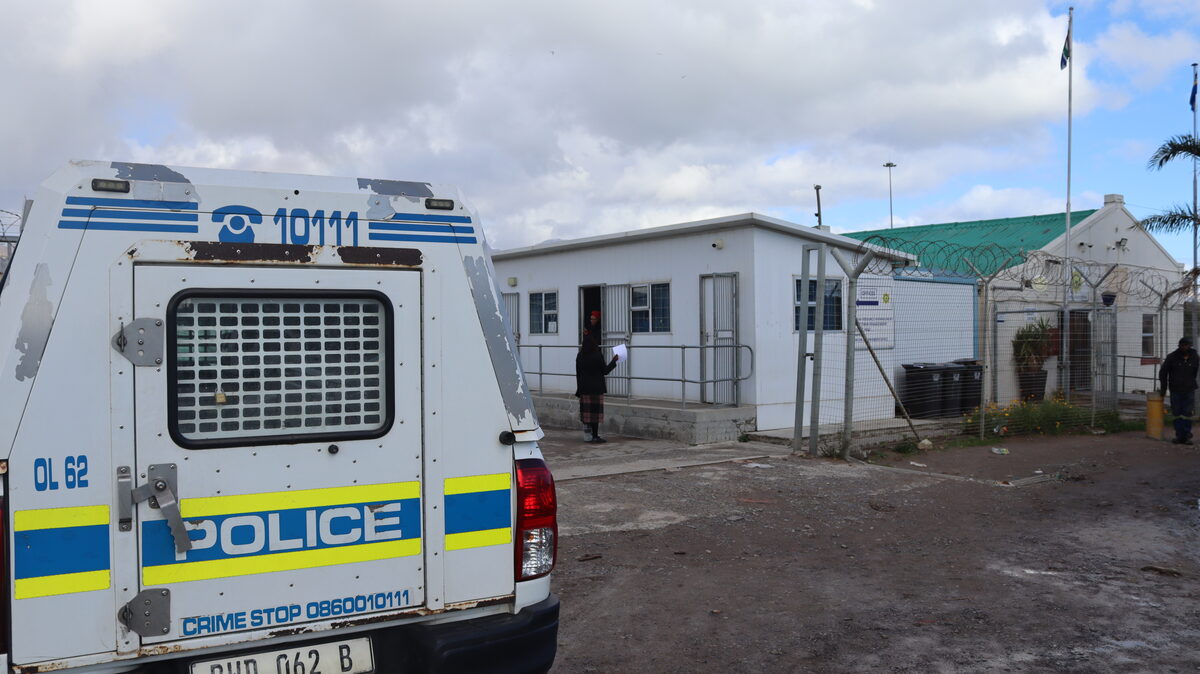
Population growth and crime statistics support claims of a policing crisis at Lwandle Police Station made during last month’s oversight visit by Benedicta van Minnen, chairperson of the provincial parliament’s Standing Committee on Police Oversight.
On Tuesday 2 June, Van Minnen, who is also the DA’s spokesperson for Police Oversight and Community Safety, conducted an unannounced visit to Lwandle Police Station. She claims to have found just 17 detectives carrying an average of 141 cases each, with one officer for every 926 residents in a precinct grappling with murder, robbery, drugs and gender-based violence (“Lwandle’s policing shortfalls exposed“, DistrictMail & Helderberg Gazette, 10 June).
“The visit to Lwandle was informed by the fact that it is a very rapidly growing area and the [statistics] cited by the police themselves are probably already out of date.”

DistrictMail & Helderberg Gazette assessed Statistics South Africa census data and the latest police crime statistics to examine the extent of the said “crisis”.
The 2022 census indicated Lwandle is the biggest policing precinct in the basin, serving 125 925 people, with its largest age demographic being between 30 and 34.
Population in the areas serviced by the police station had also monumentally increased. Ward 86 (Lwandle and the central and eastern residential grids of Nomzamo), which had 31 523 people in 2011, saw its number rise to 48 570 in 2022, and Ward 85 (Greenways, Asanda Village, Asla Park, Rusthof, Onverwacht and the north-eastern section of Strand above Broadway Boulevard), for which the police station shares policing duty with its Strand counterpart, more than doubled from 45 929 to 93 829.
This is an increase of 54% for Ward 86, while Ward 85 saw a 104% increase.
Van Minnen also claimed Lwandle had the highest contact-crime figures in the basin. The fourth quarter of the 2025-’26 policing statistics, covering January to March, showed 20 murders ranked the precinct 16th provincially; 17 cases of attempted murder ranked it 22nd in the Western Cape; two attempted sexual offences ranked it 12th; 15 cases of rape ranked it 18th; and five sexual assaults ranked it 26th in the province.
Van Minnen believes crime is a direct result of the resources available to the precinct. She called on the police and national government to upgrade Lwandle to a Colonel station and allocate additional personnel and vehicles. A “Colonel station” (Category C1) requires a minimum of 181 personnel and a maximum of 360, according to the police’s Theoretical Human Resource Requirements framework.
“The police station itself is not fit for purpose, being a repurposed RDP house surrounded by prefab structures,” Van Minnen pointed out. “It has no proper [holding] cells and staff are operating out of leaking sheds.”‘


She explained that in terms of policing best practice there should be at least double the detectives with a caseload of no more than 80 cases each. “Hence you can see that the resources need investment.”
Van Minnen has formally submitted a report to the provincial Department of Police Oversight and Community Safety, and the Western Cape provincial parliament has passed her motion on the resourcing crisis, including the need for a proper police station building.
“It is something I will continue to push as the people of Lwandle deserve the same levels of service as other areas,” she said, reiterating the DA’s call for expanded police powers to be granted to municipal and provincial authorities, specifically within the City of Cape Town.
Provincial police declined to respond to a extensive enquiry, stating that information about resource deployment, staffing and crime-combating strategies is not publicly disclosed as a matter of policy and operational security. They further stated oversight visits to police stations and discussions and outcomes relating to such engagements are not intended for public debate through the media.
Colonel André Traut, provincial police spokesperson, said resources are continuously assessed. “We wish to assure the communities of the Helderberg that all available resources are optimally utilised to provide an effective policing service.”
In October last year Lwandle received additional crime-prevention support when the City introduced Neighbourhood Safety Officers (NSOs) to the Helderberg, with the basin receiving more than 30 dedicated NSOs (“New frontline against crime“, 8 October 2025). But JP Smith, Mayoral Committee member for Safety and Security, clarified that NSOs were deployed by municipal ward rather than policing-precinct boundaries, with four constables and one sergeant per ward.
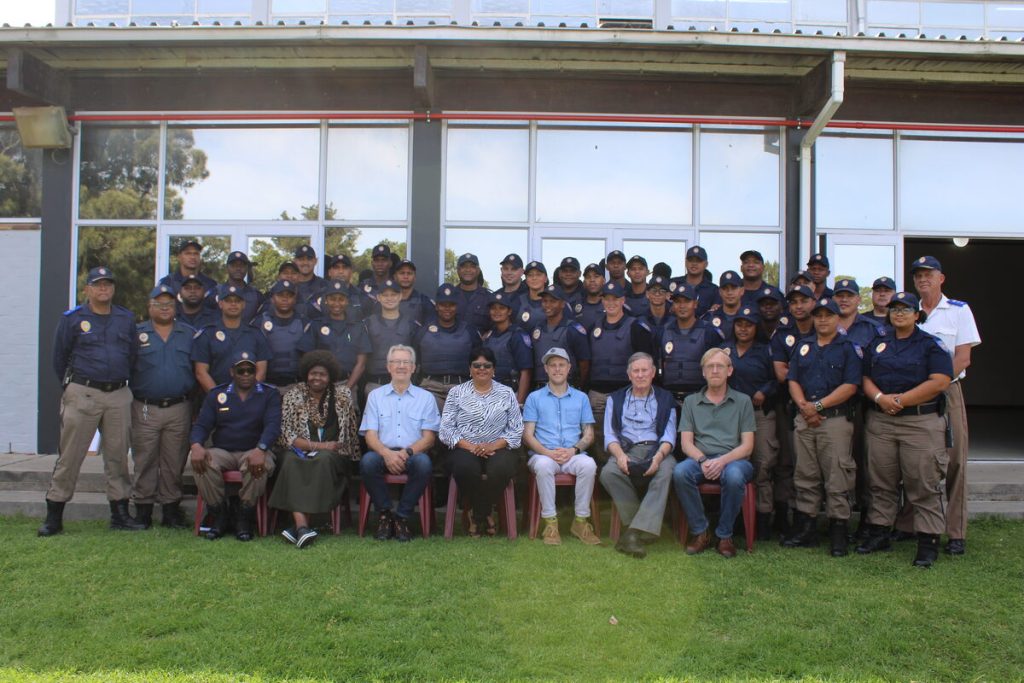
He said NSOs liaise with police as needed, but operationally their work is based on complaints received by each community to the City’s Public Emergency Call Centre.
The City also has a Law Enforcement Advancement Plan (Leap), but no officers from this programme are operating in the Helderberg. “Leap officers are not deployed based on police resources, but rather on crime statistics and in consultation with police,” Smith pointed out.
While Lwandle’s resource shortfall is the current focus, other stations in the Helderberg face its own challenges.
“As for the Helderberg, I have previously visited Gordon’s Bay Police Station, and it also has requirements that need to be met, but it is not as critical as Lwandle. It has different needs and priorities,” Van Minnen pointed out.

You must be logged in to post a comment.