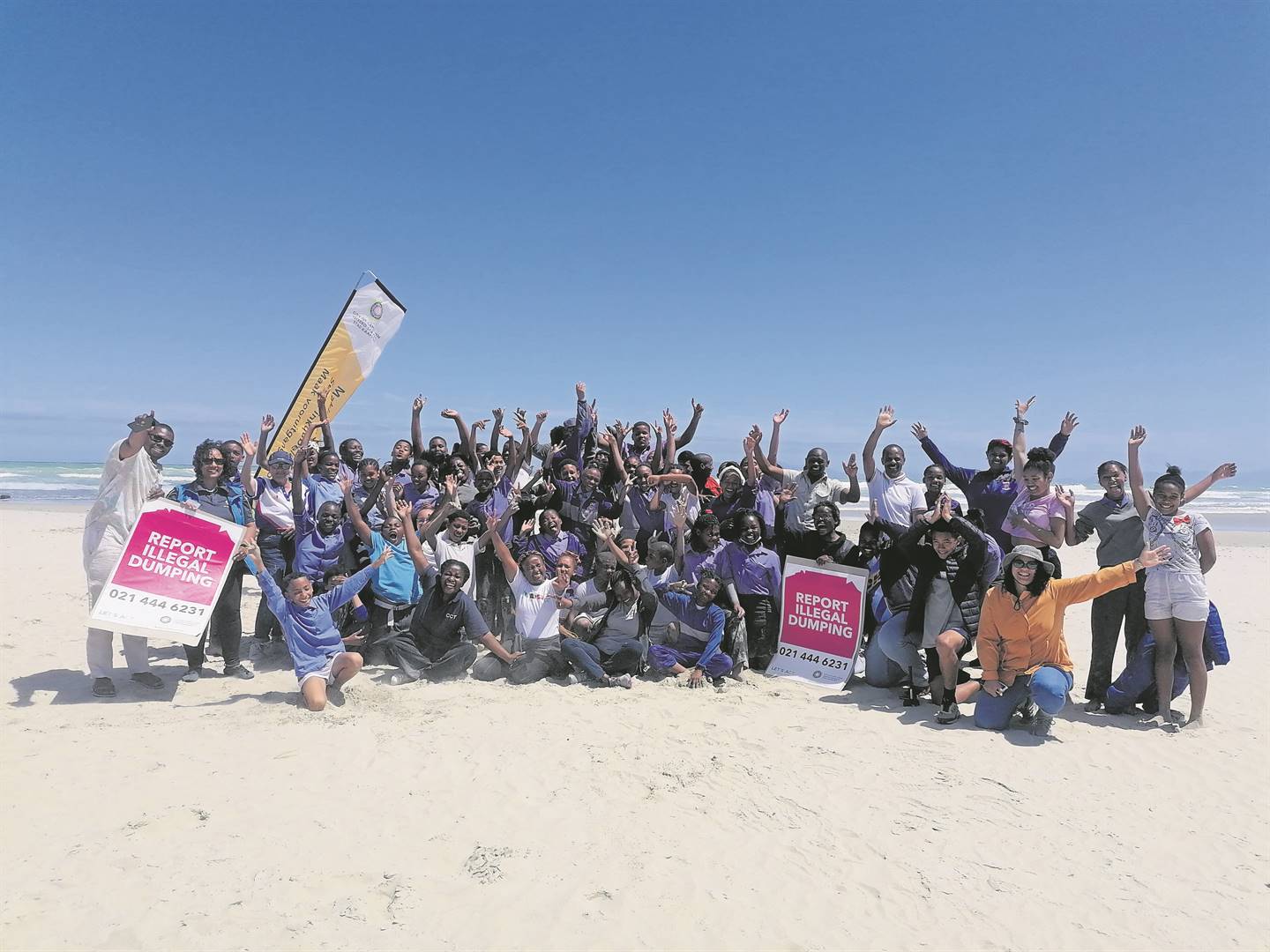

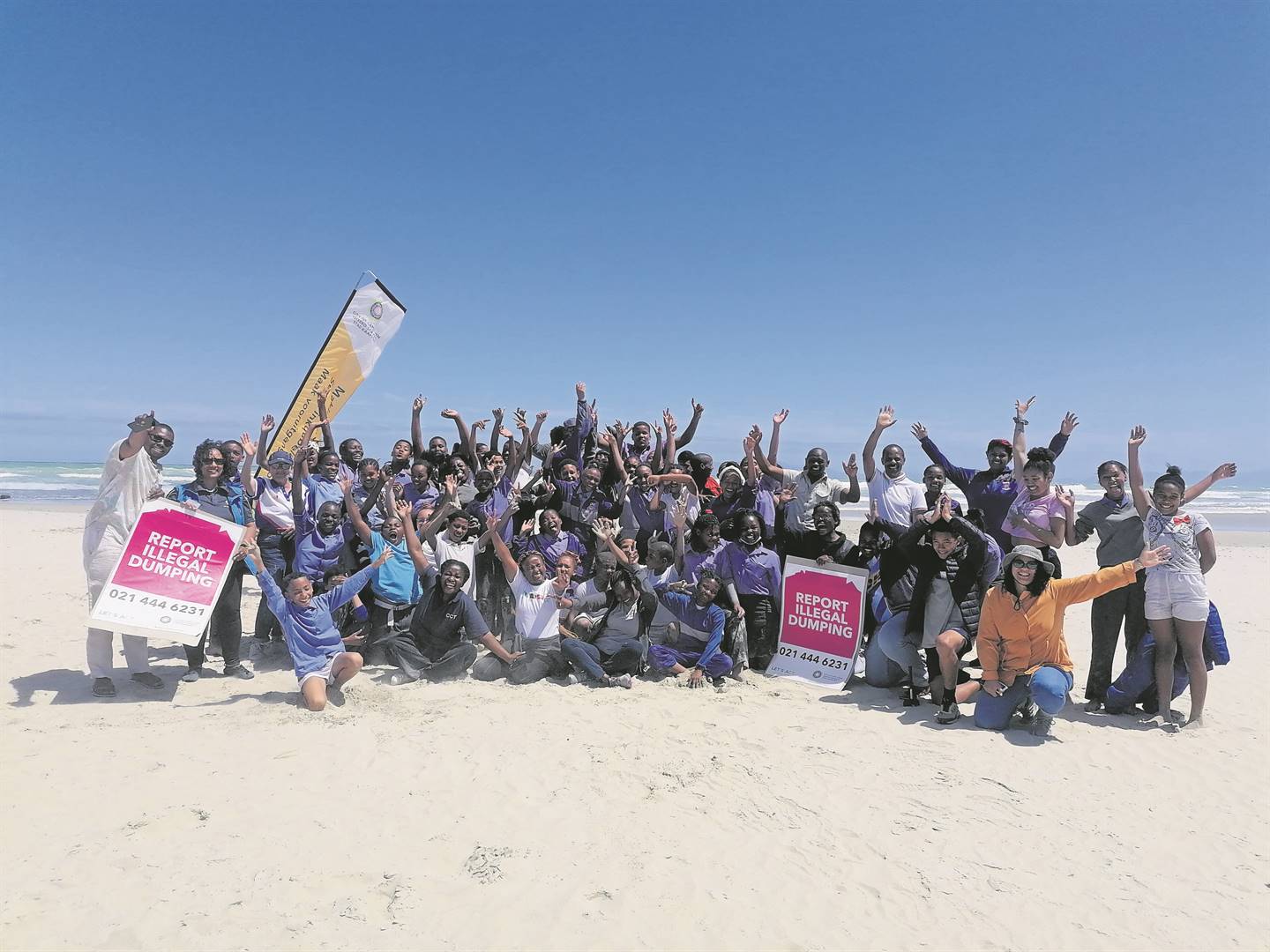
Sixty learners from Marvin Park Primary in Macassar recently participated in an exciting marine education programme in the Helderberg Marine Protected Area (MPA), hosted by pioneering shark safety and research organisation Shark Spotters during National Marine Month (NMM) in October.
The purpose of the day was to provide an unforgettable environmental experience to the learners by engaging them in practical hands-on marine and coastal conservation-related activities by experiencing a coastal ecosystem and learning about the crucial role oceans play, the impact of human actions on oceans, and how harmful effects on the marine environment are attributed to human recreation and the economy.
“NMM is an opportunity to bring about environmental awareness and change to address the state of the oceans and coastal environment, so that we may promote sustainable conservation practices that will benefit our present and future generations,” Shark Spotters said in a statement.
The City of Cape Town’s Environmental Management Department (EMD), Urban Waste Management (UWM), Recreation and Park Department, Coastal Management Department and Shark Spotters joined forces to bring about environmental awareness and action during this month, which led to hosting such an interactive educational programme to students. It also emphasised the importance of fostering partnerships with common purpose, in this instance giving back to oceans by protecting marine and coastal spaces.
On the day, the learners were encouraged to interact with their associated coastal environment, a fun, interactive lesson on the importance of having Marine Protected Areas in South Africa, their benefits and the iconic species one will find within an MPA area.
Focusing on the significant importance of the Helderberg MPA, a largely biodiverse area managed by the City of Cape Town, the aim of the lesson was to encourage the learners to understand why certain areas need to be protected and why MPAs are beneficial to humans and the environment.
The activities continued with an interactive lesson on a marine food web activity, which helped the learners understand the complex food webs and interactions that takes place within an ecosystem. Learners were also introduced to fun, teamwork activities on the beach with a focus on saving water as a resource and gathering an understanding of how important our natural resource (water) is for humans and marine animals.
The City of Cape Town, Recreation and Parks Lifeguards presented a beach safety and drowning prevention educational session. The learning programme emphasised active participation throughout the day, and it was specifically designed to support learners and teachers in being able to create meaningful relationships with their coastal environment, with a specific focus on Marine Protected areas.
“Some of the major environmental issues experienced particularly in communities can be attributed to a lack of environmental awareness and a lack of access to information and education,” said Taryn Van Neel, Education Manager at Shark Spotters, “resulting in a domino effect on our marine environment, which is one of our greatest of all shared assets on our planet. Our marine wildlife faces multiple threats, and it is our responsibility to take action. It is for this shared reason that we have come together in partnership to form a movement of public servants and local citizens to help protect and conserve our marine and coastal ecosystems.”