
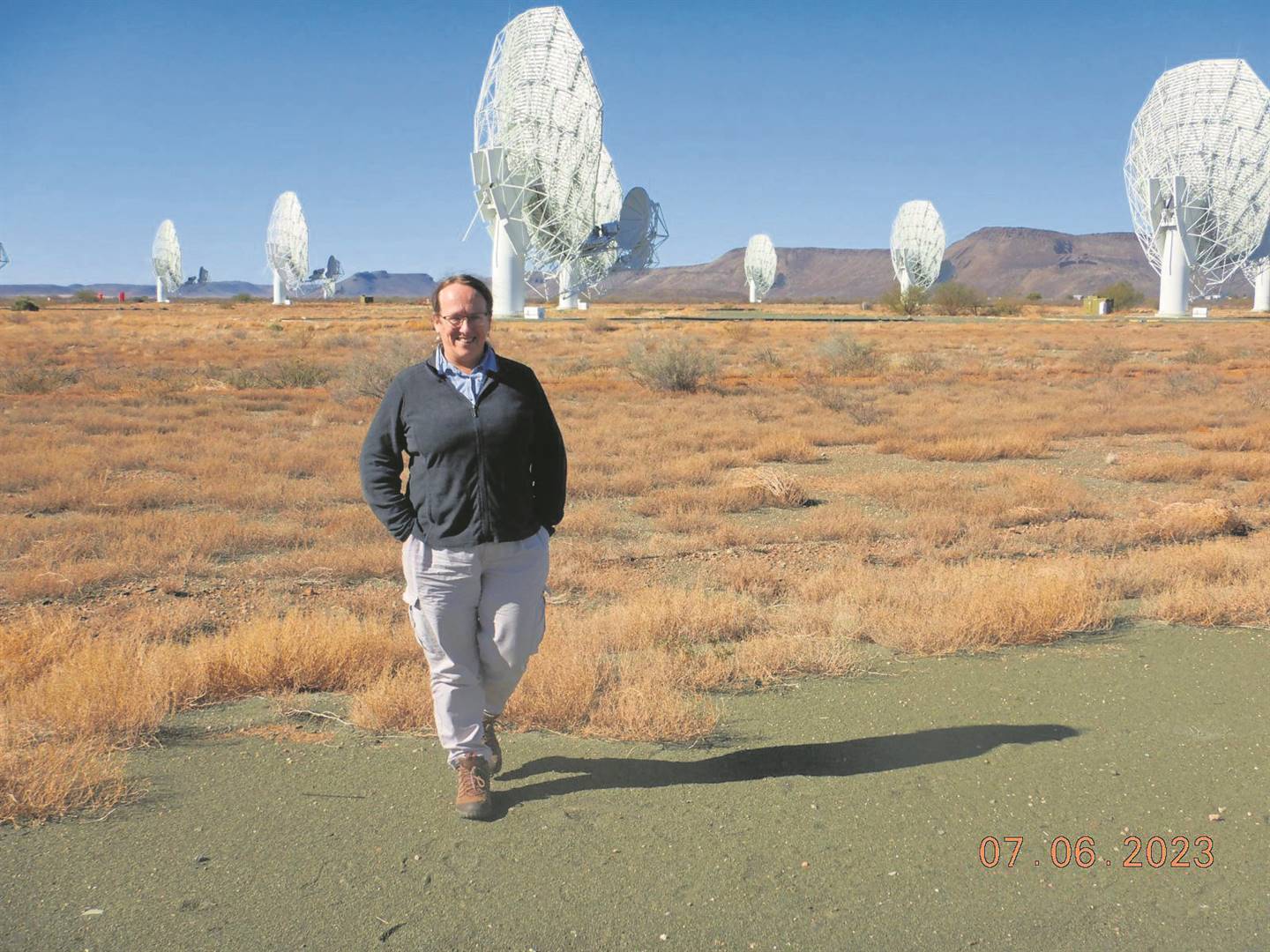
SmallTalX, in collaboration with the Gordon’s Bay Yacht Club, will host a public talk on radio astronomy on Tuesday 10 September. The talk will feature Sarah Buchner, the science operations lead at the MeerKAT Radio Telescope.
Buchner will tell interested members of the public about how MeerKAT is used to study pulsars (magnetised rotating neutron stars) and search for gravitational waves. She will also outline some of the recent groundbreaking scientific research being conducted in the Karoo.
As science operations lead Buchner is responsible for the scheduling of scientific work at the MeerKAT site. She has an extensive background in astronomy, having managed astronomical observation projects not only at MeerKAT, but also at the HartROA telescope and in the Antarctic.
Buchner was part of the South African Radio Astronomy Observatory (SARAO) team that recently discovered an object that is possibly neither a black hole nor a neutron star, but something lying at the boundary between the two. The results of this discovery were published in the prestigious journal Science.
The MeerKAT site consists of 64 radio antennae situated in the extremely dark environment of the Meerkat National Park in the Karoo. MeerKAT is an early phase of the Square Kilometre Array (SKA) project, hosted by South Africa. Local and international astronomers, cosmologists and physicists routinely make use of data from the facility.
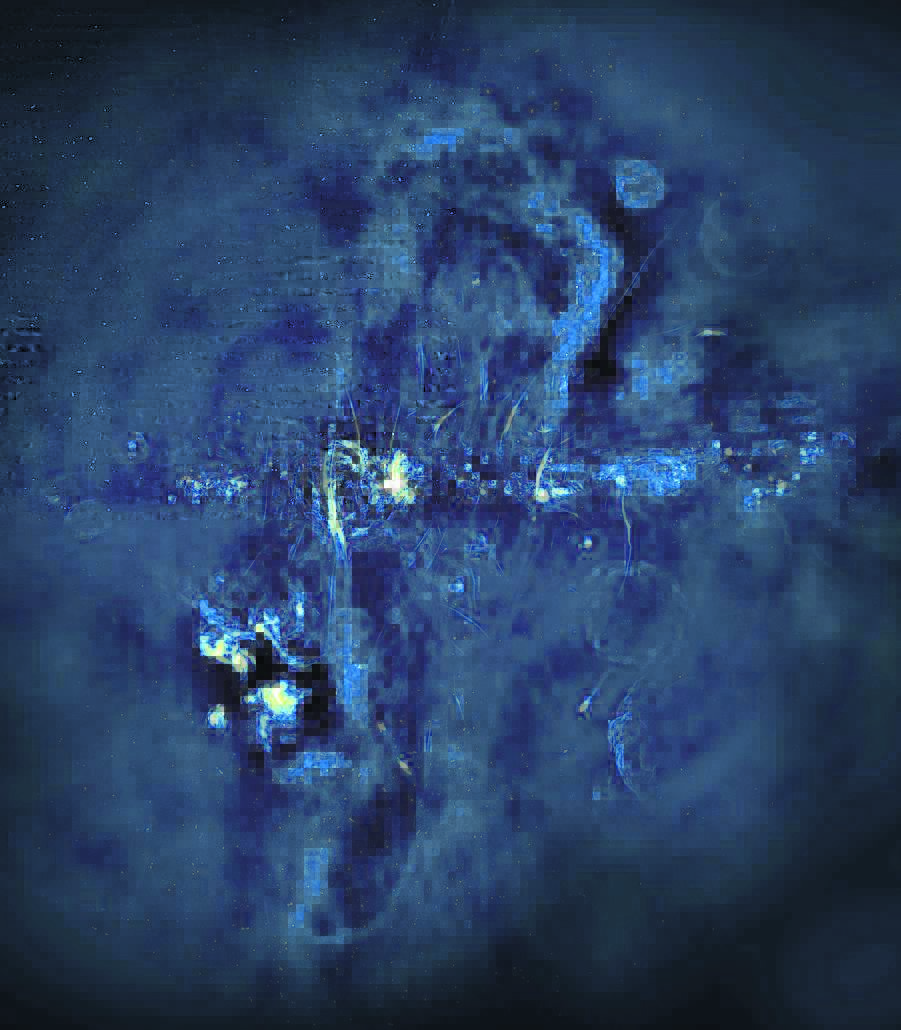
In March this year MeerKAT was used to discover an astonishing 49 new galaxies in a single three-hour observation. Another recent discovery was made in 2019, when massive radio bubbles were observed at the heart of our own galaxy, the Milky Way. These were emitted by our central supermassive black hole several million years ago.
Buchner is particularly interested in pulsars, which are giant rotating neutron stars. Pulsars emit radio beams as they rotate, just like a lighthouse flashes at a set rate. The MeerKAT facility is able to measure these emissions. Recently, an Italian team working at the site discovered eight pulsars, each rotating around 700 times per second.
Typically, pulsars have masses many times that of the Earth, but are densely compressed into an object with a diameter of only around 24 km. These extreme circumstances therefore provide physicists with a unique opportunity to study the physical processes that are fundamental to the universe.
This talk is the second SmallTalX event to be hosted at the Gordon’s Bay Yacht Club. In an extremely popular event in May, herpetologist Tyrone Ping spoke about the snakes and reptiles of the Kogelberg Biosphere Reserve.
SmallTalX regularly hosts events at the Franschhoek Theatre, on topics as diverse as artificial intelligence, shark behaviour, microscopic animals in the Antarctic, ancient Rome, national politics, classical music, and caracal research.
SmallTalX also distributes a popular newsletter, featuring information about scientific and scholarly discoveries made by South African academics.
Tickets to Buchner’s talk cost R125 per person, and includes a Q&A with the speaker. The talk takes place at Gordon’s Bay Yacht Club, at the Gordon’s Bay Old Harbour. Bookings can be made by emailing smalltalx.info@gmail.com, or via WhatsApp at 076 469 6485. The Club restaurant will be offering burgers, pizzas and soup, and there is a bar available.