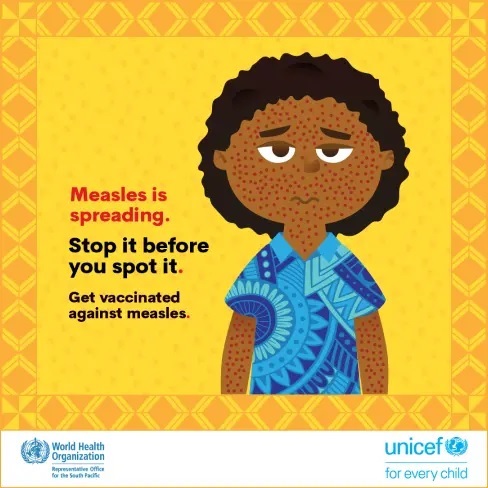

Parents are encouraged to ensure their children are vaccinated as a measles outbreak has been declared in the Cape Metro.
The National Institute for Communicable Diseases issued an alert of a measles outbreak in the Cape Metro district.
In line with the World Health Organization International Health Regulations, an outbreak is defined as the occurrence of three or more confirmed measles cases in a health facility, district or sub-district within one month.
The province had four laboratory confirmed measles cases from Tuesday 24 January to Friday 17 February, and as such an outbreak has been declared.
There is currently a national measles vaccination campaign underway to curb the measles outbreak, which kicked off after an outbreak in five other provinces. Children between the ages of 6 months and 14 years and 11 months will receive an additional measles vaccination at public schools, crèches and City of Cape Town clinics.
Since Monday 6 February 168 056 measles vaccines have been administered across the province to children in this age group.
City Health staff are visiting public schools and crèches to drop off the measles campaign pamphlets and consent forms.
“Parents and caregivers are urged to complete the consent form for their children as they cannot be vaccinated without consent,’’ said Councillor Patricia Van der Ross, the City’s Mayoral Committee Member for Community Services and Health. Children can also be taken to their nearest clinic for vaccination. The measles vaccine is very effective at preventing measles, and with a declared outbreak, it is our duty to ensure our children are protected.
If a child is absent from crèche or school on vaccination day, parents or caregivers can take the child to their nearest clinic where the additional measles vaccine will be administered.
Currently, children receive the first measles vaccination at the age of six months and the second one at 12 months, as part of the national immunisation schedule. However, some children do not receive these vaccinations for a host of reasons. The result is that every few years there is an outbreak, sometimes even a full-blown epidemic.
Measles is highly infectious and spreads rapidly from person to person. People of any age who are not vaccinated (and have not had previous infection) can get measles.
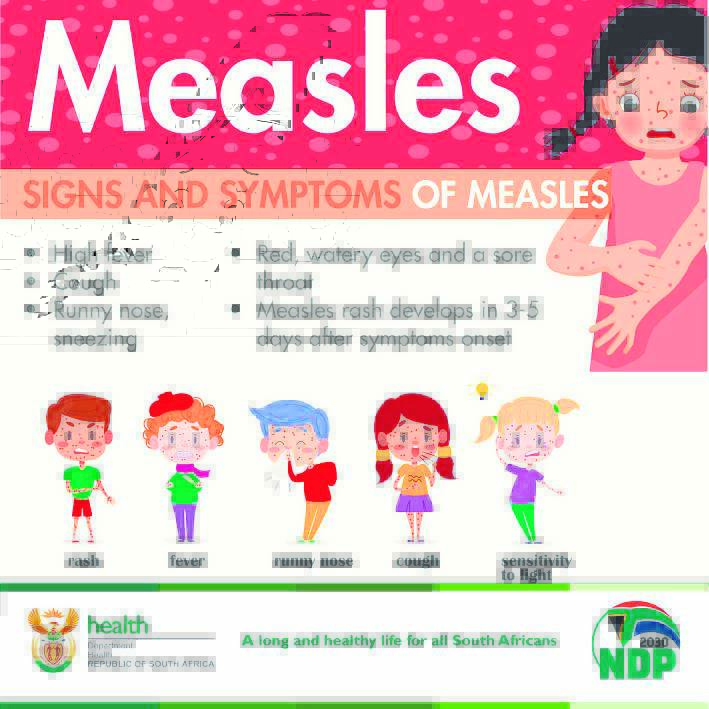
The symptoms include:
• A high fever;
• A rash;
• Runny nose;
• Cough;
• Red and watery eyes
Anyone who has these symptoms should be taken to their nearest clinic or general practitioner (GP) so that the diagnosis can be confirmed with a blood test.
Tips to care for a child at home who may have measles:
• Keep your child away from other people until the rash has cleared up for four days;
• Keep the room dark where your child is resting
• Make sure they drink a lot of clean water
• Eat healthy, fresh foods
“The vaccine is safe and provides lifelong immunity against the disease,” added Van der Ross. “We can protect our children from serious complications of measles such as diarrhoea, dehydration, middle-ear infection, brain infection (encephalitis), blindness and even death.”
The vaccine is free at all city clinics.
If your child experiences any major discomfort, as a result of the vaccine, visit the nearest clinic or your GP.