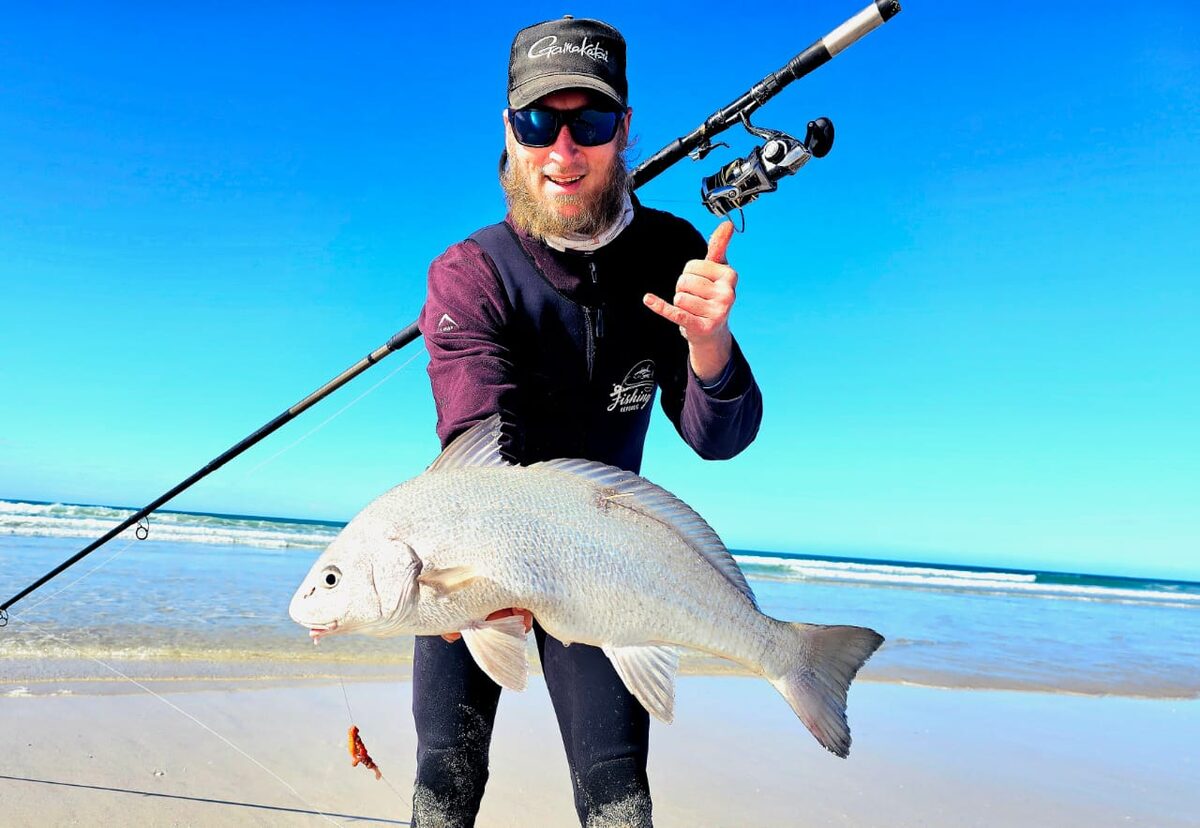

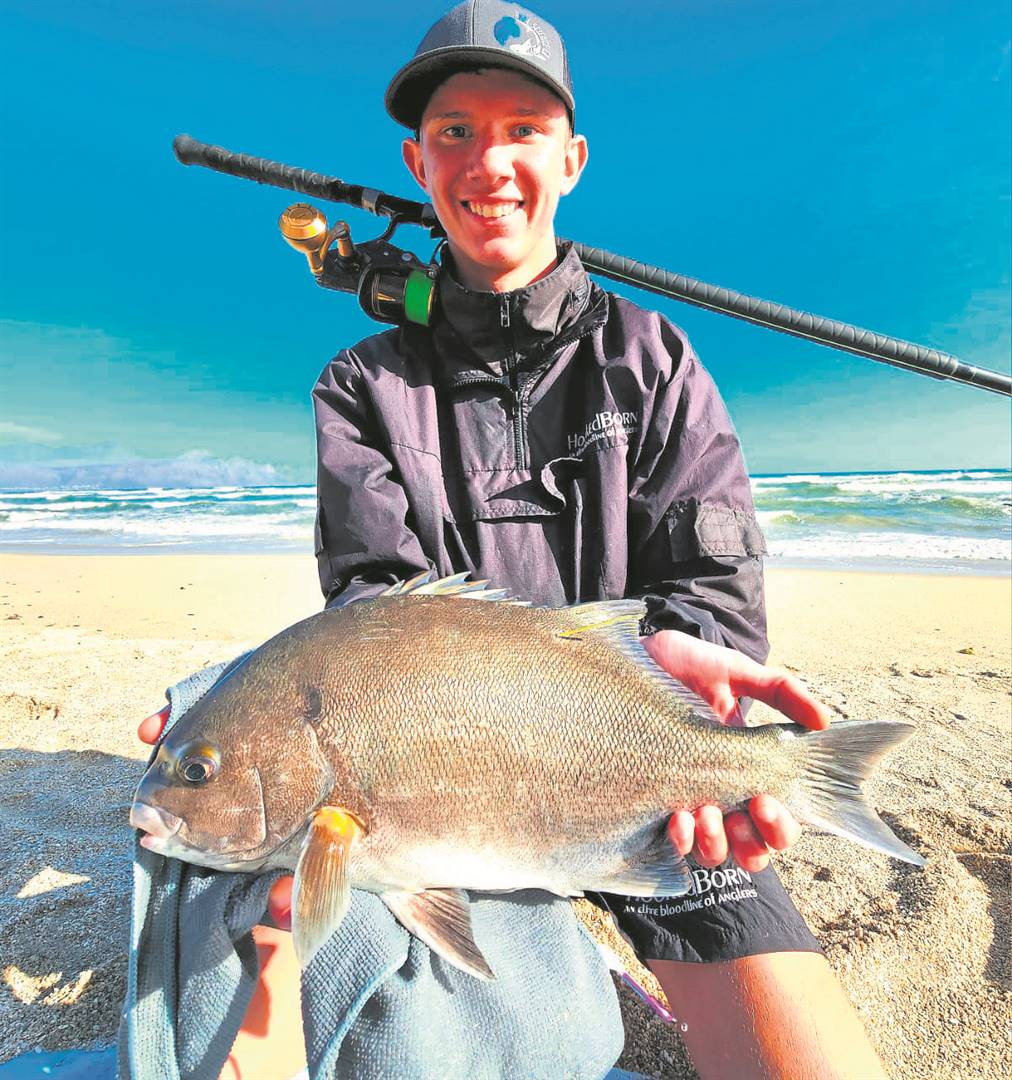
With Easter holidays here and hopefully a busy festive period, lots of new visitors and locals alike will enjoy our magnificent piece of coastline and the fishing it has to offer which usually heats up at this time of the year.
The summer fish are still around but the water temperature has slowly started to drop with the onset of autumn and more and more North westerly winds blowing, bringing a few cold fronts and rain. This drop in temperature and change in sea conditions brings with it a host of winter species which opens up lots of different opportunities and fish for anglers to target.
In this article we will discuss the summer and winter species one is likely to encounter during autumn.
Summer species
Kob – these fish are still around in fair numbers especially if we get some south easterly winds and a good bit of ginger beer coloured water, it’s always a good bet to fish with a piece of chokka or fresh fish baits such as sardine, maasbanker, mackerel or mullet baits.
Elf – This is always a good time to target these fish, as there always seems to be a lot of smaller elf during this period. But please stick to bag and size limits, it’s far to often that we see anglers taking bags full of baby elf. When will they ever reach maturity if we have people carrying on like that? There are always shoals or patches of bigger fish around, sardine and redeye are favourites but other fish baits such as streepie or maasbanker work just as well.
Geelbek – Geelbek don’t seem to show much of a pattern these days, but it is very possible that you run into these fish while targeting kob in certain areas. They readily eat fish baits such as sardine and redeye as well as mackerel and chukka baits.
Inedibles – having fished a few days before writing this article I can report that there are still plenty flat fish and shark species to be caught on the False Bay trip, we managed to land numerous blue rays, Eagle rays as well as spotted gully and smooth hound sharks. We also helped reelscienceco and shark spotters catch eagle rays for acoustic tagging, which is a great initiative and so important for studying and understanding the movements of these rays as so little is known about them. Vets from Two Oceans Aquarium were on the beach to do the operation and insertion of the acoustic tags and ensure the safety of the eagle rays.
This is a favourite time of the year for me as we start seeing the arrival of the winter edible species, let’s take a closer look at them below:
White steenbras – this is a favourite species for many anglers as the give you a proper first run, hence being known as a steamer or steam train. These fish grow to over 25 kg but fish that size are extremely rare along our coastline due to overfishing. We all need to take care of these fish and tag and release as many as possible. These fish are great fun to catch and one can target them using light tackle. They love to eat prawns and worms but I have caught them on sardine and chokka and even on red bait under the right conditions.
Galjoen – our national fish is really underestimated by most. Galjoen are super fun and technical to target and any decent size fish gives you a proper go for your money especially between foul reef where they love to feed. One can fish fairly light for these fish depending on the area one can target them with red bait and mussel being the most commonly used baits. Look for working white water next to rocks or reef areas. You can also fish for them in a bigger sea they don’t mind it when the water is strong and churning and kicking up white water with foamy areas.
Belman – these fish feed in both sandy/rocky areas and feed close to the shoreline on prawn, worms and crabs. I have caught most of my Belman on clean white sandy beaches, fishing very light with a 2/0 size hooks and 8 kg fluorocarbon hook shoots. But I have also encountered these fish in areas where there is plenty rock and reef while fishing for galjoen. They like to use caves and kelp areas or reef overhangs to rest in. These fish are usually very dark and copper coloured compared to shining silver when caught on the beach.
Wildeperd, blacktail and hottentot fish can also be added to your Easter target species list, they will eat the same baits presented for galjoen and are usually caught in the same holes and gullies as your galjoen. Always a welcome surprise when you catch a nice big wildeperd, they are a beautiful species and fight hard for there size. Please remember that all our smaller species like galjoen, wildeperd and blacktail are extremely slow growing fish, we need to give them a chance to get to a breeding size, even though small these fish have been recorded to be more than 30 years in age and older.
Let’s please start looking after our fishing spots and the ocean as a whole. I have seen first hand how the fishing has gone downhill over the past 20 years and that’s not only me the facts show it. We are in desperate need of change, and if we don’t do it soon we will lose our beloved species we all enjoyed catching as youngsters and still do as adults. Let’s stand together and make a difference, instead of turning a blind eye to poaching, which will affect us all in the long run! Let’s all get a tagging kit; you can visit (ori.co.za) and do your application for it there. It all makes a difference, and you are contributing towards understanding and saving our fish species.
To learn more about fishing or for any advice on tackle and equipment, swing by the store, Fishing Republic which is situated at 73 Beach Road, Shop 6, Helderberg Centre. For more information, call 072 552 4400. Feel free to check out @fishingrepublicstore on Instagram or fishing Republic on Facebook.