

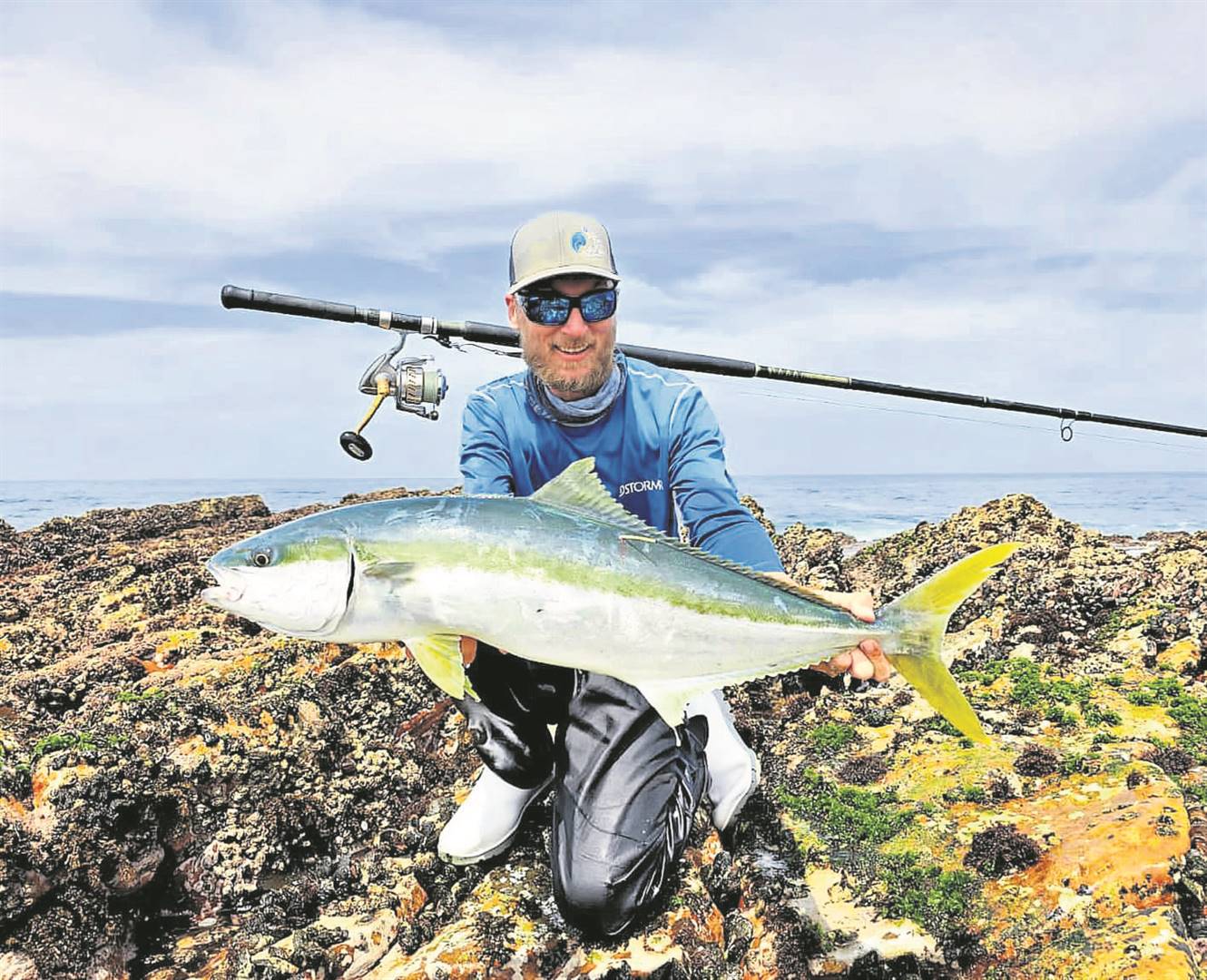
Elf is a very popular angling species among many anglers.
They are quite easy and fun to catch – well, easy once you get the hang of that “tap, tap, tap” type of bite.
If you are not quick enough these fish will take your whole sardine or fish bait off before you even know it, once you figure it out though, it is possible to catch them throw for throw – in these cases please remember to stick to the bag limits of four per person and 30 cm minimum size.
Elf are also great to eat. There is nothing quite as good as eating a freshly braaied elf straight from the grill. They are also a great bait; many guys use them as live baits to target many predatory fish including kob, garrick, bigger elf, sharks and rays.
Although they are basically one and the same fish, anglers tend to differentiate between the green elf (averaging 0,5 kg to 1 kg), which occur in large shoals, and the so-called blue elf, which is not so plentiful but bigger. Specimens of up to 10 kg have been caught.; the South African record elf being a whopper of 10,2 kg, caught at Cape Recife.
During summer they are most abundant along the Cape coast. They are common along the whole South African coast, and can be found on sandy beaches and rocky areas with a combination of sand as well. They can be as close as 10 m in front of you on the beach or a few kilometres offshore. They are, however, generally an inshore fish where they like to hunt mullet, strepie, blacktails and so on in the surf zone.
For smaller elf a 4/0 hook is perfect. When the bigger blue elf are around, nothing smaller than a 6/0 up to a 8/0 will work. To prevent the elf from biting through your nylon trace, use 8 to 10 cm of piano or plastic-coated wire between your line and your hook or lure. I prefer to use a thicker piece of .80 mm up to 1,2 mm nylon – it just gives you the opportunity at catching that shy kob that’s feeding on the elf. The wire also tends to kink after a few fish and needs replacing, which can be difficult when the fish are feeding.
Elf are most active at dawn and dusk, seemingly the best time to catch them. They will also feed during the day, especially when the sea is rolling with lots of white water for them to hide in and ambush their prey. They also like the water to be a ginger beer colour. If there are bait fish trapped inshore in a bay or gutter, then you can be sure the elf are not far behind.
The fresher the bait the better, and the sardine is the most commonly and most successful bait for elf. Although baits are the most commonly used method to catch elf, one should never leave home without a couple of lures.
The good old silver Toby spoon made by Abu is a deadly and versatile spoon, which has accounted for many elf over the years. Any silver type spoon which doesn’t sink too fast will work well.
Stickbaits, which look similar to a strepie, mullet, mackerel or maasbanker have also proved deadly in catching elf. You really get a committed bite and a solid hook-up with most bites. Because the lure looks so realistic, the elf really commits to slicing that lures tail off and the hook often gets them solid.
A deadly stickbait I have had great success on is the Cid shiverstick range, as well as Rapalas range of sinking and sub surface lures. Please pop into Fishing Republic at anytime to chat to us regarding different kinds of lures and how to fish them.
Tackle for elf does not need to be extremely heavy; they are fairly clean fighters and will not cut you off easily. They are, however, masters of shaking hooks out, so a rod with a soft tip action will be well suited. I would say a 12 ft to 13 ft rod, which can throw 2 to 5 oz, will be perfect, along with 20 lb to 30 lb braid or nylon and a standard .60mm leader.
Spinning setups can range from 8 ft to 12 ft rods, which can throw a half to 2 oz lure. In all, 20 lb braid will be more than an idea; it will also help get some distance on the lighter lures in the wind.
Elf are really a fun and sometimes frustrating fish to target. When I was a laaitie, my oupa taught me to catch elf. That’s where my passion – and I’m sure thousands of other anglers’ passion – for fishing also started.
We have to learn to conserve and look after the fish we have left, as things are not looking good for future generations. I have personally seen – no scientific study needed – how difficult catching fish has become. It’s a sad reality, but one we can have an impact on if we stand together as anglers and look after our own pieces of magnificent coastline we are blessed to have at our doorstep.
V Please feel free to visit us at Fishing Republic in Beach Road, Strand, or contact us on 072 552 4400 or Kegan@fishingrepublic.co.za.

