
The Helderberg Stroke Support Group (HSSG) celebrates three decades of success this year and desperately calls on the compassionate community to help the non-profit organisation reach their 40th birthday.
HSSG has been assisting stroke survivors and their families in the basin and surrounding communities for 30 years, and continue to rely on financial assistance to enable them to do the valuable work they do.
“[We are so] excited to have been a part of the community and making a difference to those affected by a stroke for the past 30 years, but also incredibly nervous for what the future holds for HSSG,” said Claudia Andrews, HSSG organisational manager.
“I am so incredibly grateful to each and every person in this magnificent organisation. The passion, determination and never-say-die spirit that we see coming from our group members is awe inspiring. Our big birthday wish is to make it to 31, 32, 33 and eventually 100.”
Considering the milestone, Andrews shared recent highlights including the HSSG’s first wellness day held in partnership with Helderberg FM last October, its first pop-up shop offering pre-loved clothing items, being selected as the beneficiary for the Spookhill Challenges hosted by Helderberg Harriers running club and Timbuild for a second year, and simply being able to keep support groups operating.
“Post covid and with the current economic situation life has become challenging for an NPO. Last July, we submitted our application to the National Lotteries commission and in March received the sad news that they were unable to assist with funding due to a depletion of funds on their part. This has placed us in a situation where we have had to stretch what funds we have been able to secure for as long as possible while we wait for the outcome of this year’s application. Unfortunately, this has also meant that our beneficiaries have been affected – we have had to stop our transport service to our rehabilitation group,” elaborated Andrews.
“This has shown the resilience and commitment of our group members because come rain, snow, and sunshine those that can find a way to get to the venues do. With every upside there is a down as this has meant many of our beneficiaries who relied heavily on the taxi services are not able to come to the group. As you know accessing transport for someone with a disability is already challenging and limiting, leaving them without their weekly home away from home. We have actively tried to secure more funding from other donors and are not going down without a fight. We serve approximately 400 stroke survivors and their families and have been a part of their lives and the community for 30 years and we want to continue to provide rehabilitation and support services.”
The organisation is managed by a committee of 11 members, comprising health professionals, stroke survivors, family of stroke survivors and volunteers. It also operates five rehabilitation groups within the Helderberg and a recent addition in Grabouw. These groups hold weekly meetings and provide an amazing network of support for stroke survivors and their families.
HSSG runs four programmes, namely: Rehabilitation, Training and Education, Stroke Prevention, and Advocacy for the rights of persons with disabilities.
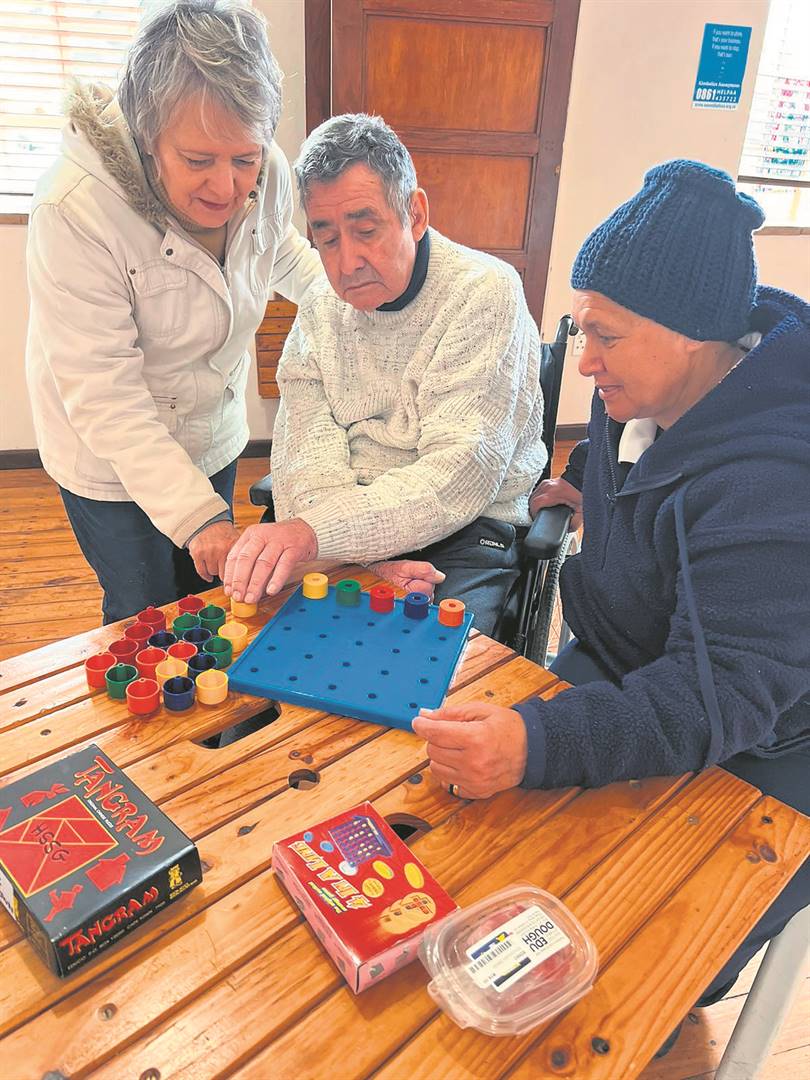
Rehabilitation: Exercises, cognitive and perceptual stimulation, speech-related activities, psychological counselling, lectures on topics related to stroke and social activities are offered. Physiotherapists, psychologists, speech and occupational therapists with a special interest in stroke run the groups with the assistance of volunteers. All services offered are free of charge.
Training: This is done by rehabilitation therapists with a special interest and experience in stroke rehabilitation, and is directed at home-based carers, nursing staff and volunteers who are interested in assisting stroke survivors. The following aspects are covered: general information on stroke, risk factors, stroke prevention, speech impairments, mobility, cognitive and perceptual impairments and home care.
Stroke prevention: Informative lectures on stroke and risk factors are given regularly to the general public. Hypertension (high blood pressure) is recognised as the major risk factor for stroke. Community outreaches are held, where information pamphlets on stroke and free blood pressure testing is offered. Monthly blood pressure testing is done at all the HSSG sub-groups.
Advocacy for the rights of persons with disabilities: HSSG strives to drive social change and address social justice for persons with disabilities by giving such persons, who are a marginalised sub-population, a voice, by ensuring that stroke survivors serve on both the HSSG committee and on all the HSSG subcommittees; connecting people with the right agencies and referral networks so that they can overcome issues such as lack of housing and access to grants; improving access to health care and rehabilitation services and by operating rehabilitation groups in the community; lobbying for transport for persons with disabilities in the community; improving participation opportunities for stroke survivors and persons with disabilities (address occupational deprivation by engaging members in meaningful occupations); and educating the public on the rights of people with disabilities.
Apart from monetary assistance, the HSSG wish-list comprises donations toward a taxi service, paper, printer ink, bread, peanut butter, jam, tea, coffee, milk, sugar and drinks like Oros which are used during group meetings for refreshments, and clothing items for the pop-up shops; and initiatives aimed at fundraising opportunities as well as Back-a-Buddy campaign champions.
Anyone willing to help the organisation celebrate their birthday or for donations, contact Andrews on 079 612 8903 or omhssg@gmail.com.