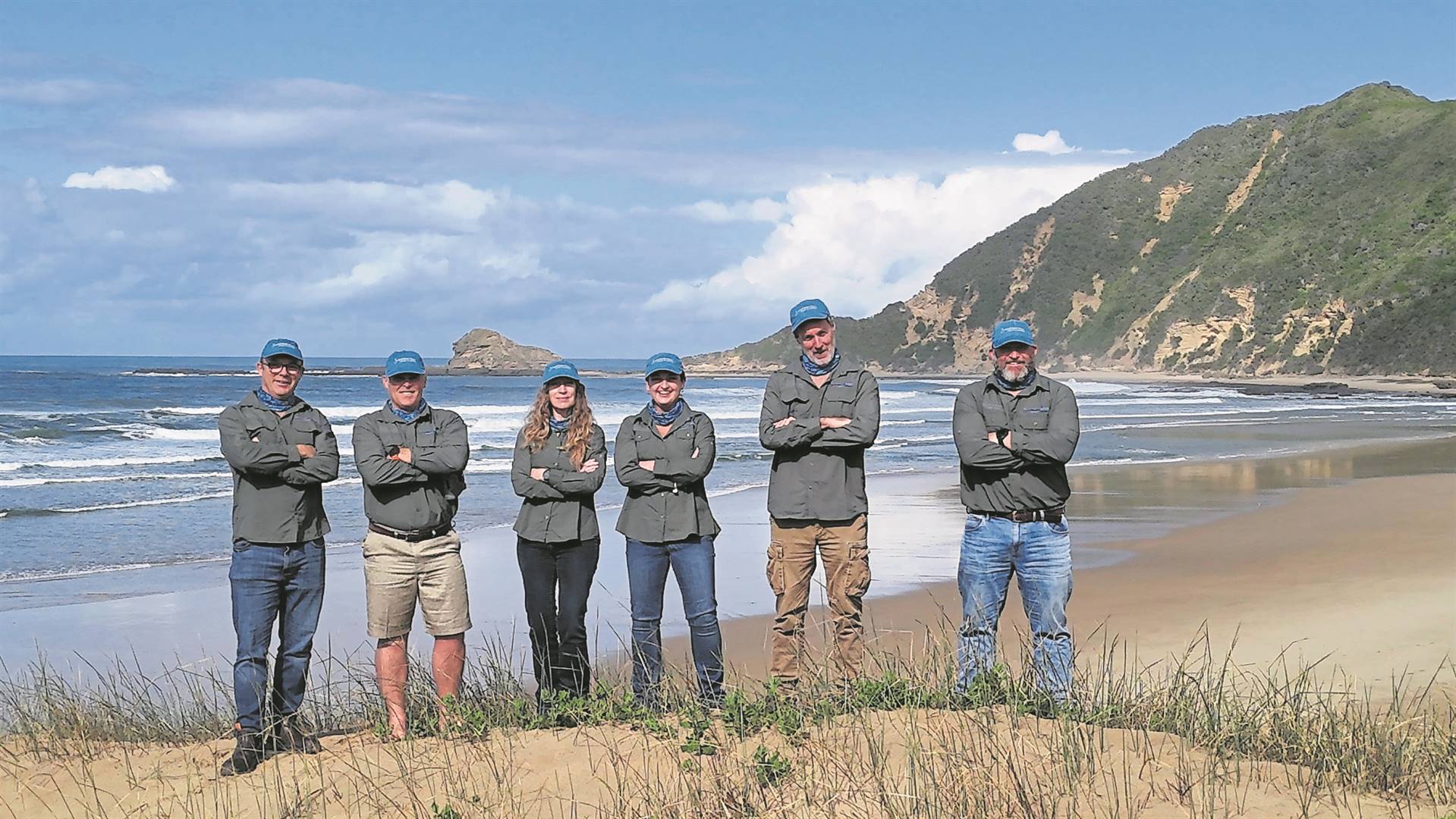


The 2024 Strandloper project took place over 12 days in October where a team of six hikers, supported by their backup driver, hiked along the shoreline from Pringle Bay to Struisbaai, a distance of 228km, documenting all the plastic and fishing debris that they could find.
Using a bouquet of five survey methods to categorise types of plastics and determine their density and distribution along the shoreline, their objective was to determine the source of plastic pollution and where it flows into the ocean.
What started out as a desire to learn more of the impact of recreational fishing along the southern Cape coastline has, for the Strandloper Project, grown into an extensive series of coastal expeditions surveying the density and distribution of ocean plastic waste.
Since 2019, in their first series of expeditions, volunteers of the Strandloper Project have hiked 960 km along the shoreline between Hermanus and Cape Recife. Depending on if the shoreline is rocky or sandy beaches, the team of volunteers hike between 15 km and 30 km per day, surveying for plastic pollution, washed up fishing gear, marine fauna and African Black Oystercatchers.
Using a collection of five survey methods, the team of six hikers collected more than 14 500 records of plastic pollution.
According to the feedback report, the range of items suggested that the bulk of plastic washing up on the beaches originated from land-based urban settlements and that it flows into the ocean through municipal infrastructure and gets flushed from rivers during flood pulses. In essence, coastal communities are connected to inland urban areas by a stream of plastic waste, which after drifting on currents, eventually washing up on the shoreline.
Density, shape and size of items, driven by winds and currents influence how far certain types of plastic drift and ultimately where it washes out. Along the section of shoreline hiked during this expedition, most of the plastic was recorded on the western facing shoreline, with lower densities recorded on the eastern facing sections.
In addition to surveying plastic and fishing gear, they also used the opportunity to document marine fauna on the expeditions. A species that they have collected valuable data on are the African Black Oystercatchers. This year, the total number of oystercatchers that they recorded was 1 204, with a mean density of 5,3 birds/km. In comparison with their 2021 expedition data for oystercatchers, it was encouraging to record an overall increase of 6,4% in numbers for the section of shoreline between Struisbaai and Grotto Beach.