
The endeavours of several key role-players dedicated to promoting awareness of the plight of undocumented children received a much-needed boost following a special visit by the Western Cape Commissioner for Children Christina Nomdo, who had been called on in support of the joint initiative intended to culminate in the launch of an official campaign in August.
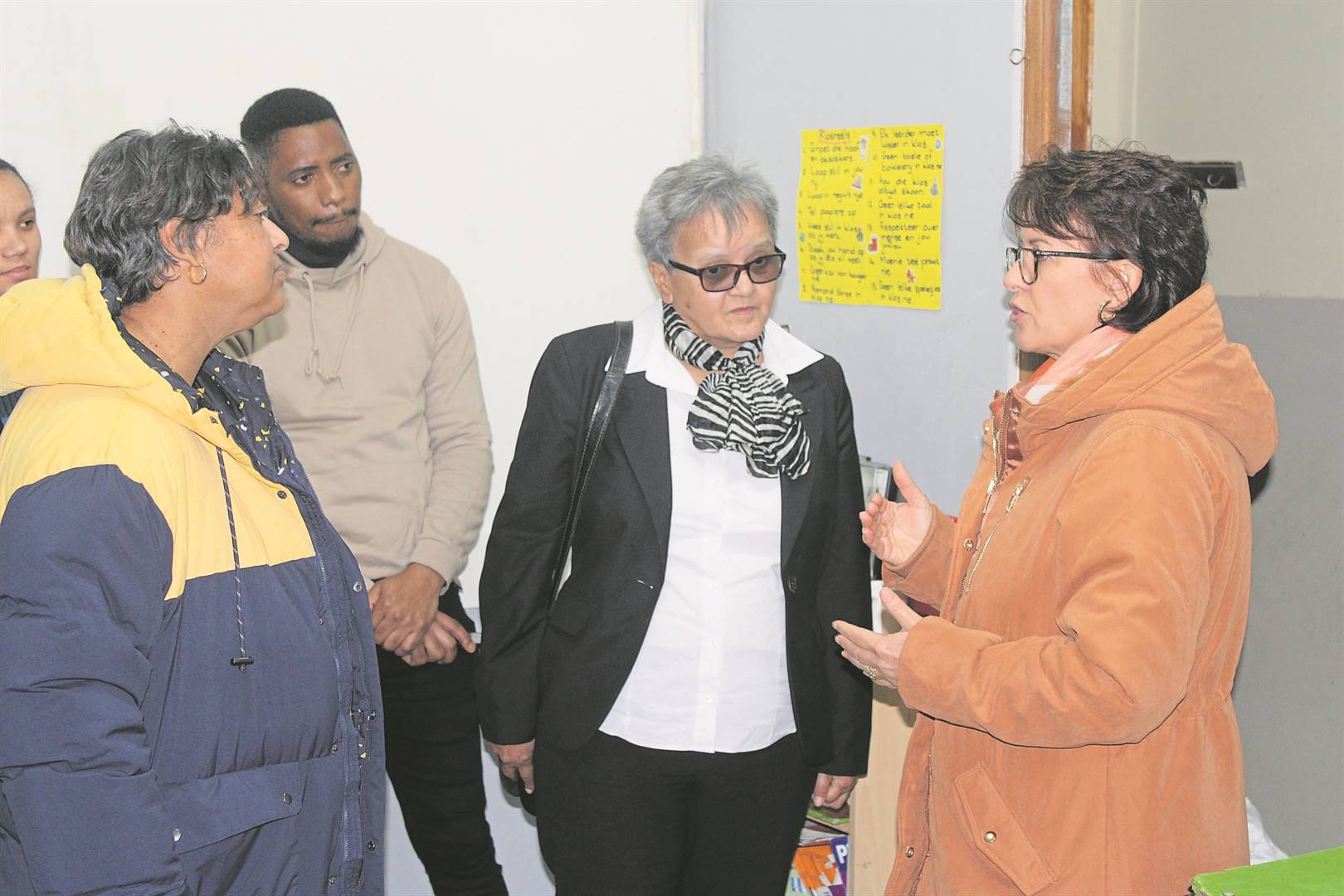
Hosted by Strand Magistrates’ Court’s judicial head and magistrate Veronica da Silva on Tuesday 20 June, Nomdo was shown the inner workings of the local judicial system and accompanied on a tour of the recently flooded Tereo Community School, which inspired the campaign, after staff had turned to authorities to assist with a substantial number of learners whose births remained unregistered.
According to Ann Coetzee, CEO of Tereo, the school currently has 21 learners who do not have birth certificates, which hampers their registration at mainstream schools. In addition to lack of access to educational institutions, learners’ educational advance is at risk and participation in sport is limited as fraternities require proof of age.
“We were getting no help or support at all from Home Affairs and local social workers,” she said. “We had waited up to six months to get a response from Home Affairs and on going to the offices in Paarl, where late registrations of births are done, we discovered our file hadn’t even been opened and no-one was prepared to assist.”
Coetzee turned to Da Silva, who put her shoulder to the wheel in hopes of assisting the school, which not only champions late birth registrations for its learners, but also pays for DNA testing required in the case of the child’s birth mother having died.
Da Silva confirmed the school had approached the court last year, requesting assistance. It, in turn, roped in various social-services organisations, including Badisa, ACVV, the Somerset West Department of Social Development as well as Scalabrini Centre. “We are still in this process, which can take some years to finalise,” she added. “These cases are reviewed by the court every two months, so the court can monitor progress.
“The court has also been working with Badisa and we intend to launch a community awareness programme to highlight the substantial number of children whose births remain unregistered. These undocumented and unregistered children are denied their fundamental and constitutional right to a nationality, which has consequences.”
Da Silva added the purpose of Nomdo’s visit was to introduce her to the community and provide insight into the work of, and challenges faced by, Tereo School, a special-purpose school started in 1999 for the basin’s street and at-risk children who, due to some social or traumatic event or circumstances, fell out of the formal education system or had never been part of it.
The Somerset West community school’s significance
“Tereo School has one goal – to break the cycle of poverty caused by little or no education,” elaborated Coetzee. “Our school’s holistic programme is designed to transform the lives of impoverished children and embeds strong character development throughout our programme, which is complemented by professional health care, nutritious meals, psychosocial counselling, family assistance and support. We focus on the whole child.”
She also pointed out that Tereo, as a registered non-profit organisation, has to cover all expenses, which include teacher and support-staff salaries, transport for learners to and from school, providing three meals a day to all learners and overall running costs of operating a school. The subsidy received from the Western Cape Education Department covered only 15% of the expenses; all other funds are raised through fundraising initiatives and donors. “Poverty touches every aspect of a child’s life. The child born into poverty almost always remains trapped there unless significant interventions occur. Left unaided, impoverished children face a lifetime of physical and psychological trauma – illiteracy, malnutrition, disease, low self-esteem and lack of opportunity. These are among the root causes of poverty that the Tereo School programme overcomes.”
Following the recent flooding of its premises, the school has received the support of the Imibala Trust, which has allowed learners access to its facility until the end of Term 2, and especially so it could complete all its tests and examinations successfully.
Feedback on flooding frustrations
Tereo has had to undergo extensive repairs, cleaning and replacement of damaged items after the school, operated from the old ambulance building off Victoria Street, Somerset West, was flooded for a third time on Thursday 8 June (“Flooding wreaking havoc,” DistrictMail & Helderberg Gazette, 14 June).
The school grounds were submerged in water due to heavy rains that caused the banks of the Lourens River, which runs parallel to Lourens and Victoria Street, to burst, resulting in significant damage. The flooding of the school’s main building has resulted in damage to the offices, kitchen (including essential appliances for refrigeration), bathrooms as well as numerous classrooms, the computer and two storage rooms housing food. The school also suffered the loss of valuable textbooks and workbooks, educational equipment, carpets and food.
While the school has initiated filling sandbags, which run along all the main building’s wall and are placed at all entrance ways to curb flooding, it has not prevented its grounds from being water-logged and sustaining damage every time it rains.
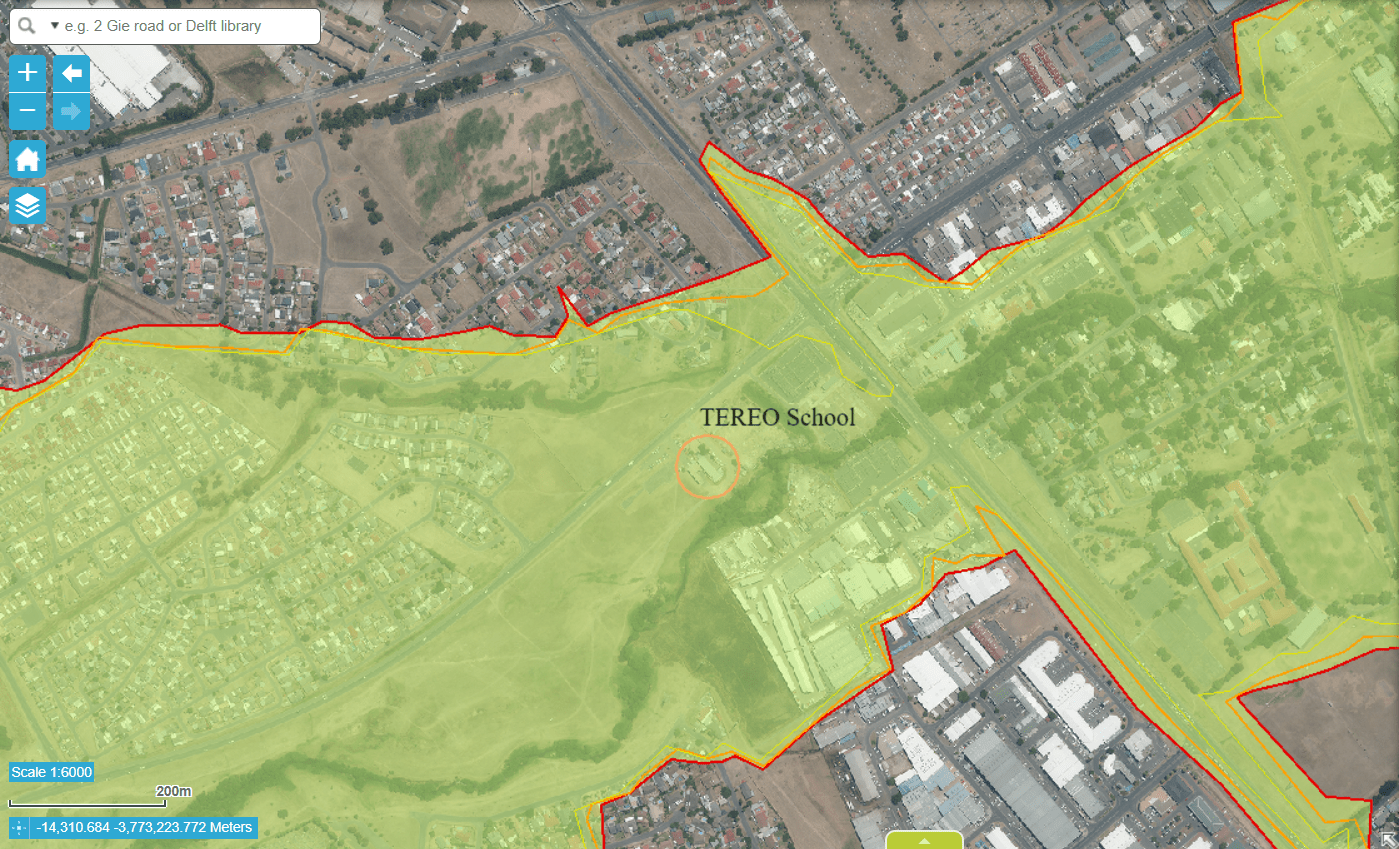
An enquiry on future flooding prevention submitted to the City of Cape Town in light of the school’s flooding on Friday 9 June was finally responded to on the 22nd. “While every effort is being made to reduce the impact on the area, with works undertaken to improve the river’s flow, the school is situated in a floodplain,” said Councillor Zahid Badroodien, Mayoral Committee member for Water and Sanitation.
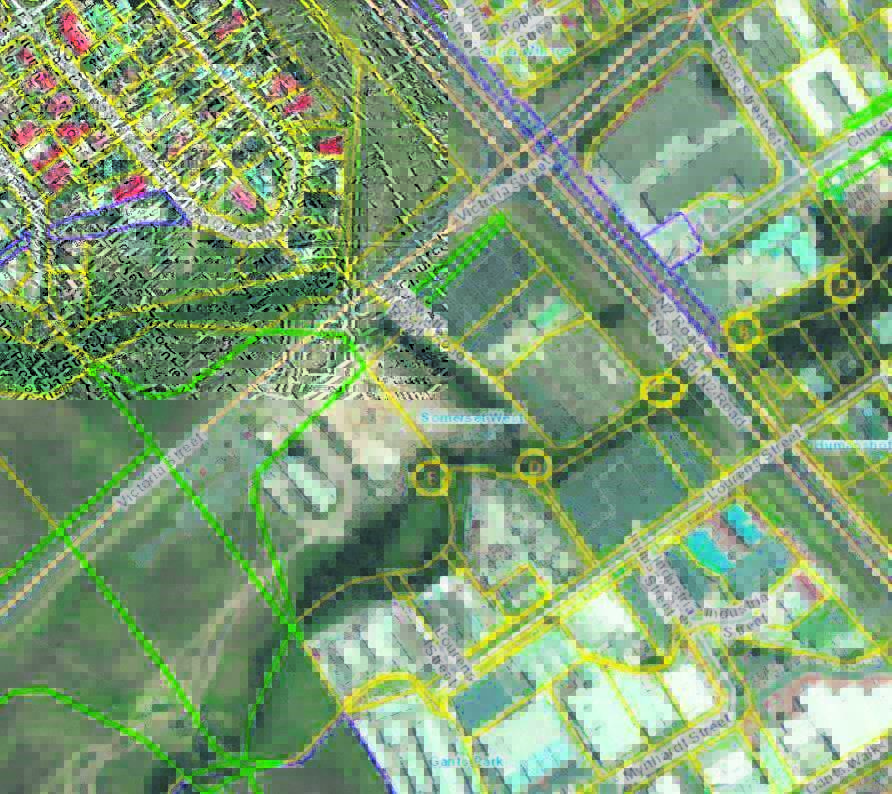
“The Lourens River is very narrow at the point between the two Eskom sub-stations (between C and D in attached picture), and this creates a backwater effect. If the volume of water cannot go through this narrow area it causes the water to run along the floodplain. The floodlines are indicated in the image. The other picture shows the Lourens River along points A-E.
“City staff has been on site to respond to flooding in the area. The road system was designed to only handle a 1:2-year storm event (which means run-off, rainfall or flood occurrence have a 50% probability of being equalled or exceeded in any given year) and anything larger will use the street as an escape route for water.”
Charlotte Powell, spokesperson for the Disaster Risk Management Centre (DRMC), said the centre had completed an assessment, and the only intervention was to provide sandbags, which the DRMC requested. The City has also communicated investigating Coetzee’s claims of a sand wall, which was apparently raised by the City to prevent water spillage from the river and to curb squatters who had set up camp on its banks from accessing a City-owned property located opposite the school.
The response also addressed questions around what will be done to safeguard the school against a serious vagrancy issue. The matter has become unbearable as the premises had been broken into multiple times a week, staff have constantly been targeted by criminal elements and children have been exposed to indecent behaviour, with increasing attacks by knife-wielding suspects and prostitution along the gravel route to the school. Law Enforcement spokesperson Wayne Dyason said: “The situation is being dealt with in cooperation with the City’s Social Development and Early Childhood Development Department. Since the termination of the National State of Disaster the courts are no longer required by regulation to consider suspending evictions. However, the City’s Streets By-law does not circumvent the need for a court order where a structure is considered a dwelling under the Prevention of Illegal Eviction and Unauthorised Occupation of Land (PIE) Act. In those instances the City will acquire the court order, and ensure alternative accommodation at shelters or safe spaces has been offered, where this is just and equitable.”