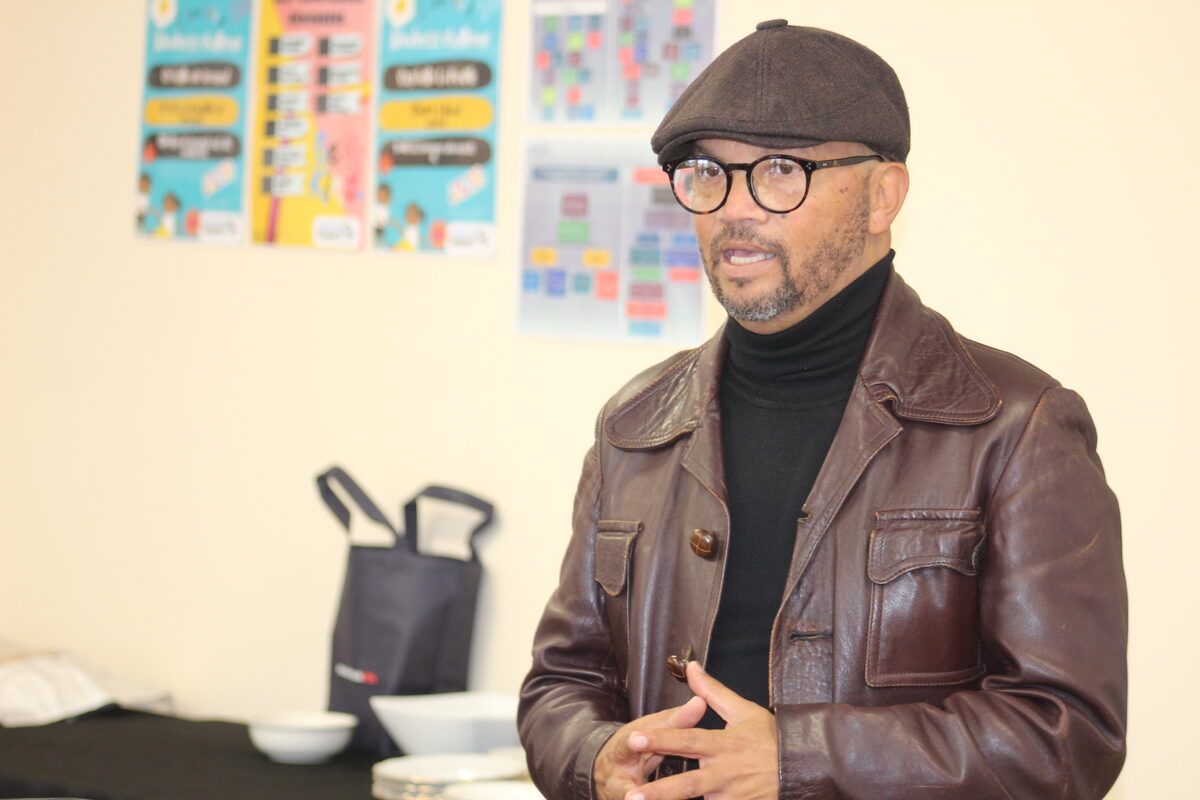
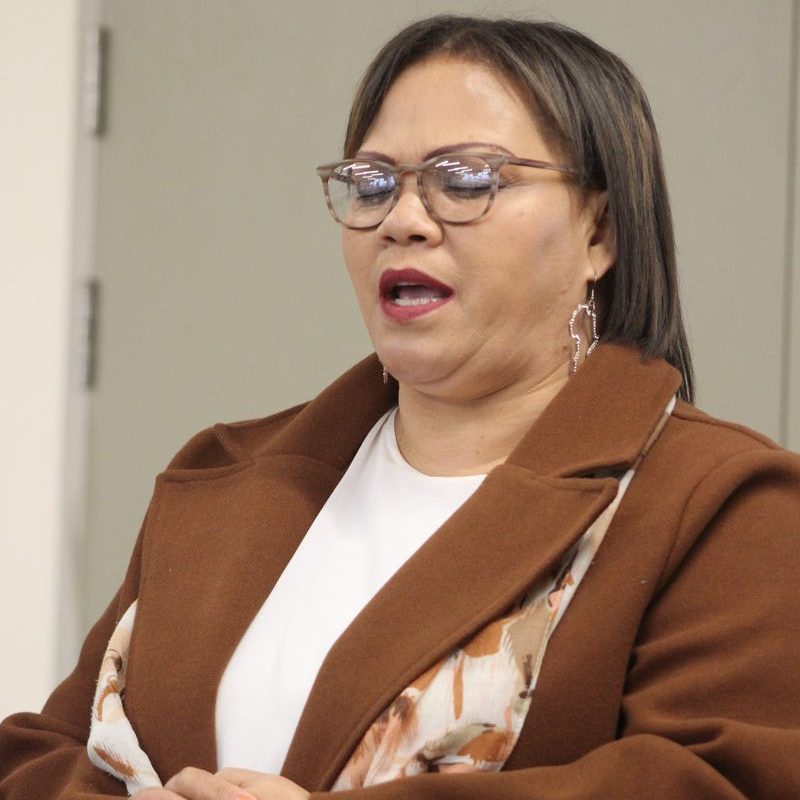
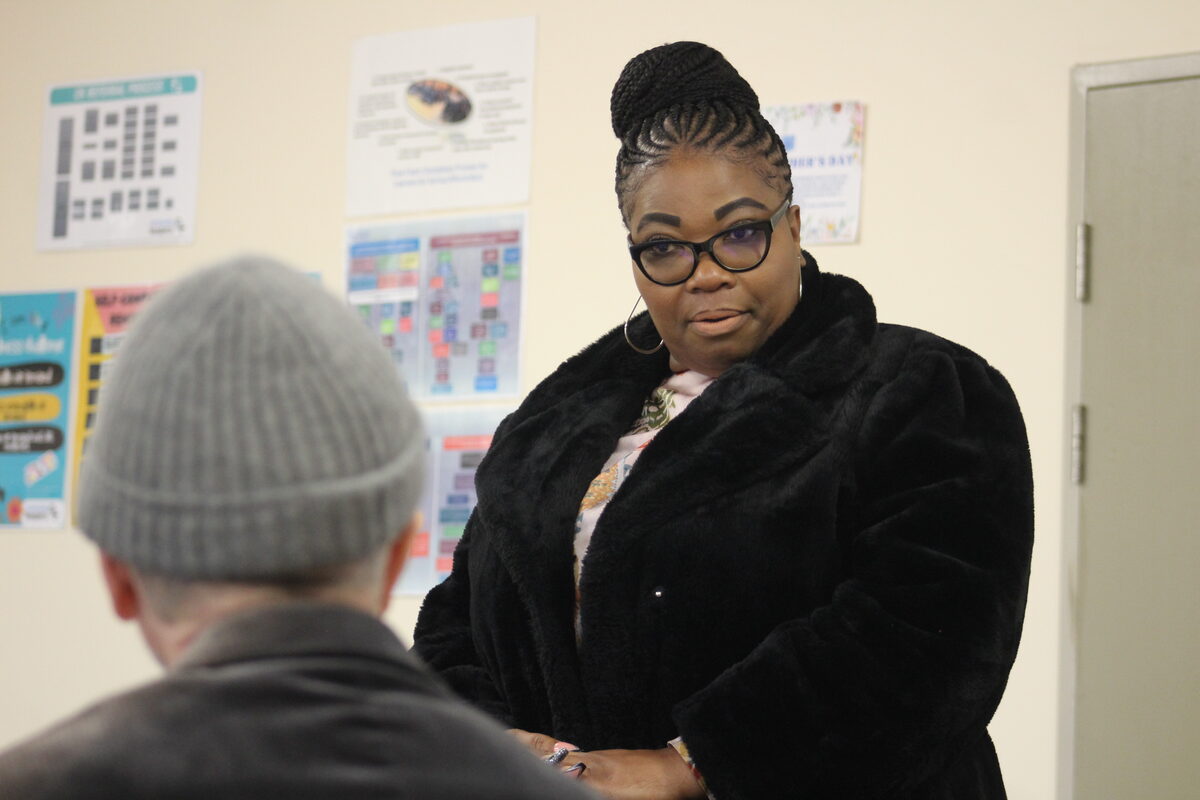
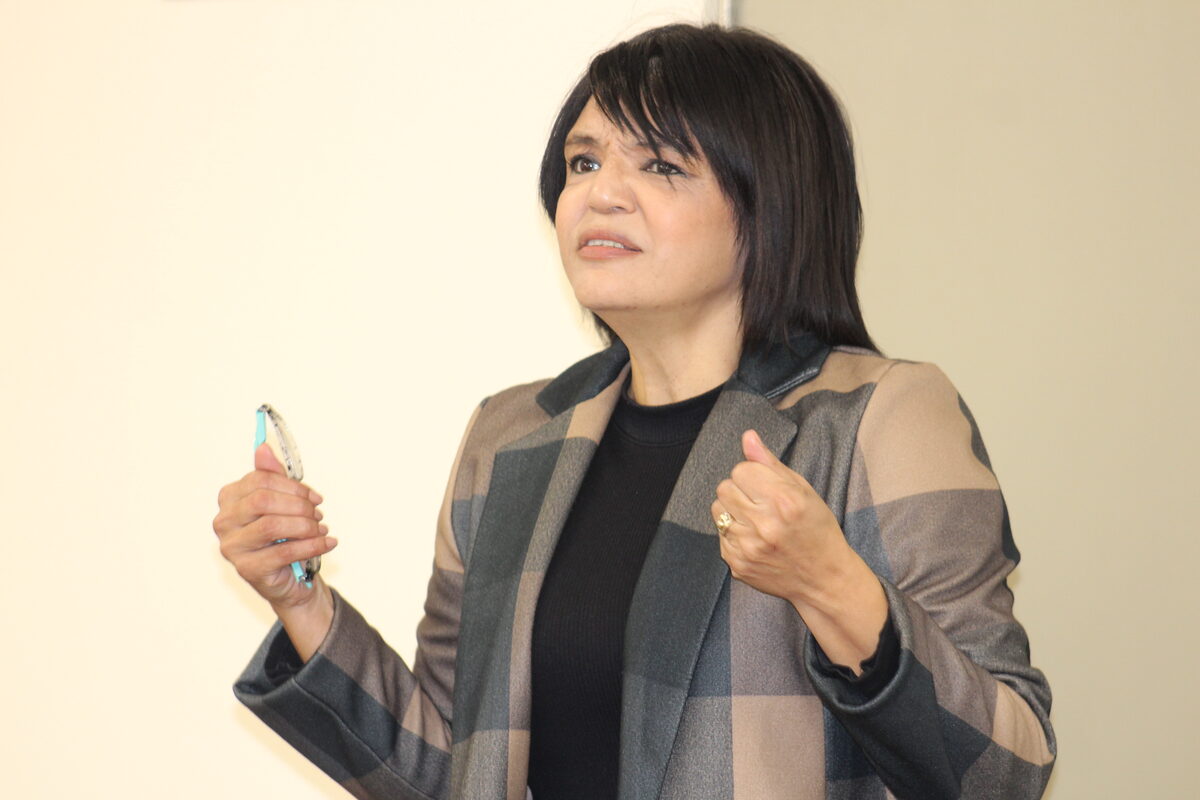
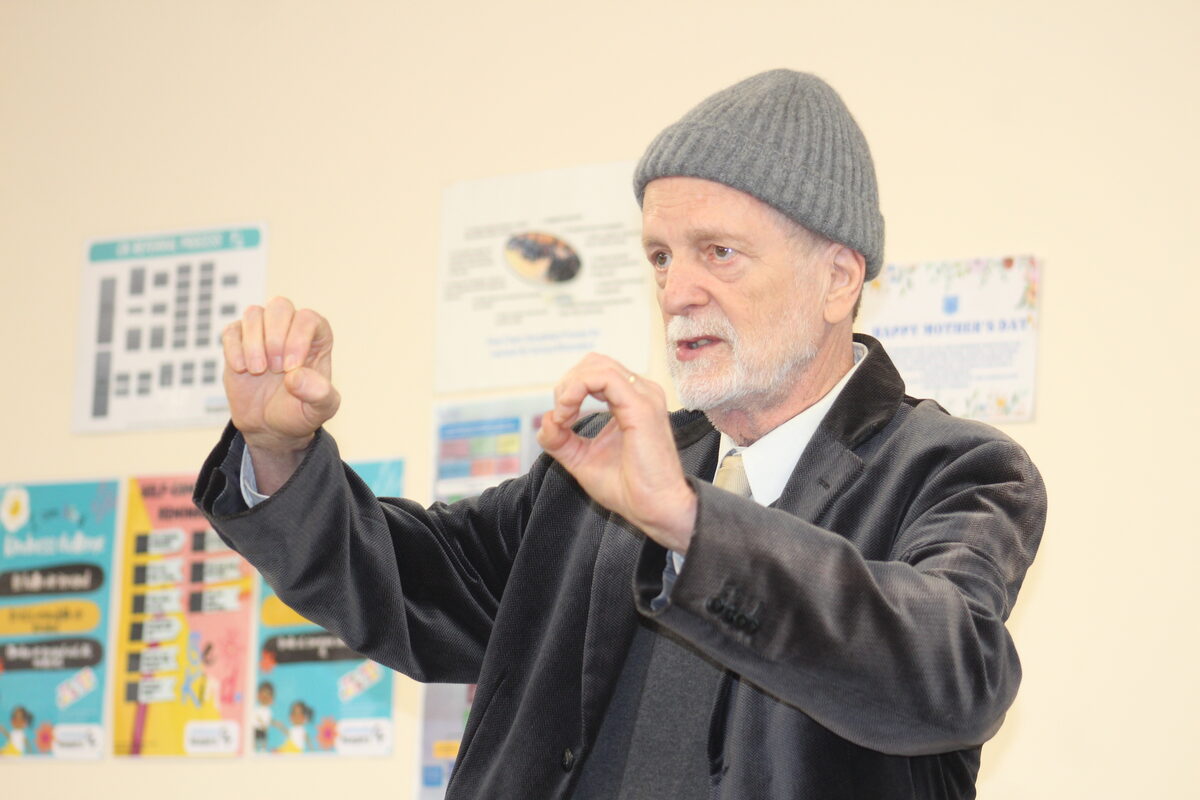
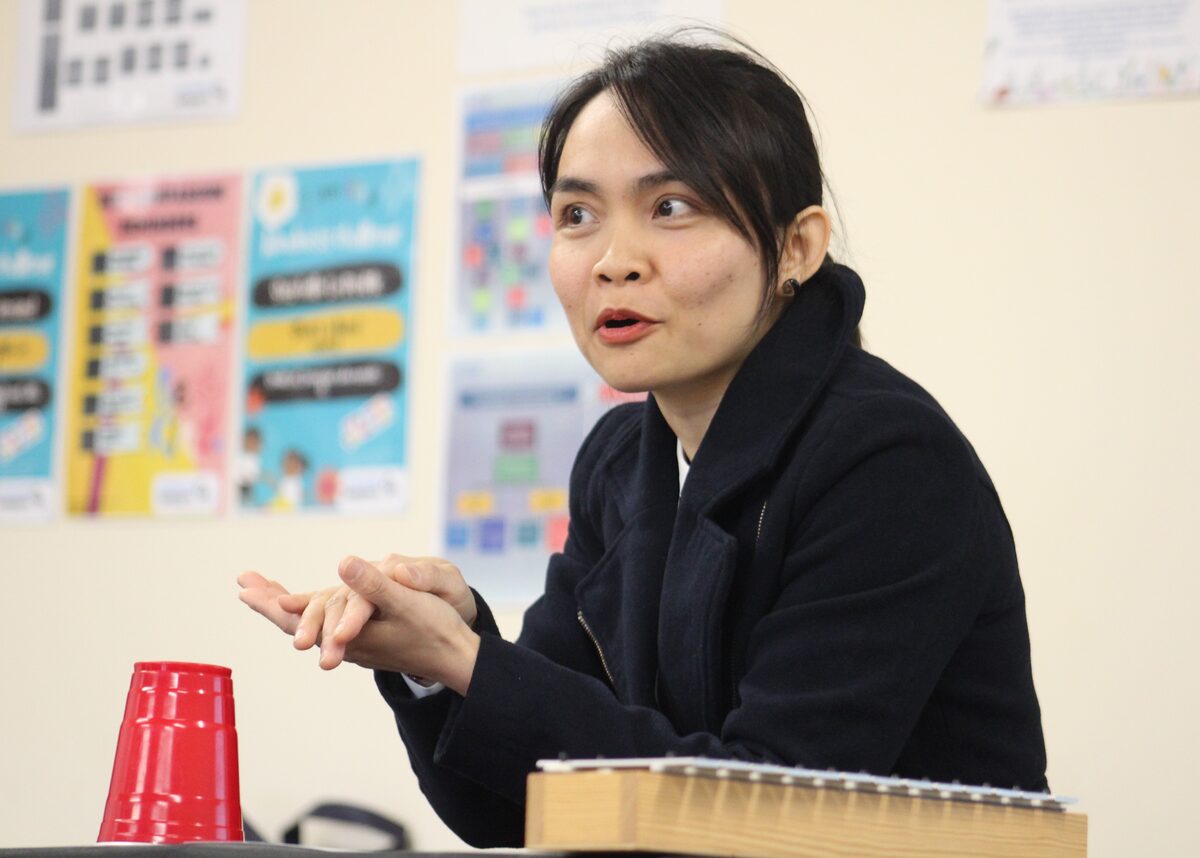
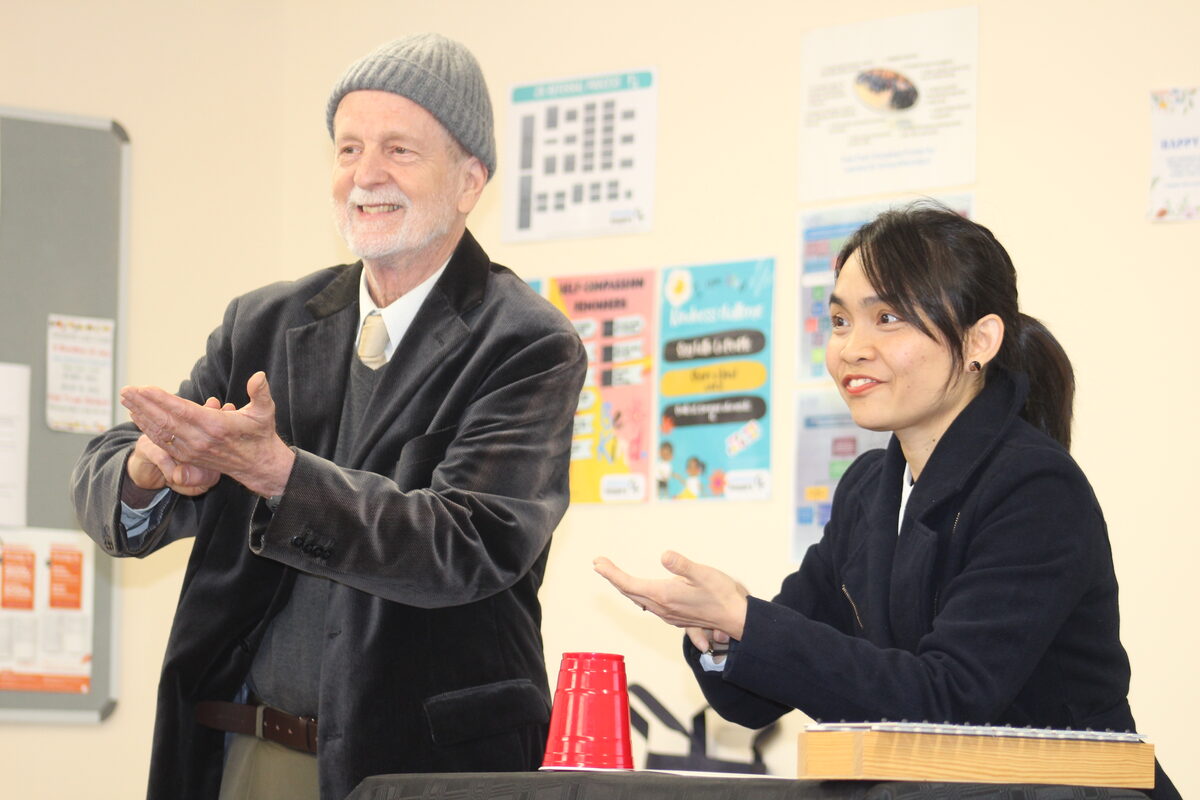
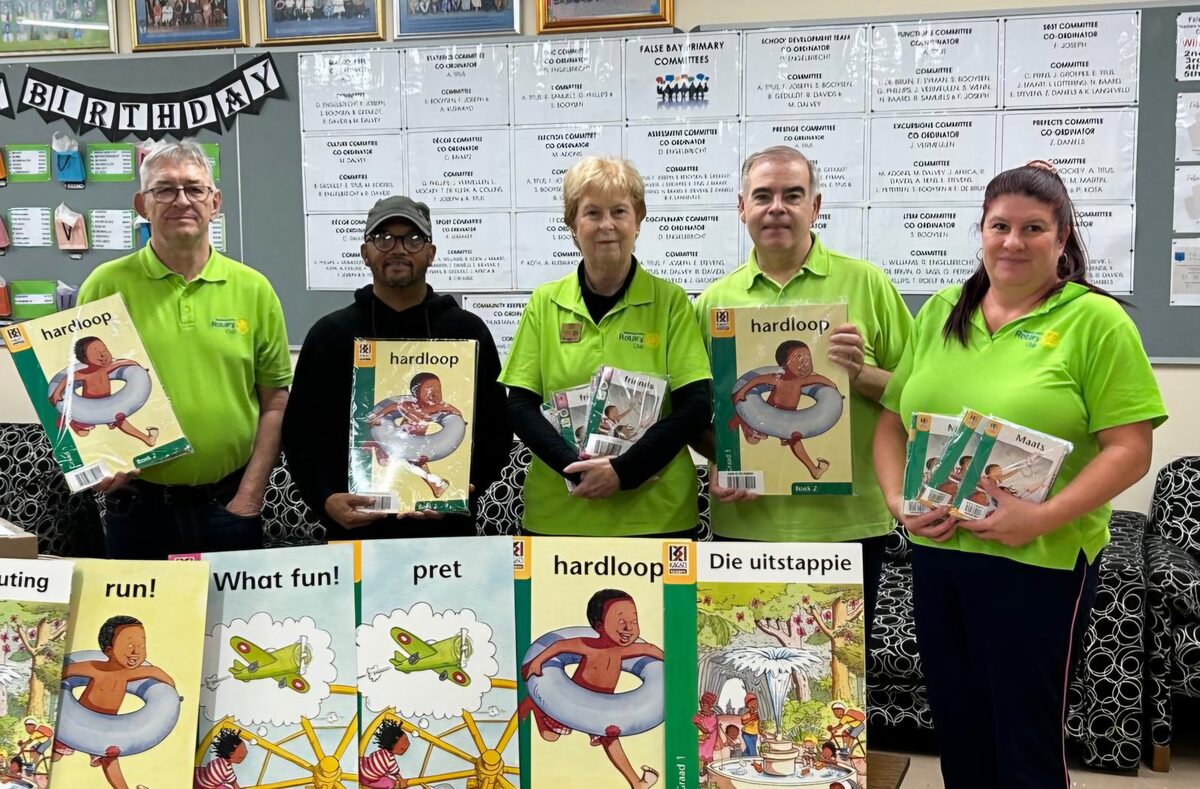
Tyme Training & Development partners Deidre (left) and Nehemia Doolabh (right) facilitated introductions between Centre for Musical Literacy-in-Education (CMLIE) specialists, Dr Larry Scripp (CMLIE executive director) and Jin Li Lim (CMLIE associate firector) from Boston, and local educational partners at False Bay Primary School on Friday 27 June. The CMLIE duo are establishing Africa’s first community-based CMLIE programme at the Macassar school. The initiative, backed by 25 years of research from Harvard University and New England Conservatory, features daily musical literacy lessons that improve learners’ language, mathematics and social-emotional skills. The pilot programme aims to become the epicentre of an expanding “laboratory school” network across the country. The CMLIE also partners with Masonic Institute for the Developing Brain in Minnesota to investigate the neurocognitive implications of musical literacy skill development in the future. Photos: Jamey Gordon
False Bay Primary School principal Desmond Engelbrecht welcomed guests to the information session aimed at introducing the CMLIE team and their decades of educational research. The gathering followed an agreement between Engelbrecht and Scripp to establish the groundbreaking musical literacy programme at the local school, with support from Tyme Training & Development.
Metro East Education District director Landeka Diamond expressed gratitude for the innovative music-integrated literacy programme at False Bay Primary, emphasising its alignment with national education goals and potential to strengthen foundational learning while contributing to broader community and economic development.
Scripp presents music as a foundational interdisciplinary educational tool that integrates mathematics, language and socio-emotional learning. He challenges traditional educational silos and talent-based exclusions, instead proposing a research-based, laboratory approach where all learners engage in precision-based yet flexible learning that develops both cognitive abilities and collaborative skills through universal musical accessibility.
Lim too advocates for music as a transformative, interdisciplinary teaching methodology that transcends traditional subject boundaries. Drawing from her experience in Singapore, she demonstrates how musical integration creates inclusive, embodied learning experiences that benefit all learners, including those with disabilities, while fostering precision, collaboration and a deeper conceptual understanding across academic disciplines.
Scripp and Lim led guests through an engaging demonstration, showcasing the programme’s innovative methods through interactive musical activities that illustrated how rhythm, collaboration, and precision enhance learning across multiple disciplines.

You need to be Logged In to leave a comment.

Gift this article