

“You can recycle anything with a plug, battery or cable.”
This is the slogan for this year’s International e-Waste Day, which was observed on Saturday 14 October and served as a platform to raise awareness about the importance of safely disposing e-waste, especially the invisible kind.
Invisible e-waste refers to electronic waste where consumers commonly overlook its recyclable potential. As our society becomes increasingly technology-oriented more and more products present on the market have some kind of electrical or electronic component that can be recycled rather than sent to landfill. Some examples of these types of objects, largely present in households, are electric and electronic toys, e-cigarettes, power tools, smoke detectors, wearables, smart home gadgets, e-bikes and e-scooters or simply cables.
Invisible e-waste can potentially contain toxic substances and, therefore, cannot be landfilled in terms of South African legislation. Furthermore, during informal salvage (as is common in South Africa), toxic residues can leak and contaminate the soil, air and water, affecting surrounding ecosystems where the local communities grow their food and fish. If not salvaged, valuable raw materials are lost, creating additional demand for mining and other potentially harmful activities.
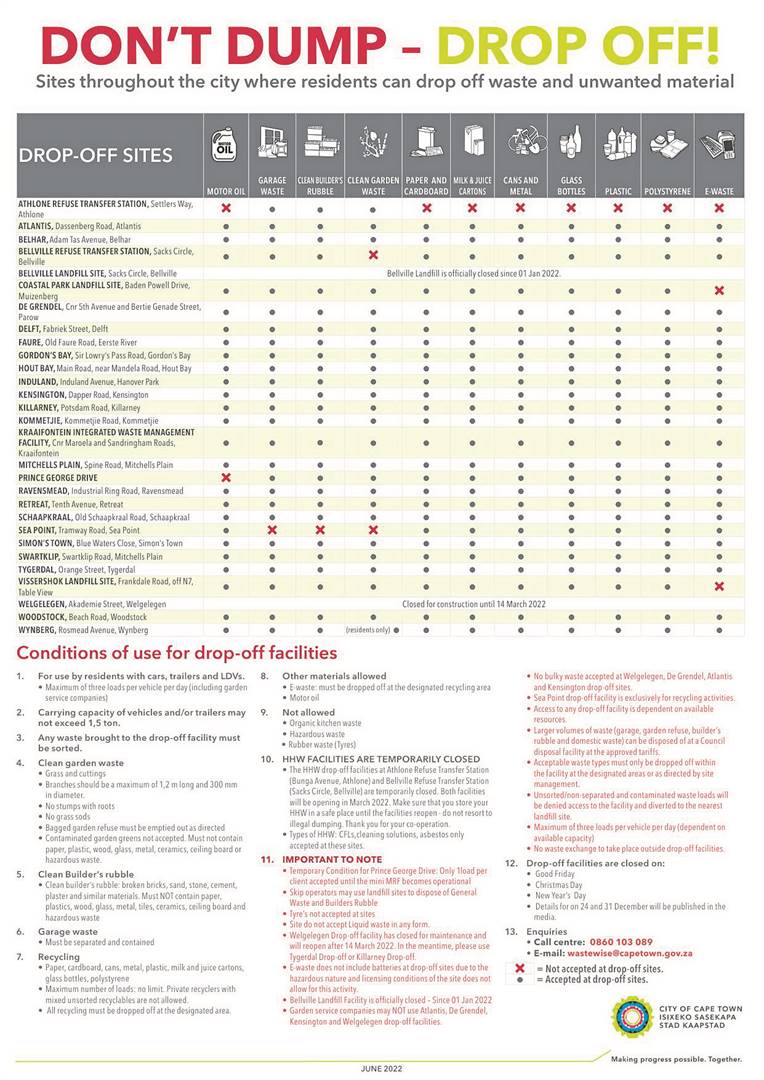
To prevent potential environmental damage this year, the City of Cape Town again encourages all residents to take any old, broken or obsolete devices with a plug, battery or cable to one of its drop-off facilities to be safely processed.
One such facility is the Gordon’s Bay Drop-off Site located in Sir Lowry’s Pass Road.
“With the disposal services offered by our network of drop-off sites and our waste-recyclers map, and the growing private disposal/beneficiation economy, it is more convenient than ever for residents to dispose of e-waste safely,” said the Mayoral Committee Member for Urban Waste Management, Alderman Grant Twigg. “With residents on board, our City can become a clear leader in e-waste recycling on the continent.”

