


Finding themselves plunged into darkness as the country’s power crisis plays itself out amounts to a far costlier battle for the local community than a mere inconvenience, what with worst-case scenarios such as appliance damage, loss of refrigerated food and so on.
The ongoing electricity disruption, which sees Helderbergers tough out three power cuts in a single day, now threatens business operations and even leaves local health facilities bearing the brunt.
The rolling black-outs have the Sir Lowry’s Pass Community Day Centre (CDC) struggling through delays in facilitating vital health services.
Last week, a concerned resident took to social media depicting the gloomy situation by posting photos of the clinic’s dark hallways during load shedding and a call to council for assistance with a generator.
According to a trusted source, one of the bigger challenges during load shedding is accessing patients’ electronic records when computers are off and visitors do not have their patient cards with them.
On enquiry, Patricia van der Ross, Mayoral Committee member for Community Services and Health, said the facility had not been afforded a generator to keep operating effectively despite load shedding due to budget constraints, but the City of Cape Town’s health department will prioritise the purchase of the apparatus for the CDC.
“We cannot plan for an unscheduled power outage, but staff will assist clients and provide health services to the best of their ability,” said Van der Ross.
“No patients will be deferred due to load shedding, but we appeal to the community to be patient when there are delays during power outages.”
On the other hand, businesses, especially smaller organisations that are already battling crippling economic times, are also adversely affected by the rolling black-outs.
Macassar resident and community leader Waseemah Flaendorp operates a sewing business and dedicates herself to teaching the skill to other women who are eager to learn. She shared battling with business operations hampered by load shedding and, even worse, the loss of income when jobs remain incomplete and clients opt to take their business elsewhere.
“I have lost my fridge and a computer box that I use to help people with their CVs,” explained Flaendorp.
“People are cancelling orders because I can’t finish my work when the power supply is cut off. I am losing business thanks to load shedding.”
A locksmith from Gordon’s Bay, Yusuf Rhoda, expressed battling the same problem when load shedding kicks in.
“I can still do call-outs, but the problem is that my laser cutting machinery can’t work during load shedding, which means I can’t cut keys for clients,” he said.
Stephen Carelse, who owns a printing business in Macassar, and a composite making one in Strand, said battling to keep business going during load shedding has negatively affected his health.
“I usually print my vinyl prints in the afternoon, but now during load shedding I have to work later at night to get orders done. It is affecting my health,” he said.
The small blade he uses to do the vinyl cutting with gets stuck when the power is cut, Carelse added. If there is any movement close to the blade then it breaks off immediately and needs to be replaced. It is a cost incurred with every bout of load shedding.
Mawande Sigwinta, a restaurateur from Nomzamo, complained of losing business with every power cut too.
“We are connected to a different power box than some of our neighbours. So when the whole neighbourhood has power then we are still off. Customers leave when the power is off and we can’t give them food,” he related.
Sigwinta is left feeling defeated, as the community is rife with competition and other eateries power on through load shedding with the benefit of generators. “The other problem is, when we get DJs in to play music, and the power goes off unexpectedly, we still have to pay them for that hour or two in which they could not make music. So we are losing money daily.”
Ward 109 councillor Peter Helfrich said residents are still recovering from Covid-19 and pandemic-induced levels, and are now subjected to load shedding in varying stages. “Small businesses and the poor in our area are the hardest hit by this,” he said.
“Small businesses are forced to let people go, which only increases the unemployment rate in our ward. Many small businesses are concerned that they may have to close shop if we continue on this path. It breaks my heart to see our poorest of the poor having to suffer like this.”
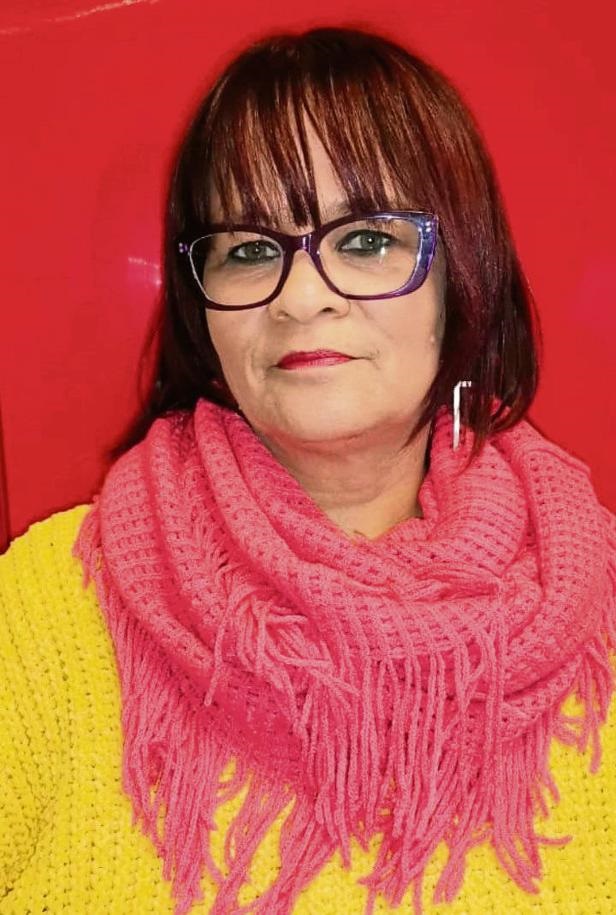
Waseemah Flaendorp from Macassar who has a sewing business.
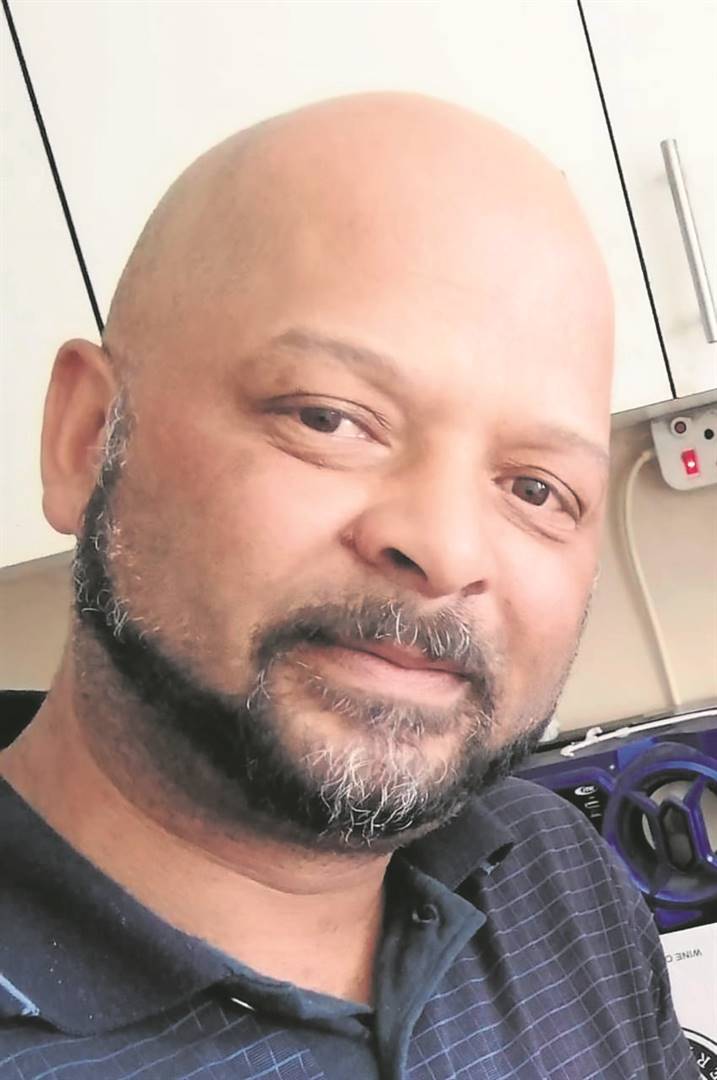
Stephen Carelse, who owns a printing business in Macassar and a composite making one in Strand.