

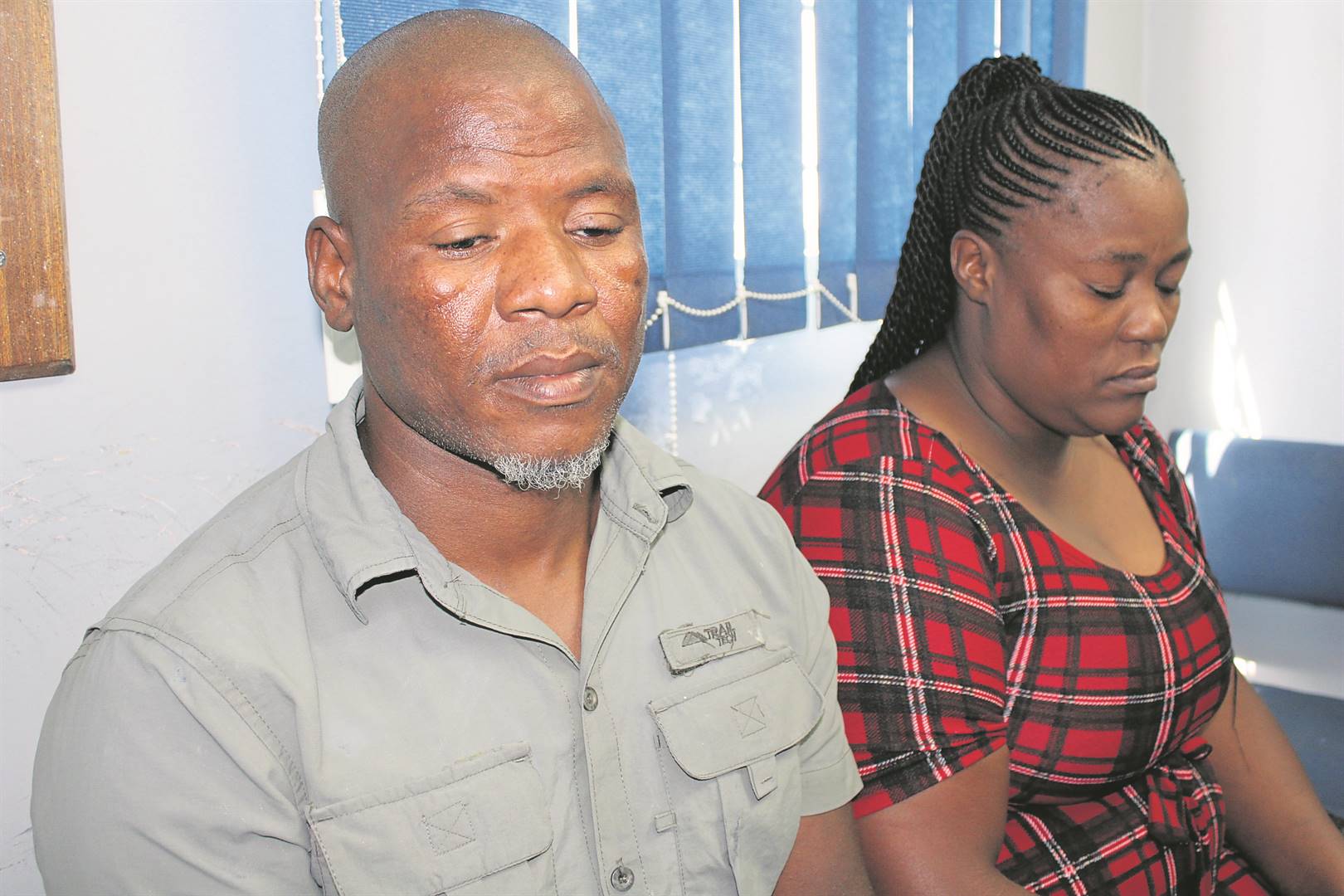
A township family has been thrust into mourning by the tragic electrocution of a young boy.
Last Tuesday (27 February) seven-year-old Lithemba Nqavela was killed apparently after being shocked to death by live wires from an illegal connection between shacks in the Ezinkomeni informal settlement.
Lithemba’s father, Wellington Mlamla (38), and stepmother, Bukeka Ngongoma (37), said the youngest of their blended family was in the care of his older brother, Sibahle Ngongoma (17) when the alleged incident occurred. They related that according to the teenage boy Lithemba had come home from school and had a bite to eat before going outside to play. Mlamla recalled being called by neighbours who had rushed to the aid of his injured son and summoned him to the scene, around 16:00. However, on his way back from his workplace in Kraaifontein, accompanied by his wife, he experienced car trouble on the highway while rushing back home. While dealing with the consequences of an untimely speed bump, the dislodging of the engine mounting, the concerned father kept phoning to arrange private transport in the hopes of getting Lithemba to hospital faster. After coming up with a makeshift part for a temporary solution to repair the broken mounting the couple finally hit the road and arrived at the scene at 19:30.
The parents were dealt a devastating blow when they found Lithemba’s lifeless body, which was taken to a shack by neighbours after their admirable rescue efforts had failed. The first responders attempted to pull the electrocuted boy from the source with their bare hands and after being shocked themselves, and resorted to using planks to get the child away from the electrical current. However, it was too late.
Contact with electrical source unclear
A Lwandle spokesperson said what exactly happened and how the child came into contact with the electrical source remained unclear as all the wires had been removed by the time police arrived on the scene that evening. “An inquest docket has been opened for further investigation,” police confirmed.
According to Lithemba’s parents his heart-wrenching loss comes after his having previously survived many other life-threatening incidents, including a near-fatal car accident a few years ago.
“Lithemba was the most loving of children, who loved to laugh and play outside,” said Ngongoma.
“We shared a special connection; he called me ‘Mamzo’. He will be sorely missed, especially his jokes.”
The mother of two grown offspring said her older son was responsible for Lithemba that day and he was battling to cope with the tragic loss that had left him crying uncontrollably and endlessly.
Mlamla could not find the words to describe his emotions after losing his only son, who had lived with them for just a few weeks since his biological mother was admitted to hospital due to serious illness, and her household was being run by his two older sisters, of 16 and 12 years old. The couple had to visit the hospital to break the news to his mom on Thursday (29 February).
Lithemba was a Grade 1 learner at ACJ Phakade Primary School and principal Thobile Majingo, in the wake of the tragedy, expressed the school’s grief at the loss of yet another young learner robbed of a bright future. He said the school had lost three learners in recent years through fatal shocks; this includes eight-year-old Fundiswa Mhlaba, who was killed apparently after stepping on loose wires, also from an illegal connection, on Monday 15 November 2021 (“Girl (8) electrocuted near her home,” DistrictMail, 25 November 2021).
“We are deeply saddened by the shocking incident and tragic loss,” said Majingo.
The school paid tribute to Lithemba with a memorial service held in the school hall on Tuesday (5 March).
The incident once again placed the spotlight on the vandalisation of electricity infrastructure and illegal connections, which has sparked concern as the increase in electricity theft has led to an increase in loss of life, especially that of innocent children who are unable to play freely.
Hotspot for illegal connections
In response to a detailed enquiry sent to the City of Cape Town, Councillor Beverley van Reenen, Mayoral Committee Member for Energy, confirmed the incident was not reported to council. She said the Ezinkomeni informal settlement was recently established and the area not directly supplied with electricity from the City or Eskom.
“The City’s Energy and Law Enforcement agencies, with the support of the police, conduct regular disconnection operations in hotspots in the metro. Lwandle is one of the hotspot regions for illegal connections and electricity infrastructure vandalism.”
While Van Reenen pointed out that police remained the lead authority in crime prevention, she said the City will continue to remove illegal connections in hotspots and drive education and awareness in communities about the dangers of illegal connections.
“We urge residents to report incidents to the police and City so we can protect the lives of residents, our communities and community electricity infrastructure.”
She noted vandalism or theft of electricity infrastructure is a criminal offence and a very serious crime especially when they are prosecuted in terms of the Criminal Matters Amendment Act (Act 18 of 2015) for crime relating to essential infrastructure. Anybody charged under this act faces harsh sentencing and may not be entitled to any bail.

