

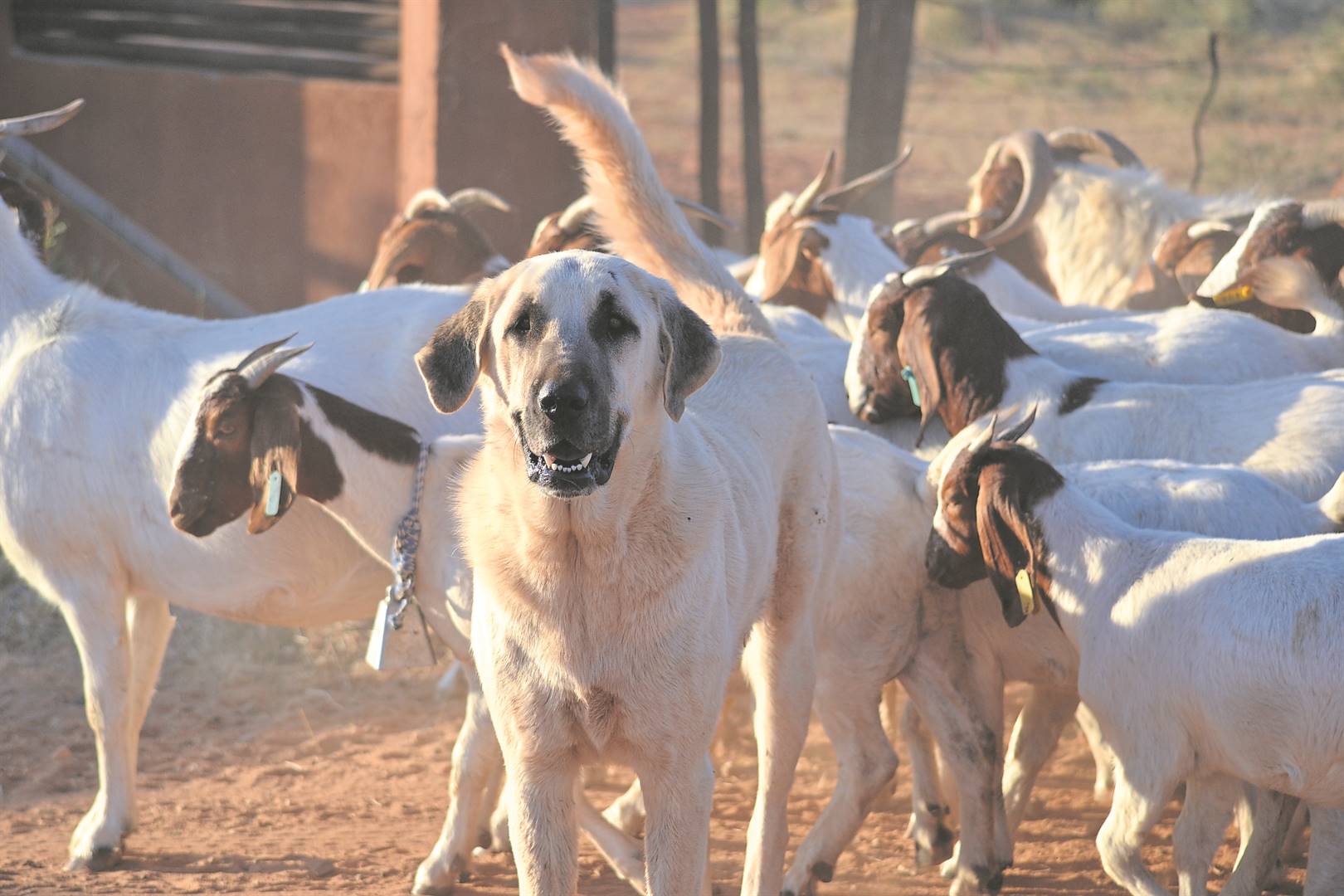
In an effort to preserve the majestic big cat, the Cheetah Outreach Trust is working with farmers in free-roaming cheetah territory to alleviate the conflict between farmers and predators through education, management of livestock and the placement of Anatolian livestock guarding dogs with the herds.
This innovative approach has not only proven successful in reducing predatory activities on livestock farms, but also plays a crucial role in maintaining a balanced ecosystem and allowing space for predators to roam freely and perform the function they were intended to.
Located in the heart of Somerset West, Cheetah Outreach raises awareness for the Trust, which breeds Anatolian shepherds at its stud located in the Northern Cape. Up to 20 puppies are placed annually, with two field coordinators overseeing the placements for life.
The dogs are placed with the livestock herd soon after weaning; they grow up considering the herd as family and therefore protect the livestock from predators. The dog will defend the herd without killing the predator, in this way reducing livestock loss for the farmer and allowing Cheetah Outreach to conserve both habitat and free-roaming cheetah numbers. The presence of the Anatolians is ideal for deterring predators, as cheetahs are not confrontational, they won’t pick a fight with a dog, and the dog is bigger than the predators most responsible for livestock killing, for example, the jackal and caracal.
The Cheetah Outreach Trust have just over 400 dogs placed and over 600 000 ha of cheetah-friendly land established through the dog programme where non-lethal methods are undertaken for predator control.
The buy-in from the farmers to adopt the Anatolians and stop lethal predator-control measures has contributed significantly to preserving the cheetah population. The greatest risk to cheetahs is human-wildlife conflict and misinformation within the farming community. Often, cheetahs get falsely blamed for killing livestock and are persecuted illegally through indiscriminate means, for example, poison, gin traps and hunting. The centre aims to educate the public and offer a sustainable alternative to livestock loss through its work with the Anatolian livestock guarding dogs program.
The world cheetah population is currently estimated at 6 600 individuals in sub-Saharan Africa, with a small population of Asiatic cheetahs left in Iran (estimated 8-20 animals); South Africa accounts for approximately 1500 cheetahs, of which about 600 are free roaming. This raises alarming concerns as it points out the dwindling numbers of cheetah population worldwide. Cheetahs are at risk because their genetic pool is very low; the greater the population we have, the greater the range within the gene pool for cheetahs to survive.
Other breeding programs focus on managing metapopulation; they would bring cheetahs together that are genetically unrelated to strengthen the gene pool. To ensure genetic diversity among cheetahs in wild areas and provide a back-up population for potential reintroduction into the wild, it is essential to maintain a diverse gene pool. This will help reduce the risk of extinction and serve as a reserve population.
Cheetah Outreach has a public eco-tourism centre focusing on education and awareness in partnership with ambassador cheetahs born and bred in captivity, which can never be released to the wild due to assimilation challenges; these cheetahs have been habituated to be comfortable around people. The facility assists in raising funds that go to its dog-breeding programme. As adults, the dogs act as guardians to ward predators off due to their instincts in carrying out their protection assignment. The only training they need is snake aversion; back in Turkey, where they were initially bred, the snakes are less dangerous than South African snake species. An Anatolia’s life span is eight to 10 years, its working life six to seven years.
Currently, Cheetah Outreach and the associated Trust have long-standing relations with the Rheinmetall Denel Munition conservation team, who kindly supports the centre with red-meat donations of carcasses when available to ensure a healthy diet for the very particular cheetah. The cats eat between 1,6 and 2,2 kg of meat each on a daily basis. A healthy diet consists of 50% white meat, 50% red meat and mostly lean, with minimal fat. Game meat is therefore ideal, as the fat is not marbled in the muscle.
Besides the main focus, the centre also houses other ambassador animals such as bat-eared foxes, Western Cape leopard tortoises, meerkats, serval and caracal.
People can support the facility by visiting and learning more about Cheetah Outreach programmes and further use the knowledge to educate others on possible solutions to end the plight of these iconic cats. If you are passionate about cheetah conservation and want to make a difference, volunteering at the facility can be a rewarding experience. By assisting in caring for the ambassador animals and educating the public about the importance of cheetah conservation and the role Anatolians play in mitigating human-wildlife conflict, you can actively contribute to their preservation. The Cheetah Outreach Trust also welcomes in-kind support for fundraising initiatives or donations.
To learn more about its programmes, visit The Cheetah Outreach in De Beers Avenue, Firgrove, Somerset West, or call 082 872 4007 to learn more.