

The month of November marks Men’s Health Awareness globally, and Saturday the 19th marks International Men’s Day.
This is an awareness raising day on which the positive value men bring to their families and communities through their own health and well-being is emphasised.
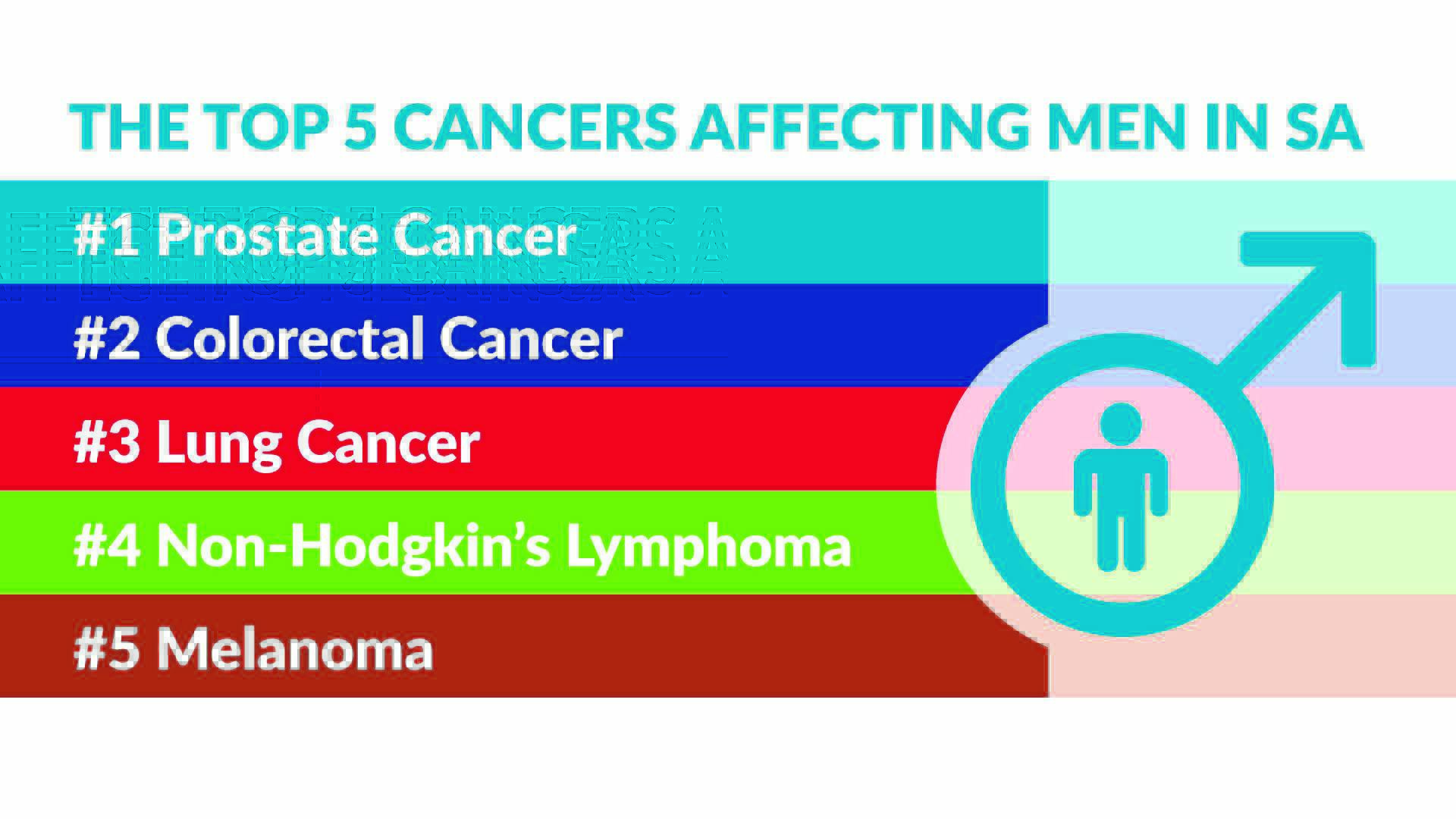
The Cancer Association of South Africa (Cansa) has highlighted the importance of the top five leading cancers affecting men in the country, urging men to have regular check-ups throughout the year.
“Men should be proactive about their health,” said Lorraine Govender, Cansa’s national manager of health promotion. “Cansa encourages monthly testicular self-examinations, annual check-ups and cancer screening for early detection, as symptoms don’t always present until cancer has spread. The number of men being diagnosed with late-stage cancer is increasing, and this is alarming.”
Prostate cancer continues to top the list of five cancers men suffer from, with one in 15 at risk, according to statistics from the National Cancer Registry (NCR) of 2019. It often grows slowly and may not cause significant harm, but some types are more aggressive and can spread quickly without treatment.
Screening results in early detection, enabling more effective treatment and a better chance of recovery. Cansa recommends routine Prostate Specific Antigen (PSA) blood tests annually, from age 40 for all men at risk to detect prostate abnormalities. High PSA levels may indicate inflammation of the prostate or even cancer. The PSA test may be accompanied by a digital rectal exam. PSA tests are available, by appointment, at Cansa Care Centres nationwide at affordable rates.
Cancer survivor Andreas Kleynhans, diagnosed with grade-1 prostate cancer after a routine check-up, said: “Prostate cancer was a big shock, since I had been healthy throughout my life. Seven months later the cancer had metastasised (spread) to the hip bone and was now grade-4, meaning this type of cancer could not be healed, but only slowed down and its symptoms were managed.”
His advice to men: “Please test PSA levels regularly. Prostate cancer is very curable when detected early. And even when it’s as advanced as mine there is hope. Yes, a digital rectal exam is a bit awkward the first time, but it’s necessary. In the end, it’s all about how you think about it and what it can mean for your health. You can’t determine what happens to you, but you can decide how to react to it. I choose to tell my story and make something positive of it.”
Colorectal or colon cancer is the second most common cancer in men, with one in 77 diagnosed, according to the NCR 2019. Moreover, more younger individuals were being diagnosed.
Lung cancer is the third most common cancer in men and ranks as the number 1 cause of cancer deaths. There is low awareness of lung cancer in SA, which is why Cansa provides lung cancer information and implements health campaigns to increase education and awareness.
Non-Hodgkin’s Lymphoma (NHL) is cancer of the lymphoid tissue, which includes the lymph nodes, spleen and other organs of the immune system. It’s the fourth most common cancer in men and it’s estimated that one in 176 men will develop NHL, according to the NCR 2019.
Melanoma has replaced bladder cancer as the fifth most common in men, with one in 168 men at risk, an illuminating statistic made possible by improved screening. Melanoma is less common than other skin cancers, but it’s the most dangerous.
“Early detection is key when it comes to beating cancer,” Govender pointed out. “Recognise changes in your own body and act on any changes or symptoms that develop, and go for regular screening.”
David Lucas, a prostate cancer survivor and Cansa Relay For Life Global Hero of Hope, encouraged men to reach out for support and use services such as Cansa’s Men Supporting Men groups.
“When it comes to men I have found that once men see you are open about your challenges they become more relaxed and freer in asking questions, relaying their fears and anxieties as well as dealing with a disease that has a worldwide brotherhood,” he said.
Govender urged people to contact their local Cansa Care Centre to access the support offered. “If you or a loved one have been diagnosed with cancer, contact your local care centre to access Cansa’s care and support programmes, such as medical equipment hire, wigs, counselling, tele-counselling, support groups, online support groups and resources as well as Cansa Care Homes, where patients receiving treatment far from home can stay during treatment.”
For more information or to get support, visit www.cansa.org.za, call 0800 226 622 or email info@cansa.org.za.


