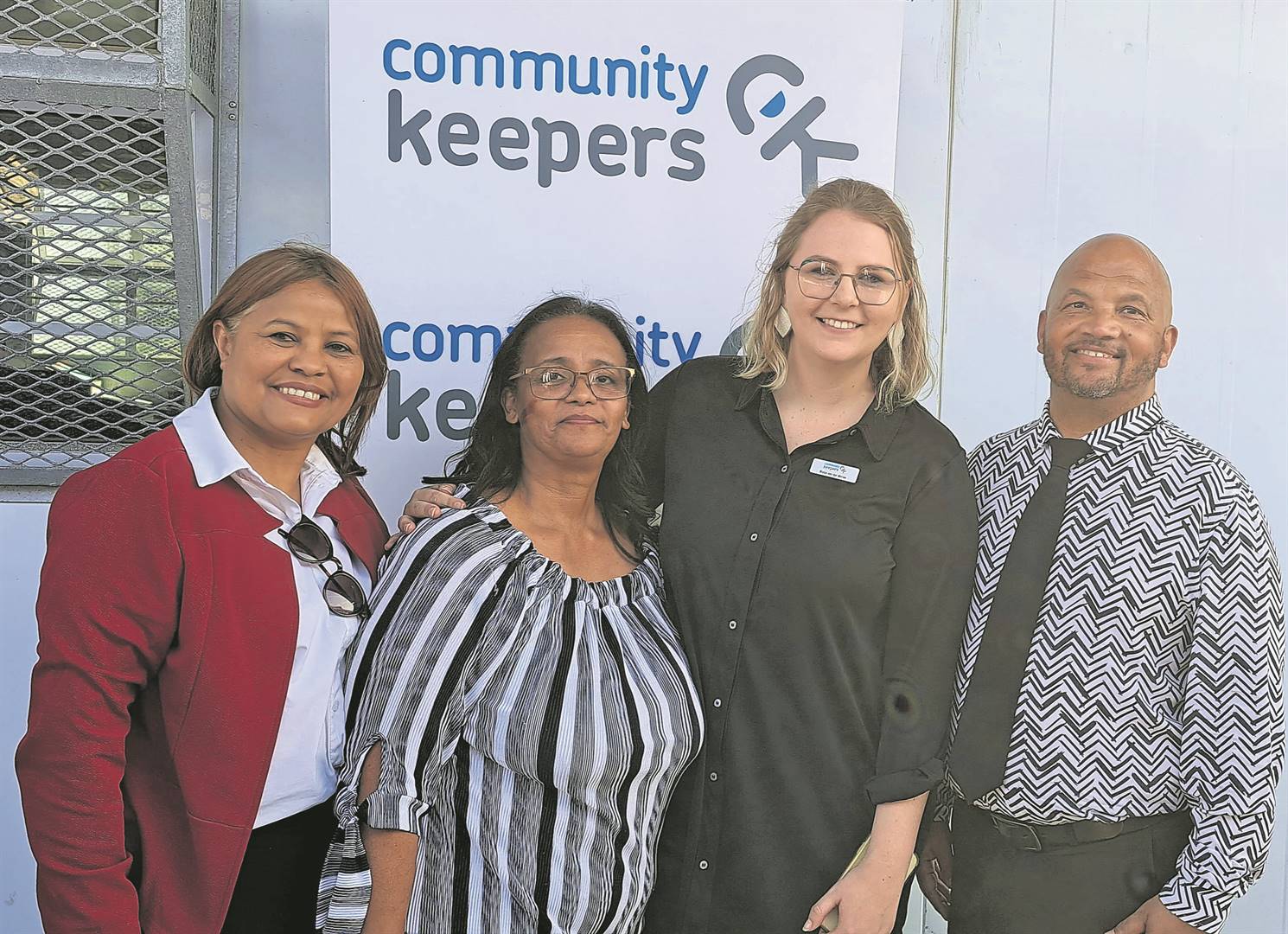


To mark Mental Health Awareness Month (October), and its theme “Make mental health for all a global priority”, a Community Keepers therapy room was opened at False Bay Primary School on Monday 17 October.
Community Keepers is a non-profit organisation that provides professional support services to children, teachers and parents at local schools, and this school facility in Macassar is its 34th partnership with an educational institution.
The organisation offers a whole-school approach to psycho-social services through a multi-disciplinary team that operates on site, removing barriers to access. The team includes social workers, psychologists and community members who are trained in mental health first aid and recruited into the organisation as care facilitators.
While the focus in on prevention and early intervention as well as destigmatising mental health issues and help seeking behaviour, the organisation also provides crisis intervention, therapeutic interventions and referrals.
“Well-being is our goal and our measure,” says CEO Gerrit Laning. “Mental health is defined as a state of well-being in which every individual realises his or her own potential, can cope with the normal stresses of life, work productively and fruitfully, and is able to make a contribution to her or his community. We use standardised tests to measure subjective well-being at our schools continuously using the WHO-5 for adolescents and educators and the CORS (Child Outcome Rating Scale) for the younger learners.”
He says Community Keepers’ work forms part of a broader initiative, working to strengthen child and adolescent mental health services in resource constrained areas of the Western Cape.
“Earlier this year we approached MEC Nomafrench Mbombo to ask whether there was a way to collaborate more effectively with the Department of Health and Wellness, to help carry the burden of psychological services to school going youth, and it makes sense that we work together with a whole range of service providers to leave no one behind but to, also, avoid duplication.
“Typically, we see 10-15% of learners in our partner school communities being referred (or self-referring) for therapy, but during the pandemic and, now, during the aftermath that has doubled at some of our partner schools. The need is great and we are extremely concerned about the state of mind of young people. Whenever we host a ribbon cutting ceremony we are approached by other schools in the area and we welcome anyone to join our waiting list. Our plan is to partner with 100 schools by 2030, and next year will see another growth spurt.”