

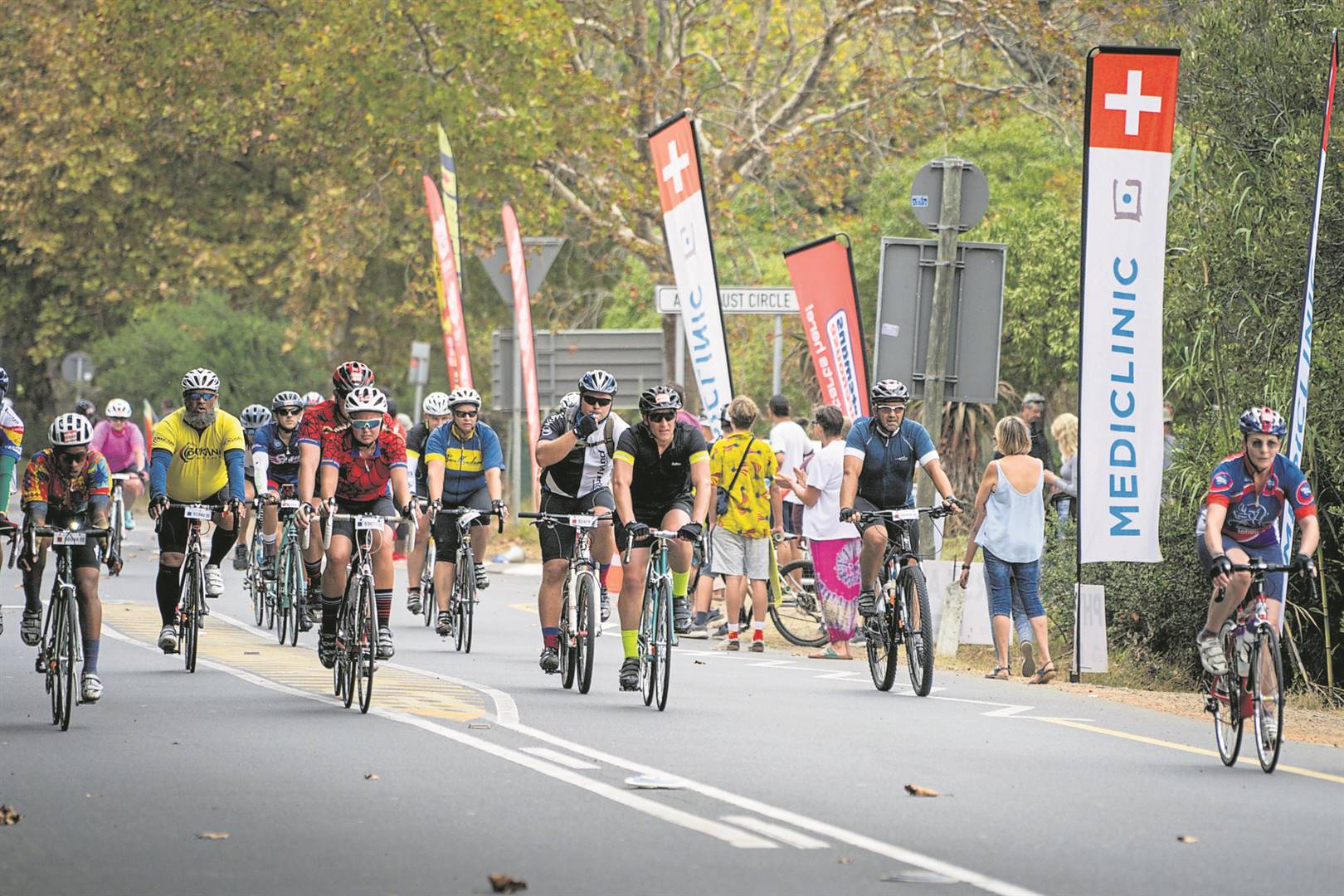
From cramping and hydration to knowing whether you can participate on Sunday 12 March, Dr Darren Green of Mediclinic gives some sound advice about when it is just not safe to participate.
Cramping
No-one knows why we cramp. But we know there are different causes for cramps in different population groups. And being conditioned is the most important thing for reducing the chances of cramps since they hit most often when the muscles are fatigued.
So, what to do when you cramp? The first thing is to stop. You can’t keep riding if your hamstring is cramping, because you’ll be a danger to others on the road if you suddenly swerve or fall over.
The best way to get the muscle to uncramp is to stretch it. Ask someone to help you slowly stretch the muscle or stretch it yourself. You need to increase the blood flow into the muscle, which will help get it working again.
Energy
Don’t try anything new on race day! But if you must, try to ensure you know what’s in the products you’re taking. Read the labels.
Many energy boosters contain stimulants that can increase your heart rate, so be careful. Stick to well-known brands, such as Powerade, since they will be available on the course on race day.
On the day, everybody wants that gummy berry juice to give them a boost when you tire, but be sure you know the sugar content of the drink or gel you’re taking. It may make you feel great 10 minutes later, but after the spike it will dump you.
The key is sustained energy release throughout the race and drinking and eating good carbohydrates and protein sources.
Medication
Whatever you do, don’t change your use of chronic medication on race day. Whether it’s asthma, epilepsy, blood pressure or heart medication, stick to your regular schedule. Your body is used to exercising with those medications anyway.
The crucial group is painkillers. If you take painkillers of any kind, you put yourself at risk. Some anti-inflammatory medications can affect kidney function and even cause kidney failure. Antipyretics, used to treat fever, can affect liver toxicity when combined with alcohol – such as your post-finish beer.
Then there are the serious painkillers: such as opioids, which contain codeine and can affect concentration and your level of consciousness. Not something you want when you’re flying down Hospital Bend.
If you have a history of severe allergy and anaphylaxis, remember your EpiPen. The route may take in some of the world’s incredible flora, but they also attract bees. So always be on the safe side.
Recovery
It’s important to cool your muscles down after a ride. Keep walking through the finish zone, and slowly get the blood moving back from your legs to the rest of your body. If you just stop, you may feel dizzy because all the blood has been shunted to your legs.
Get a recovery drink – chocolate milk is always great – and replenish your lost fluids and electrolytes before you have that first celebratory drink. You’ll be thankful you did on Monday.
Staying safe
The Cape Town Cycle Tour has Mediclinic points along the route where you can check your blood pressure, pulse and sugar levels. They are there to help you and are responsible for ensuring everyone is safe.
Sometimes, riders become argumentative if we advise them to stop; but it’s important to know that we’re always working only in your best interests. If one of our medical staff advises you to stop, please listen to them. It could save your life.
When not to ride
If you’re taking antibiotics, do not ride.
This means you have a bacterial infection, which your body is busy fighting, so your energy systems will not be normal. You will also have increased sensitivity to heat; on top of that, antibiotics can also affect the absorption of food, nutrients and fluid.
Also, be wary of any kind of chest pain on the day. It may be a warning sign that something is wrong and that not enough oxygen is reaching the heart muscle.
If you experience light-headedness or dizziness, this could also mean something abnormal. So rather stop, and come back another year.
Some riders may get morning sniffles or a runny nose. You may still be able to ride, but be cautious. But if you have a fever, night sweats, sore throat or shortness of breath, it’s advisable not to ride. There will always be another year, but you can’t get another life.
If you haven’t already, please complete the medical questionnaire as it is to protect you and provide Mediclinic with the information required to manage you optimally in case of any untoward medical emergency: https://forms.mediclinic.co.za/Events.