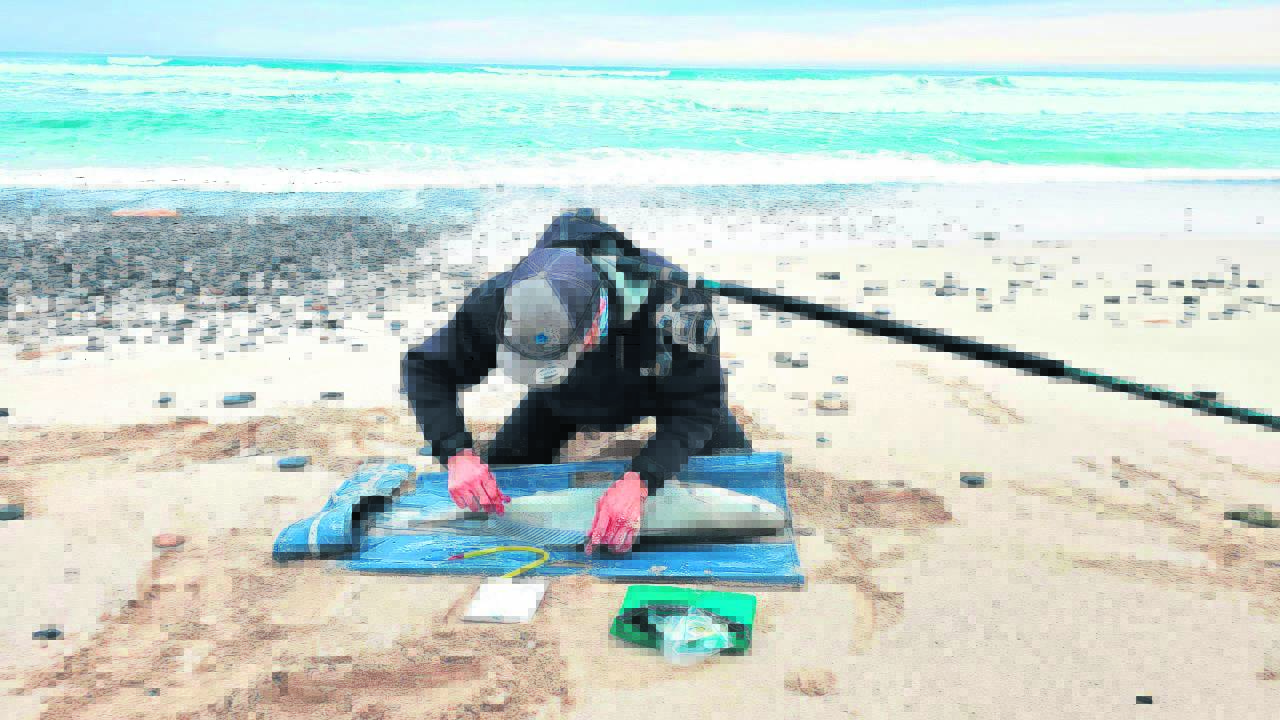

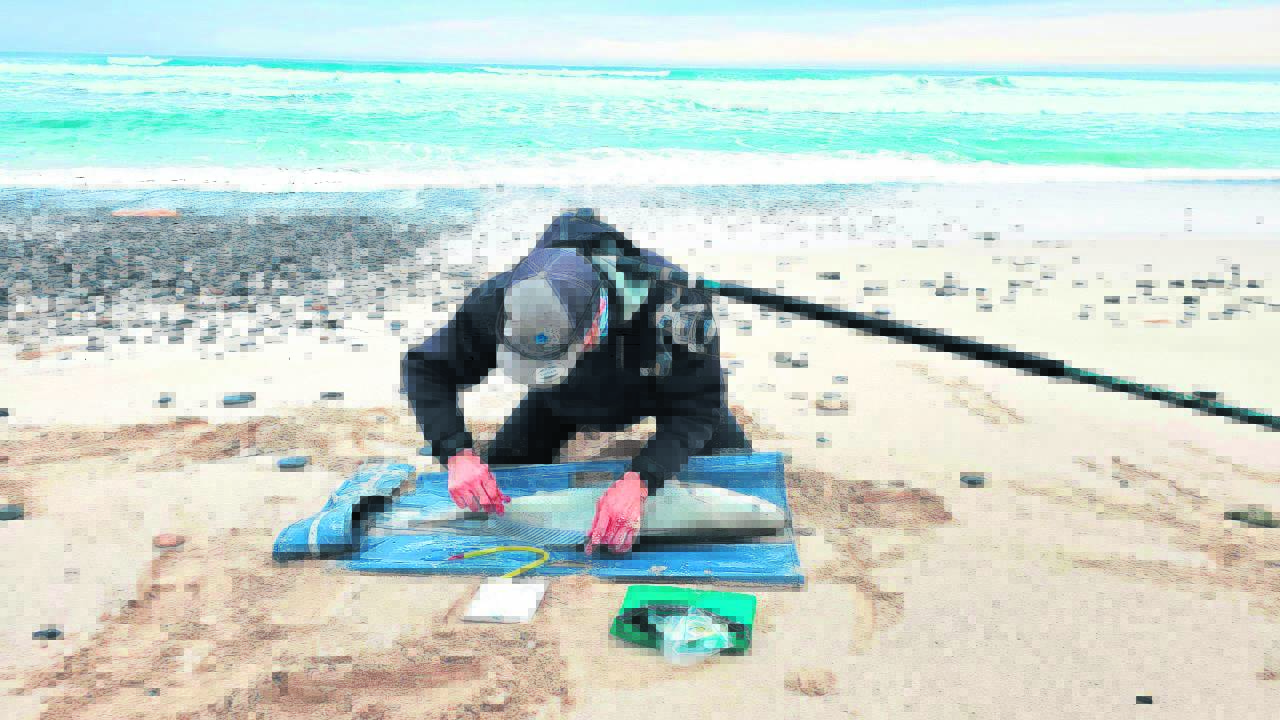
There comes a time in one’s fishing career where you realise there is a serious problem.
Having spent many hours next to the water from a young age learning the ropes with my oupa, first learning how to catch rock fish in pools then upgrading to catching streepies and blacktail in the holes and then learning how to catch elf between the men – all you hear is “coming over” or you get “vloeked” by them when your cast is a little off and goes over their lines.
But that’s how you learn and that’s how many of us started our fishing journeys.
In those days we were unfortunately taught to take almost everything home, whatever you catch braai it. Sharks were mostly gaffed and kept as trophies and many left them to die as they were seen as pests.
Thankfully as time has gone on we have slowly realised we can’t carry on like that; there is certainly a new generation of anglers who do care about the sport and the marine environment.
We see far more catch and release type events, lots of guys are tagging fish and a lot of people are getting involved in the conservation side of things as they realise how bad the situation is. We thank those people for getting stuck in and looking after our fish species.
Unfortunately, though, there is a huge problem with illegal poaching of course, netting and trawlers and pollution especially in estuarine systems.
We all know there are many problems that contribute to our fish stocks being in a terrible state, but that doesn’t mean we should turn a blind eye to the guy next to you taking a few undersized fish home or more fish than his quota allowed. Our fish stocks simply cannot handle this.
We see more and more of these “recromercial” type anglers taking advantage of the ocean, individuals who have all the money they need, fancy 4x4s, the best fishing equipment and so on, but greed gets the better of them. They plunder fish species that are red-listed or endangered, fish such as white steenbras and dusky kob, which are highly threatened and close to or under 5% of their original pristine levels.
These guys will take as many as they can catch, whether the fish are undersized or massive breeding females they don’t care, it’s a second income and more spending money for them.
Unfortunately it’s a sign of the times; come and spend some time in False Bay and watch how baby 40 cm steenbras, kob that are so small they look like baby belman, undersized galjoen and pretty much everything go into the bag or the bakkie. Hy is mos “pan size”.
You can’t argue with these individuals either; they always have a clever answer, and if you give them the facts they usually get aggressive. It’s strange how people can say that actual scientific studies on fish stocks and species are rubbish. And the typical response, “Did you count them under the sea”? Uuuhh for those individuals who say that they actually do count the fish!!
I was listening to Bruce Mann (one of the world’s leading marine scientists) on a recent webinar where he was speaking about marine protected areas and spoke of how they swam 32 km in the Tsitsikamma Marine Protected Area over a period of time, actually counting the wildeperd and blacktail in the various holes and gullies.
These days they use what is called a bruv (baited remote underwater vehicle) to count, monitor and estimate our fish populations. We agree some of the studies are perhaps old and need reassessing but, as we all know, without any such studies we wouldn’t know that most of our fish species are in decline, especially our inshore species.
Let’s get into that and hopefully we can educate a few people on how they come up with fish-stock statistics and also give you insight into the scary numbers.
We don’t realise the impact we have as recreational anglers, the recreational shore fishery is one of, if not the largest, fishing industry in our country. This means, in simple terms, we as recreational anglers have the biggest impact on our fish species and especially inshore species.
We need to stop blaming the trawlers and blaming everything else except ourselves as recreational rock and surf anglers.
Let’s look at some of the most commonly caught species and what there stats look like:
White steenbras
Unfortunately the white steenbras is classified as endangered according with overexploitation, climate change, and habitat loss and degradation being the main threats. Unfortunately, white steenbras populations are on the verge of collapse, believed to be under 6% of its original pristine level. Certainly a species that needs to be looked after before it’s to late.
Most steenbras caught a long our coastline are small these days, ranging from 40 cm to 55 cm. Where are all the fish between 80 and 100 cm? One very seldom sees a mature breeding size steenbras in the Strand these days, in fact they are tough to catch anywhere on our coastline.
Silver kob
A assessment as recent as 2018 showed that silver kob are severely depleted and exploited. The current biomass is estimated at 10,4%. They are listed as vulnerable and red listed as a “do not buy” species. This species is likely to join dusky and white steenbras on the endangered list.
Dusky kob
Dusky kob typically live in excess of 30 years, with the oldest recorded at 42 years. They reach maturity after five to seven years, with males maturing slightly earlier than females.
At this age they are 90 cm to 1,1 m in length, the stats show that less than 5% of breeding females remain. A scary statistic.
I can carry on putting up stats here, but the fact is we don’t even need these stats to be able to see that there has been a huge decline in catches over the years.
It’s becoming increasingly difficult for especially young and beginner anglers to catch fish, I have lots of clients who come to me in the shop and complain that after two years of patiently trying to catch there first fish, they tell me they are giving up because they can only catch barbel or sharks.
This trend will only continue and things will only get worse for our sport and the ocean. It’s time that we as anglers start making the difference we know that the government is not going to suddenly enforce regulations.
I’d like to take this opportunity to personally thank a club like Gordon’s Bay rock and surf angling club for recently implementing a catch and release policy, it’s a great initiative and one that seems is already being supported by many of its members.
Clubs have also started to realise that they need to get involved, its these small changes and steps that we as angling communities need to start implementing. These small changes will lead to big results for our children and their children.
Fishing Republic is a specialised interactive fishing store, with plenty focus on marine conservation and catch and release efforts. Pop into the shop located at Shop 6, Helderberg Centre in Beach Road, Strand. Alternatively, contact us on 072 552 4400 or kegan@fishingrepublic.co.za for more information.