

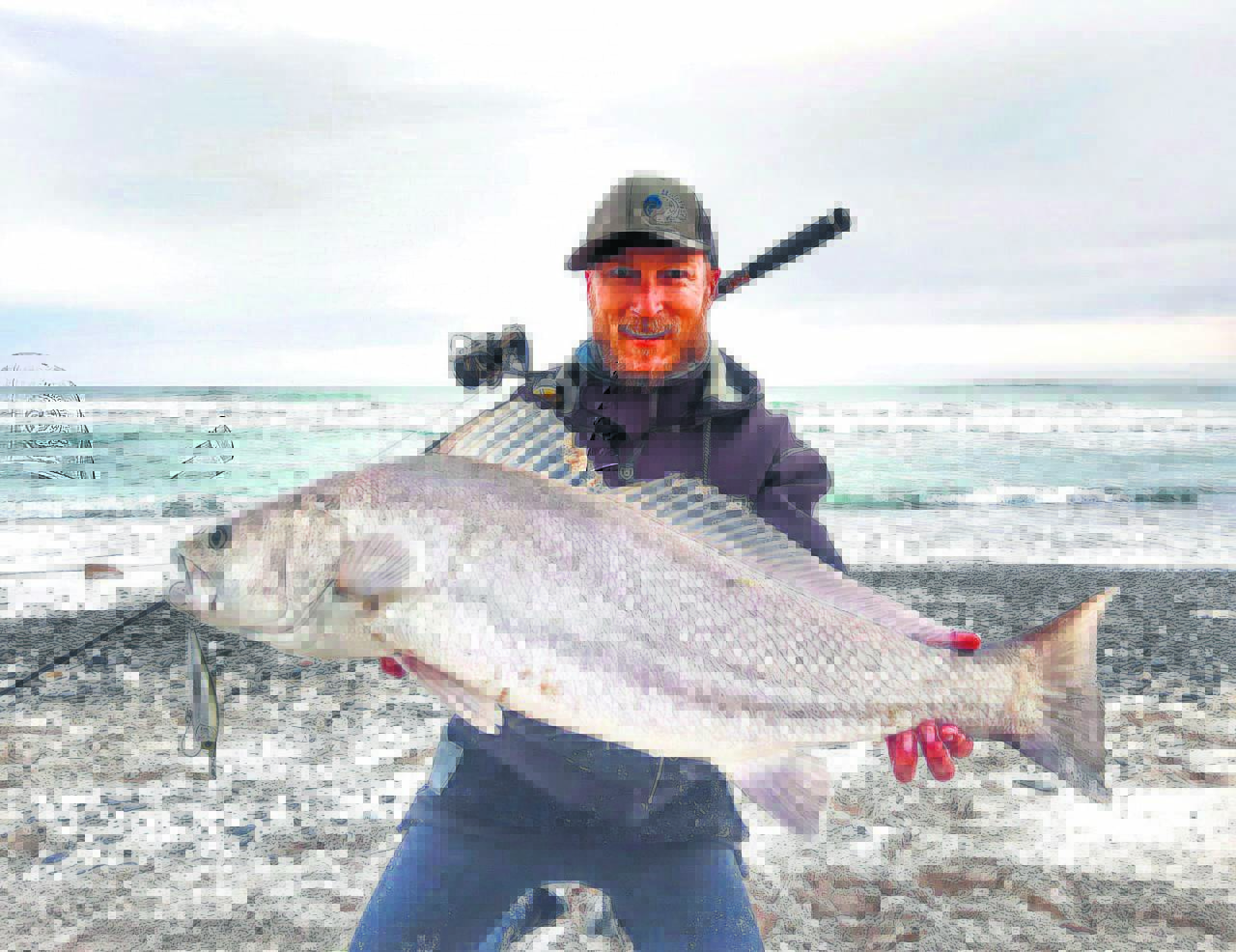
As summer settles in, and in the aftermath of our coastline being battered by some massive fronts in recent weeks involving huge downpours, strong winds and huge sea swells, the massive flow of fresh water and debris into the ocean from the various rivers breaking their banks meant difficult fishing conditions for us anglers.
Thankfully, though, we have started to see the south-easterly wind which has already helped dissipate some of that ‘thick’ brown water, especially in Strand and the greater False Bay, and there have already been big catches of kob.
Please remember elf season opened since 1 November and galjoen season closed on 15 October and reopens again on the last day of February.
As fishing season kicks into full gear, I would like to discuss the collection of the most popular alternate baits for our main summer and winter target species. If one really wants to be a consistently successful angler, then bait collection needs to be at the top of your list. Fishing with freshly collected baits which are specific to your area will nine times out of 10 outfish the angler next to you with “old” bait.
Before we start, please make yourself aware of the laws regarding bait collection, make sure you tick off the necessary boxes on your licence that allow you to collect the various baits. Please stick to size and bag limits.
Dusky and silver kob
Mullet – a live mullet or fresh mullet fillet has surely accounted for more kob catches than any other bait around. The best place to cast for mullet is usually the area you are fishing in. In the surf, one would look for “mullet” water; brown patches of foam and scum lines are a sure sign there will be some mullet around. It takes some practice to throw a cast net in chest-deep water with a 60 km/h east wind blowing, but the reward of a net full of mullet makes learning the technique worthwhile.
Kob and elf
Strepie – A golden stripe, as it’s called by some, is a deadly bait for kob and elf, but it doesn’t work in all areas, although in places such as Strand and False Bay a strepie fillet can be deadly. There are certain areas where you can throw strepies with the cast net; I would say it’s far more fun to grab an ultra-light stick and head to a jetty or harbour or favourite little tidal pool with a number-12 hook and some sardine. One can quickly catch oneself a few strepies and a mullet or two, and even be surprised by other species when fishing this light.
Strepies do work as live bait too, but tend to die more quickly than a mullet. So often guys keep them as fillet baits.
Maasbanker/mackerel – At certain times of the year we get maasbanker and mackerel coming inshore, and be sure there are predators following them. A fresh maasbanker/mackerel is one of the best baits for kob, but catching them can be a tedious task.
When there is word of these baitfish it would be a wise idea to grab some sabiki rigs and head to your bigger harbours or deep water spots. A sabiki rig is a great way to catch these fish. One can add a sardine block to the sabiki hooks to increase one’s chances, and sometimes this leads to strepies and other species eating your sabiki, instead of the strings of mackies you are wanting to catch.
There are many other bait fish species such as anchovies, pinkies, stumpnose, which also work but are not as commonly used as the above.
Occie – Octopus has always been one of the best baits for targeting big kob, but unfortunately it seems this year in particular there are very few occies left in our waters. Occie can be caught in the low tides in the various tidal pools and holes one may encounter. The guys usually use red bike tube or a skirt tied onto a stick with a hook to entice the occie out of its hole. Once it comes you hook it with your “occie gaff” and the rest is history.
Squid – You get chokka and you get chokka; I have seen, first-hand, the effectiveness of fresh-caught local chokka versus perfect export chokka. Nothing beats chokka that is still so fresh it’s changing colours. The meat is completely transparent and absolutely deadly.
Catching chokka is also extremely fun and some guys actually dedicate their time and effort to only fishing chokka. An ultra-light to light rod is used and a 5 to 15 lb braid with a chokka jig is a great way to target chokka. Lots of time and dedication is required when trying to catch them as they normally bite very late at night when most are in bed.
Collecting bait is part of the fishing experience, and I would suggest any beginner or expert angler to take the time to collect your baits. It is not only great fun and exercise, but allows one to understand the intricacies of these various organisms and where they are found, and how they work helps one build a picture of where the fish would need to swim to be able to move into these areas to feed on these baits. Collecting one’s own bait certainly makes one a better angler and increases one’s chances of catching fish dramatically. We will continue with part 2 of this topic in our next column.
- If you are interested in learning about bait collection and want to find out more, please visit us in-store at Fishing Republic in Beach Road, Strand, or contact us on 072 552 4400.