

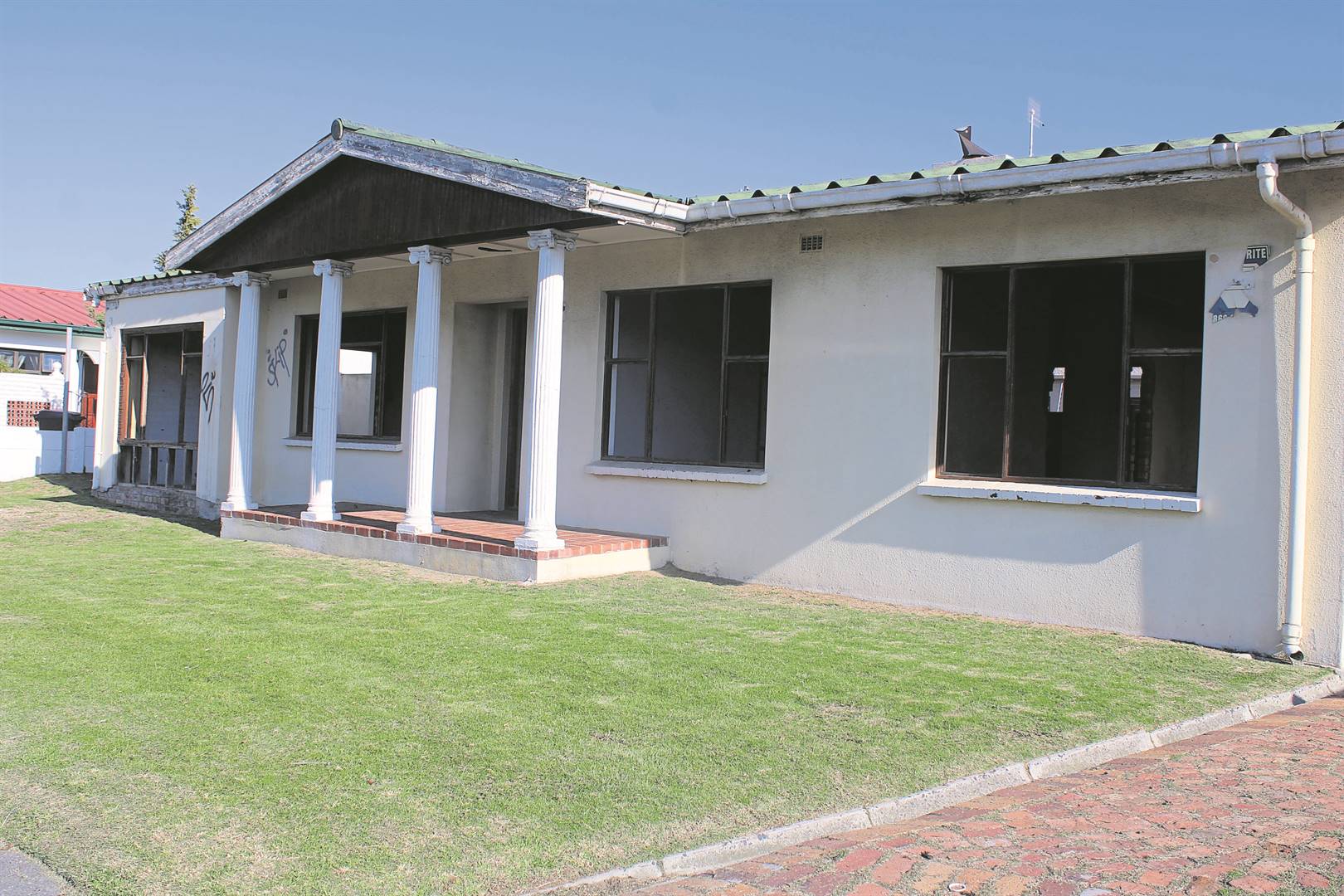
- The abandoned house at 51 Gordon’s Bay Road in Strand has become a significant concern for local residents and business owners due to its dilapidated state attracting criminal activities and social disturbances.
- Neighbors have reported continuous problems such as vandalism, theft, and illegal occupancy since the property has been vacant since 2009, despite efforts to contact the owners who claim it is a “project in progress.”
- Local authorities, including the City of Cape Town’s Problem Building Unit, have not classified it as a problem building, leaving residents frustrated and seeking more effective measures to secure or repurpose the property.
A derelict, abandoned house, which has not only become an apparent eyesore, but a proclaimed problem building attracting crime-related activities and social ills, is sparking concern.
The property that sticks out like a sore thumb at 51 Gordon’s Bay Road in Strand, is driving residents and business owners alike up the wall, as the dilapidated private property continues to fall into ruin and serve as a magnet for vagrancy, criminal activities and disturbances.
According to a next-door neighbour, who has apparently lodged continuous complaints with various authorities, the house has been vacant since at least 2009 and has been vandalised by trespassers, stripping it of all the pipes, electrical wiring, windows and interior walls over the years.
“There is nothing there but an eyesore of a shell, which remains,” the neighbour related, adding that they have turned to the municipality many a time, pleading for a resolution.
The neighbour further shared successfully tracing the owners who, in response to enquiries, apparently said the property “is a project in progress” and declined offers to take it off their hands.
“However, we can’t sit with such a property,” said the neighbour who, among others, is left bearing the brunt.
According to the neighbour they have had to fork out funds for regular fumigation, to keep rodents and other pests away, and the property has fallen prey to crimes such as numerous attempted break-ins and incidents of theft. Most recently, perpetrators allegedly accessed the premises and broke off the exterior air-conditioning unit.
“The vacant eyesore is not good for business and poses a health, safety and security risk,” the neighbour added.
Another neighbour has constantly had to call on the assistance of the local neighbourhood watch, especially at night when illegal occupants move in, start fires inside the building, make unbearable noise, smoke drugs and further break the structure down.
“In one instance, the trespassers went under the wall to access a neighbouring property where they broke into a motor vehicle,” the neighbour said.
The neighbour further shared that a local health inspector was horrified at the situation after stopping at the property during a three-month visit to the preschool and day-care centre.
“Nobody does anything about the matter,” said the neighbour, fearing for collective safety.
Both neighbours believe that for the problem to be resolved, the house should either be demolished or the property sold to be fixed up. “What else can one do to enforce this?” one asked. “If council is not willing to take action what can the ordinary person do?”
According to Law Enforcement spokesperson Wayne Dyason the City of Cape Town’s Problem Building Unit has not listed the house as a problem building. He said problem buildings are dealt with as per the Problem-building Bylaw, which states that the owner must secure the property to prevent illegal occupation by securing all entrances.
“The owner needs to lay charges with police for trespassing,” Dyason pointed out.
In response to enquiries to help trace the owners Dyason said: “The City cannot make available the detail of the owner as per the Popi Act.”
He further advised residents to report any criminal activity or suspicious behaviour to authorities; or call the City’s Public Emergency Communication Centre on 021 480 7700.
DistrictMail & Helderberg Gazette also reached out to local ward councillor Chantal Cerfontein, who simply emphasised that the property is privately owned.