

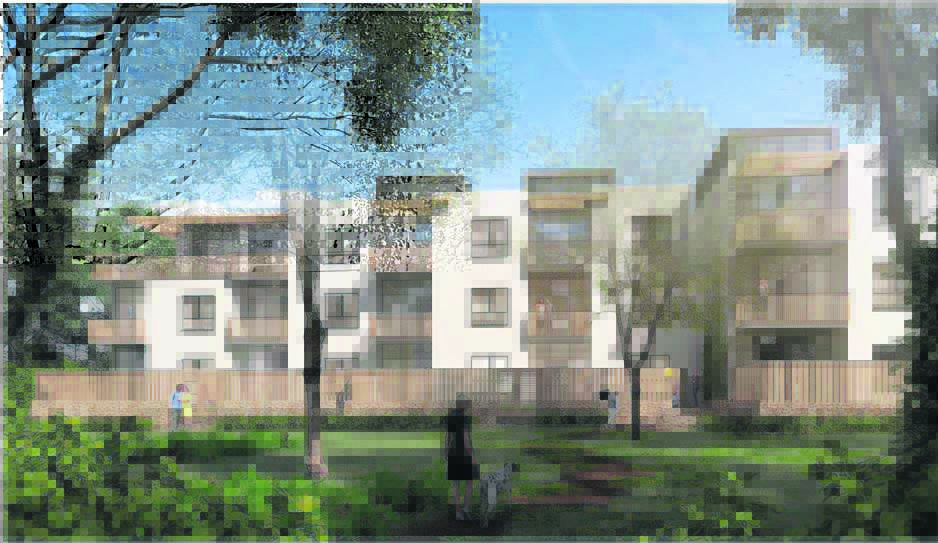
A proposed redevelopment of Erf 9013 in Somerset West has ignited a debate between developers and local conservation groups.
The proposed renewal of Willow aan Rivieren (Willowbrook Lodge), located adjacent to Radloff Park, involves the demolition of an existing guest house and the construction of 39 apartments.
The proposal is now receiving comments on heritage grounds. A draft Heritage Impact Assessment (HIA), prepared by heritage practitioner Cindy Postlethwayt, recommends approval for the project, concluding that the development will have a “low visual impact on heritage resources” and will not encroach on the 45 m Protected Natural Environment (PNE) buffer zone that protects the Lourens River.
The HIA states: “The assessment concludes that the proposed development will have a low visual impact on heritage resources, largely due to existing and planned landscaping. It also emphasises that the project will not encroach on the PNE and is compatible with the surrounding suburban environment.”
Furthermore, it suggests that “given the limited heritage impact, socio-economic factors are unlikely to be a primary consideration in the decision-making process”.
However, the assessment is being strongly contested by the Lourens River Conservation Society and the Friends of Radloff Park, who have raised serious concerns about the project’s potential environmental and social impacts.
Steven Louw, chairperson of the Lourens River Conservation Society, stated the organisation had previously lodged an objection and emphasised its specific concerns. “This objection highlighted a number of concerns, in particular the potentially detrimental effect on the Lourens River PNE, potentially negatively affected water quality, water flow, flooding and flood damage,” he said.
Louw also clarified the scope of the PNE, noting: “Our objection also noted that the PNE included all erfs along the river in their entirety, that is the entire erf falls within the PNE.”
The society fears the development will contribute to “urban creep” and negatively impact the area’s delicate ecosystem. “Increases in hard-surfaces and related non-natural interventions, which reduce the quality and/or quantity of the biodiversity of the area, not only pose threats to the natural state of the riverine area and the related biodiversity, but also potentially increase both the risk and severity of damage due to flooding in high-flow periods.”
Maarten Schurer, speaking on behalf of the Friends of Radloff Park, echoed these environmental concerns and highlighted a range of social impacts.
“Our committee, and a large part of our community, have [a number of] concerns if the project goes ahead. This includes high density housing too close to the river and current traffic congestion issues in the neighbourhood will further increase, as there is only one route (Lourensford Road) leading in and out of the area. There are also infrastructure issues with regard to electricity, water and sanitation, loss of tranquillity by increased urbanisation and overcrowding in the area,” he elaborated.
“There are also concerns of further restriction of river water-flow during flooding as we saw three times last year. The Lourens River will create a new path, probably through Morgenster farm and bypass the Morgenster weir; this will also cause problems upstream at Vergelegen. There will also be major construction noise and disruption during the building process, which will probably take a minimum of about two years in my estimation.”
Schurer also addressed the heritage aspect, acknowledging the lack of historical buildings on the site but emphasising the intangible heritage at stake: “As far as objections from a heritage point of view are concerned, there are no historic buildings on that site but the ‘feel’, view and surroundings will be changed forever. The project is widely opposed by the community.”
The draft HIA is currently available for public comment, and all feedback received will be incorporated into the final document.
Heritage Western Cape will then make a final decision on the proposed redevelopment, weighing the arguments presented by the developers, the conservation groups, and the broader community.
- Any person wishing to object or comment on heritage grounds to the application must make such comment or objection in writing to Ms C Postlethwayt via email on cindy@cpheritage.co.za on or before Thursday 27 February. Objections or comments that are not made on heritage grounds will not be considered.