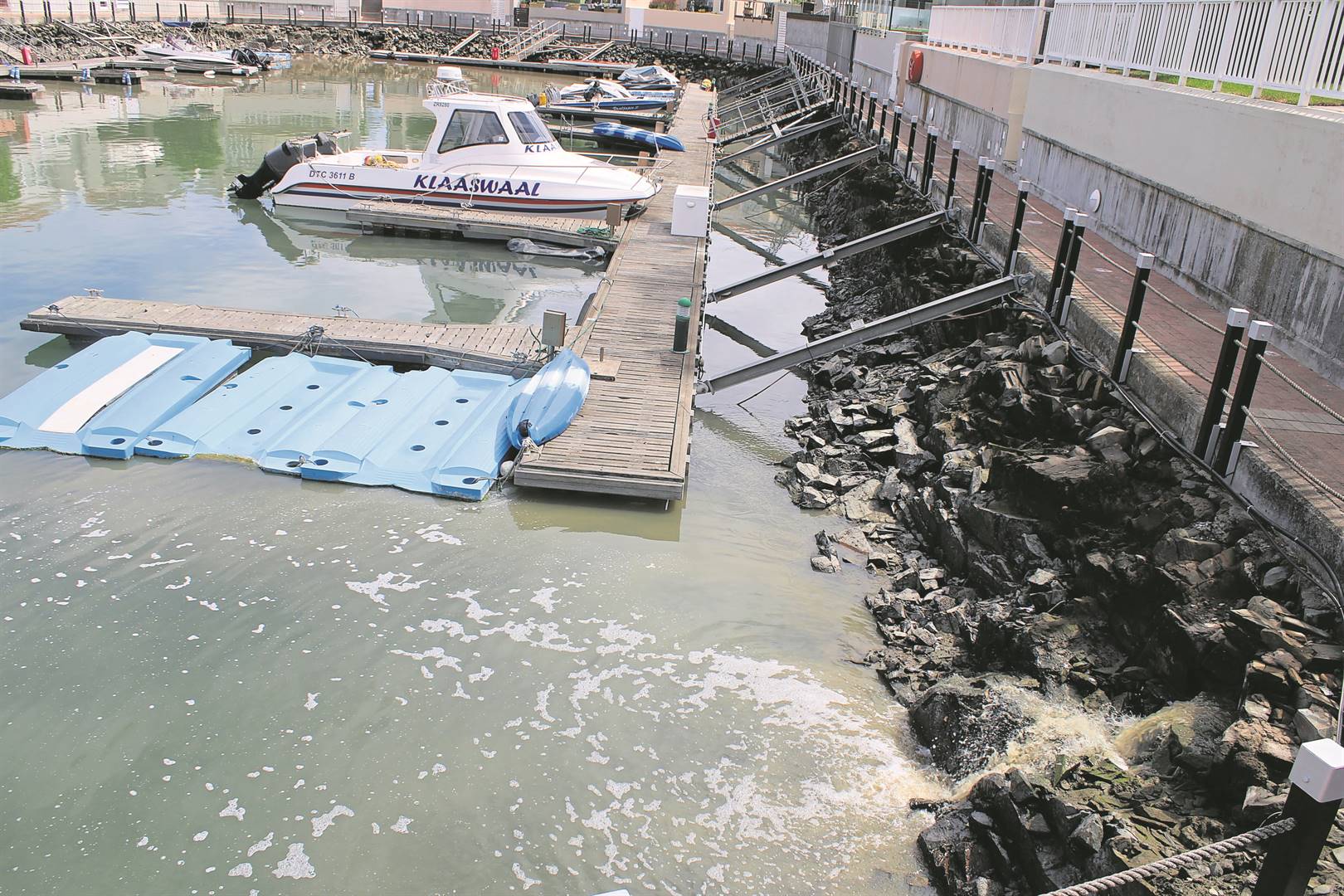

Asked how marine life is impacted in the event of sewerage spills, the City’s Deputy Mayor and Mayoral Committee Member for Spatial Planning and Environment, Eddie Andrews, said they are not aware of any reports of dead or dying marine life at Harbour Island.
“That said, the degree to which marine life is impacted by a sewage spill will depend on multiple factors, including the volume of the spill, how long it goes on for, whether it is a spill into a partially enclosed or exposed ocean environment and the rate of change of seawater to that environment through both tides and wave action.
“In most cases it is not the sewage itself that is harmful, but rather the nutrient loading and/or suspended solids that can reduce oxygen levels in the water via multiple mechanisms. Algal blooms from the nutrient loading are a common cause of reduced dissolved oxygen. This kind of impact is mostly limited to environments where there is little or low levels of change of seawater. This is a problem more common in freshwater systems, but it can occur in enclosed coastal systems. When it occurs we will see dead or dying marine life.”
Andrews further said the City has various strategies in place to respond to sewage-spill events in the most effective and efficient way possible. He said: “These include a coastal sewage spill response protocol as well as the recent development of sewer-pump station protocols that are being developed which specify management actions across various City departments, and which are geared towards limiting the impact of such spills, on both people and the natural environment, including the receiving marine environment.”
Pulsed on the eColi levels, Andrews said the residential marina has a history of poor water quality likely to be a result of multiple factors, including sewage spills, contaminated stormwater, urban run-off and poor or low ocean circulation inside the harbour itself.
“Importantly, this is common in harbour environments. The most recent data we have for Harbour Island is 60 enterococci per 100 ml which, on its own as a single result, is not a cause for concern. However, long-term data over five years shows water quality as calculated is poor, hence the pollution warning sign.