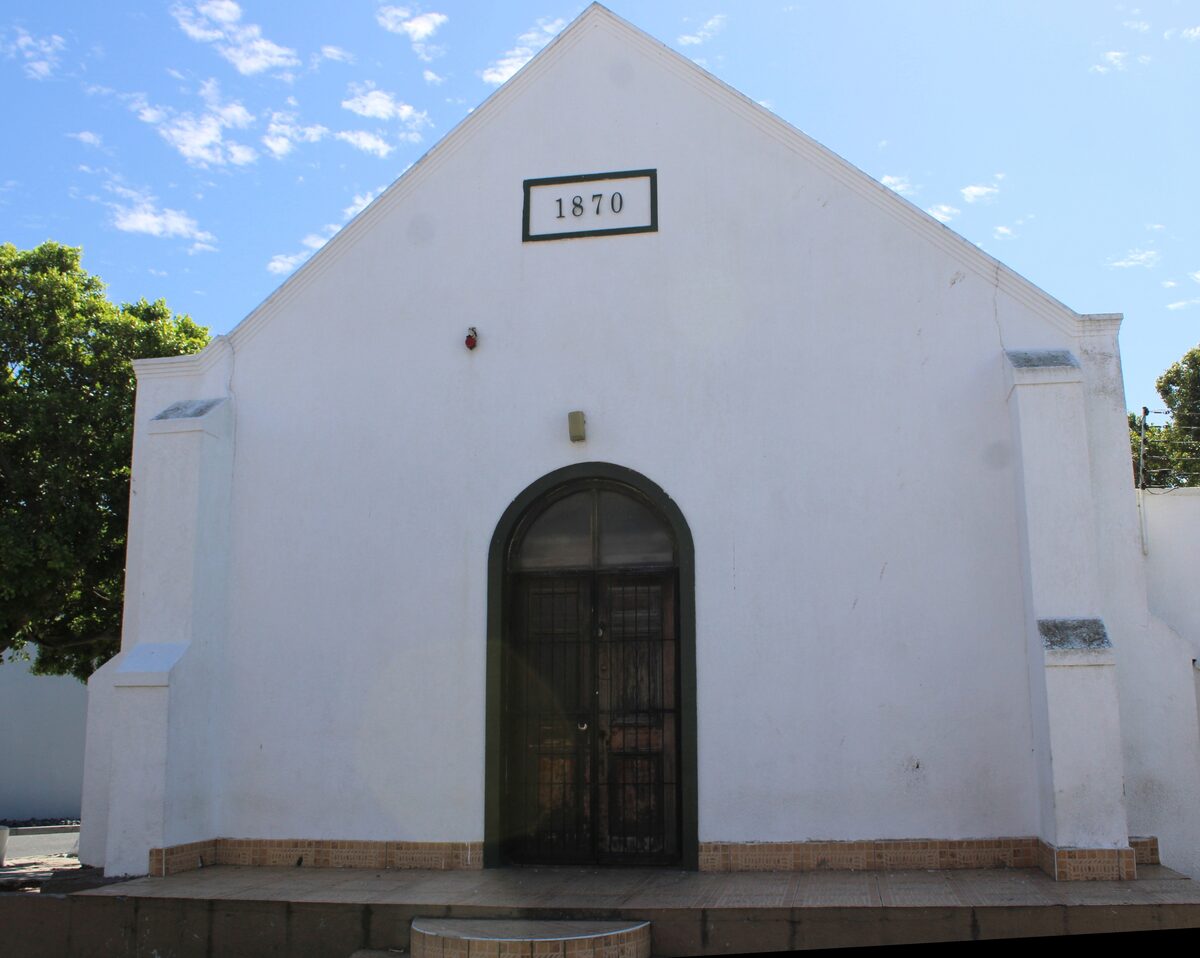

As part of the ongoing celebrations marking the 200th anniversary of the Muslim community of Strand, the Strand Moslem Council (SMC), in partnership with local young Muslim men and women, has arranged programmes to commemorate this important milestone.
This bicentennial programme started with a Raatib Al Hadaad by Aswaatul Shabaab Thikr Group on Thursday 31 March on the theme “For the youth by the youth” at the Jaamiah Masjid. Since the start of Ramadaan, the SMC Imaamat Committee invited guest speakers to deliver lectures every Saturday and Sunday as part of the celebrations.
On Sunday 17 April, the annual SMC Ramadaan Qirah Programme showcased our highly talented Quraa. A very successful Mass Iftaar, organised by the SMC, Strand Muslim Primary School and community youths, followed. The SMC plans to publish a series of articles in Muslim Views after Ramadaan to reflect on the community’s founding, growth and development.
Diverse views on origins
Among the diverse views of the origin of the community are those of Peggy Heap and Faure de Kock, who assume that the followers of Shaykh Yusuf of Macassar were the founders. The late Maulana Yusuf Karaan held the same view, while the late Imam Ismail Latief believed his congregation was established in 1796.
No documentary evidence has been found to corroborate these views. I will share my version.
Founding of Strand’s Muslim community
Muslims established a faith-based settlement at Mosterd Bay (Strand) in the early 19th century. Abdol Sammat, an imam from Semarang (Indonesia), settled here with five compatriots in 1822. Under his leadership the settlement became one of the first sustained rural Islamic communities at the Cape. They were the pioneers of the Strand Muslim community 200 years ago.
Sammat’s testament, filed in 1832, enabled the tracing of his movements by using the Opgaafrollen (census) of the districts of Cape Town, Stellenbosch and Hottentots Holland. His movement coincided with fervent activity by both Muslim and Christian missionaries, which was taking place at the Cape during the first three decades of the 19th century.
The movement of imams moving into the interior and converting the slaves to Islam is confirmed by Wesleyan Methodist Missionary reports of 1817 and 1818.
Prior to moving to Mosterd Bay most of these Javanese lived in abject poverty in the alleys and lanes of Cape Town. Their movement to farms in the rural areas should be seen as a hijera (flight) from poverty to greener pastures, where they could sell their labour as artisans. Farmers allowed them to squat on their farms. Sammat was a knecht on the farm of the Myburghs in Somerset West in 1820.
His testament confirms that he is a “Mohammedaansche priester woonachtig aan Mosterdbaaij aan Hottentots Holland strand” as reflected in the extract.
The Javanese who initially joined the settlement were free blacks (vrijswarten). Perhaps it is necessary to explain the term “free black”. Were they really free in the true sense of the word?
Origins and status of “free blacks” at the Cape
By way of background to the history of Mosterd Bay, it’s necessary to understand the position of free blacks in Cape colonial society. Historians refer to slaves who were set free as free blacks, some convicts and political exiles who remained at the Cape after serving their term. Tuan Guru, who was released from Robben Island in 1793, is a case in point.
In addition, some free men of Asian origin who settled at the Cape were categorised as free blacks. The free blacks were predominantly from the islands of Indonesia or India, while a smaller number were of Mozambican and Chinese origin.
Freed male slaves faced formidable disadvantages, such as prejudice, poverty, the inability to obtain credit, and the extreme difficulty of obtaining gainful employment in the Cape’s oscillating and insecure economy. Preference was given to the “poor whites” of Cape Town in most occupations. Both the Dutch and British colonial authorities didn’t regard free blacks as the complete equals of Europeans. The legal status of free blacks was ambiguous at best.
Free blacks enjoyed certain privileges. They could buy and sell land, and own slaves if they could afford to, but they were also subject to legal restrictions. The house of a free black could be searched without a warrant. Curfew regulations compelled them to carry lanterns at night and they had to obtain passes to leave Cape Town for a few days. They also had to perform the duties of the fire brigade in the event of fire in the city.
Despite the restrictions on their movement, free blacks seem to have been relatively mobile in the pre-emancipation era. Some moved from Cape Town to the interior before Ordinance 50 of 1828, which made Khoi and free blacks equal before the law. For instance, Sammat was listed as a free black on the Opgaafrollen of Cape Town, Stellenbosch and Hottentots Holland between 1810 and 1822.
The occupations of free blacks and the services they offered allowed them access to and residence on farms.
They were masons, carpenters, cabinet-makers, coopers, saddlers, basket makers, tailors, shoemakers, hatmakers, harberdashers, bakers, greengrocers, butchers and fishermen – no wonder settler farmers allowed them to squat on their farms!
Squatting on Crown Land
It must be noted that as early as 1794 the free black Corridon of Ceylon was the first Muslim to purchase property in Dorp Street in the Bo-Kaap. Subsequently, many Muslim free blacks were property owners in the city, but majority lived in abject poverty.
Their movement to squat on Crown Land at Mosterd Bay could, firstly, be ascribed to Sammat’s effort to prevent them from being Christianised. Secondly, their state of poverty precluded them from obtaining finance to acquire land, most of which had been appropriated by the settlers.
In the immediate pre- and post-emancipation era, land in the Cape metro must have been expensive and scarce, so squatting on Crown Land was a feasible option. Between 1822 and 1832, 28 Muslims, mostly from the island of Java, joined this settlement of fishermen.
In 1830, Reverend Paul Daniel Luckhoff referred to the shabby reed huts of the Muslims on the shores of Mosterd Bay in his diary.
Formation factors
A number of factors facilitated the formation of the Muslim community at Mosterd Bay. Firstly, the initial preponderance of free blacks from the islands of the Indonesian archipelago, who shared a common bond of the Islamic faith and common language (Malay), greatly contributed towards the cohesion of this rural enclave of Islam.
Two important components of community formation is a common language and a common faith. The free blacks of Indonesian origin probably spoke several of the Indonesian languages, of which Malay was the most widely spoken and understood. The language of the Indonesians at the Cape, Melayu, provided a common bond among the Indonesian slaves and became the religious language of Cape Muslims.
One of the narrators of the oral history of Strand and my aunt, the late Ragiema Crombie (1900-1990), couldn’t speak Melayu, but could recite the rules for taking ablution before performing the five daily prayers in Melayu, learnt by rote from her old khalifah (teacher), Imam Moosa Karan from Java. The old imams from Java must’ve used Malay in their teaching at Mosterd Bay 100 years earlier.
Communication among the Indonesian free blacks, those of other ethnic origins and even the Khoi was possible through the lingua franca at the Cape in the early 1800s. Most free blacks at Mosterd Bay had been at the Cape long enough to acquire this lingua franca.
Apart from shared roots and shared faith, free blacks of Indonesian origin would also have shared experience as slaves or convicts before they becoming “free” at the Cape.
The settlement at Mosterd Bay had the benefit of Islamic leadership under the guidance of Sammat. Perhaps the greatest binding force in the settlement was their iman (faith) in Islam, which enabled them to resist attempts of Christian conversion by missionaries.
This deep religious conviction enabled them to preserve their Islamic identity as Mosterd Bay became a multi-ethnic settlement of Khoi and free blacks of diverse origins, especially after the final emancipation in 1838.
Sustaining an independent livelihood
With its fresh water and abundance of fish, Mosterd Bay was a place where the new settlers could sustain themselves. Without a reasonably permanent stream an independent existence was not feasible and the small communities that attempted this were few and poverty-stricken.
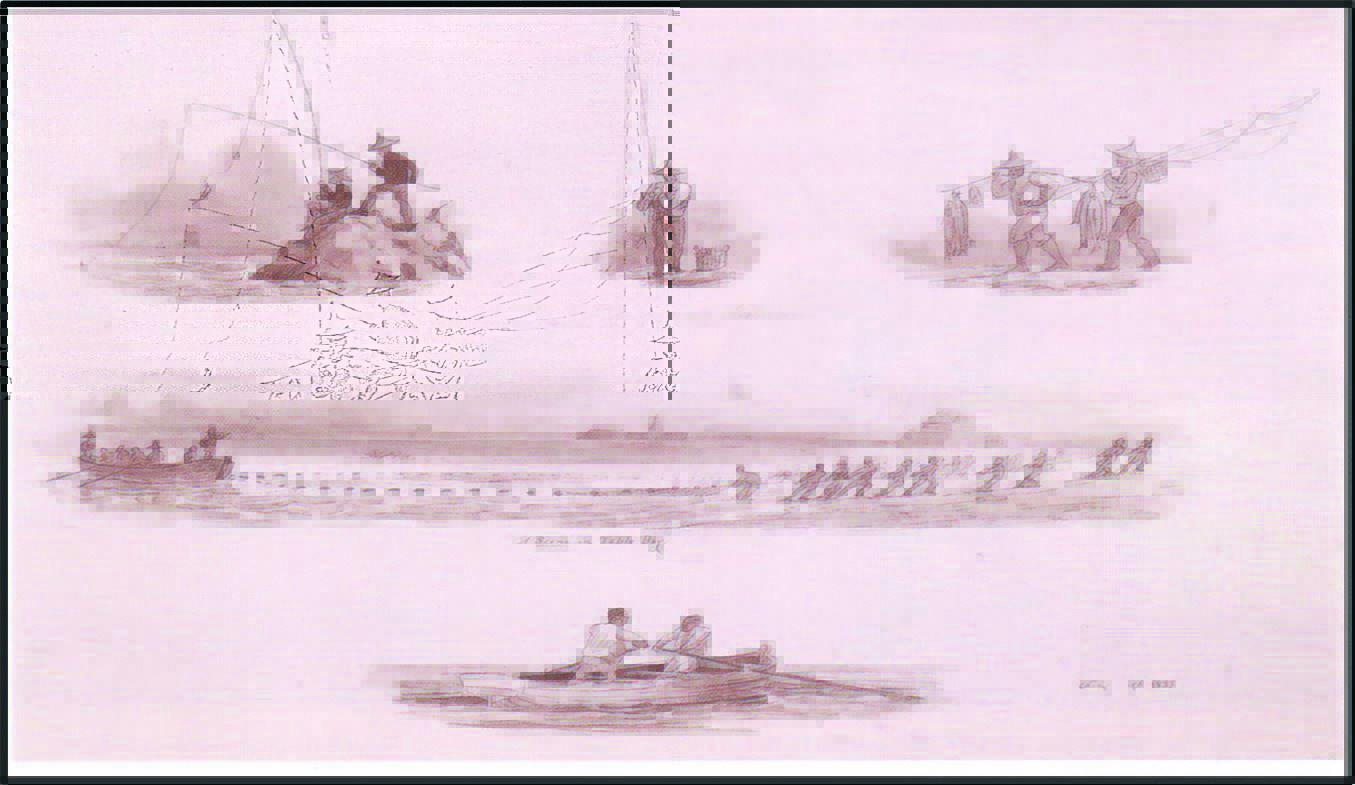
The streams dried up in summer, but the nearby vlei was a source of water. Many free blacks of Cape Town were fishermen and the group in Mosterd Bay virtually lived from the sea initially.
From Sammat’s testament it is evident that he was a subsistence farmer. In 1830 the imam also operated a small retail business, as he applied for the licence that year.
In the archival records, there are also indications that some free blacks kept livestock on a small scale. In 1825, free blacks Cornelius Stynhard and Wiro of Java took Hendrik Morkel to court for impounding their livestock and whipping two boys with a sjambok. Morkel denied he had whipped the children and claimed the cattle were grazing on his ground, but the plaintiffs claimed the animals grazed on government land. The court record notes that Stynhard had four oxen and two horses and that the son of Wiro of Java was herding his father’s cattle.
I was curious to know how Sammat moved about and found the answer in this court case when Morkel complained about the imam’s old stallion interfering with his pedigree horses.
Community growth
In the years before emancipation, the ward of Hottentots Holland had a substantial slave population. In 1834-’5 field-cornet Ryk de Vos enumerated 532 slaves (84 children under six, 265 men and 183 women) in the ward for compensation purposes.
After the apprenticeship period ended in 1838, the settlement at Mosterd Bay grew rapidly as large numbers of ex-slaves moved from the countryside to Cape Town. There was also a movement of ex-slaves to the rural Islamic enclave of Mosterd Bay – both from Cape Town and farms in the Boland – on a lesser scale. Free access to land here must’ve encouraged many to join the settlement.
Some historians have traced freed people’s movement patterns. They first contracted themselves as wage labourers at a series of farms before settling on a Christian mission station. At least eight of the free blacks of Indonesian origin, who lived close to Sammat in Cape Town in 1810, had followed a similar pattern from Cape Town to farms in the wards of Stellenbosch and beyond, before settling at Mosterd Bay.
Freed slaves in the basin had the option of settling at the Wesleyan Methodist Mission stations in Somerset West, Raithby or Sir Lowry’s Pass if they were Christian. A number of slaves whose forebears were Muslim became Christians who settled here.
However, Opgaafrol statistics indicate that many freed slaves and others settled at Mosterd Bay after emancipation in 1838. According to the Hottentots Holland Opgaafrol for 1842, there were five white men and four white women, 43 coloured men and 47 women resident at Mosterd Bay. The Opgaafrol of 1851 indicates the community had increased from 99 to 160, with the fishing village comprising 32 houses or huts.
Shirley Judges, in her study of poverty, living conditions and social relations in Cape Town in the 1830s, refers to the close bond between free blacks and slaves. She said when slaves lived away from their owners they occupied the same houses as free blacks.
Jackie Loos observed that freedom came at a price, as freed slaves were suddenly responsible for maintaining themselves and children. She said the Cape’s small free black community supported freed slaves.
Robert Shell also referred to the assistance freed slaves received from a sympathetic free black Muslim community. Freed slaves were probably accorded similar assistance by the settlers at Mosterd Bay. The eventual allocation of the quitrent grants partially confirm this as three to four families shared small plots near the sea.
Islamic activity
Apart from Sammat’s testament, which states that he was an imam at Mosterd Bay, there are few documentary records of Islamic activity from 1822 to 1838. There is no conclusive evidence as to who succeeded him after his death, though it’s clear the Muslim community continued to grow.
For Islam to survive at Mosterd Bay, some Islamic education and practices must’ve taken place. One can assume the congregants would’ve used one of the reed huts for the purpose of salah, jumu’ah, miaraj, Maulud al-nabi, ratibul-Haddad, taraweeh in Ramadan, Eid celebrations, janazah and the traditional prayers on the seventh, 40th and 100th night after the death of a family member. In his testament, Sammat specifically requested that these prayer nights be held.
Historian Pamela Scully could find no documentary evidence, but she believes it’s probable that marriages were solemnised in the homes of the Islamic community between 1823 and 1853. Shell said by the 1820s Muslim imams routinely performed marriage ceremonies for slaves; Sammat would certainly have performed these nikahs (Islamic marriages).
There is some documentary evidence of marriages that could have taken place at Mosterd Bay while Sammat lived. In 1825, Ongo Talodien was listed as a resident at Mosterd Bay Opgaafrol – the same Ongo mentioned as an alternate executor in Sammat’s testament in 1832.
In his own testament, filed on 12 May 1837, Ongo stated he was a married. Sammat was still alive at the time, so it seems reasonable to conclude that he performed marriages at Mosterd Bay. For example, the marriage of Saban and Eva Wanza may have taken place c.1834 when Sammat was still alive. The couple were born in Stellenbosch and died at Mosterd Bay – Saban in 1879 and Eva in 1895.
Saban’s death notice stated he was married by Malay rites. Eva’s eldest son was 60 years old when she died in 1895. This means their marriage may have taken place c.1834, but it’s not known whether they were married in Stellenbosch or Mosterd Bay.
Other significant documents of the Muslim community of Mosterd Bay are the testament and death notice of Ongo and his memorial for land. From his testament we learn after his first marriage to Nella, with whom he had two children, Spasie and Salie, he then married an apprentice, Dolphina, of Johannes Brink, owner of the farm Knorhoek in Sir Lowry’s Pass.
This is an example of the situation described by Judges: “Slave women had formal and informal unions with free men and slave men were involved with free women.” Ongo’s two children by the slave Nella were born into slavery. Dolphina was among the 28 slaves of Brink, including Spasie and Salie, who were appraised for compensation purposes in 1834-’5.
The Opgaafrol of 1840 recorded that Dolphina was with her husband at Mosterd Bay. Further evidence that Ongo and Dolphina were married can be found in Ongo’s death notice, as he drowned in 1842. Dolphina made her mark on the death notice and both Spasie and Salie, his children with Nella, are listed. They were also at Mosterd Bay in 1842.
This is one example of a free black who married an apprentice and, after final emancipation in 1838, was united with his family at Mosterd Bay. Ongo, his wife and children are one of the pioneering families of the Strand Muslim community.
Sammat died on 7 March 1838. I would propose that he died a happy man because his effort at dawah (missionary work) had been richly rewarded.