
There is no conclusive record of who the person was who succeeded Imam Abdus Sammat after his death in March 1838. The absence of documentary evidence makes it difficult to account for the Islamic leadership and their activities at Mosterd Bay between 1838 and 1864.
Oral history corroborated with death notices and registrations, and Christian missionary records have been used to account for the history of the Muslim community at Mosterd Bay (as Strand was then named) in this period. The death notices and registrations corroborate the names of Muslims who, according to oral history testimony, lived here from 1838 to 1864.
In 2014 the Muslim community launched a book that recorded their founding, growth and development. The publication dealt with imams who served the community until 1966.
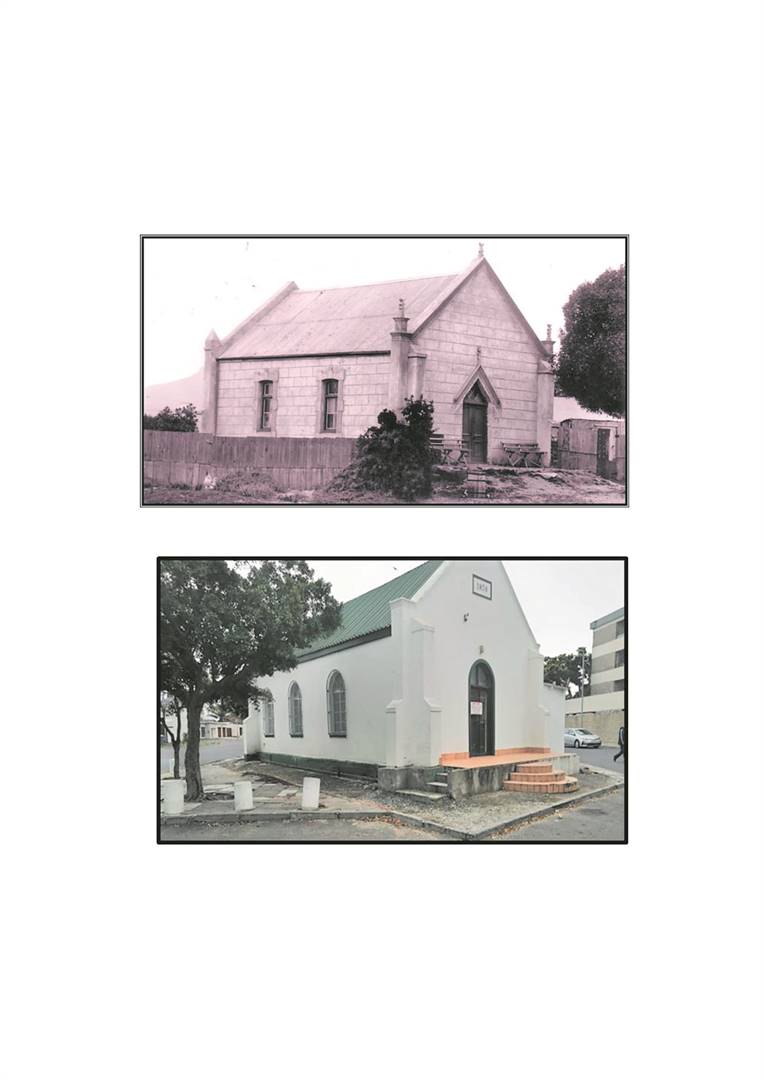
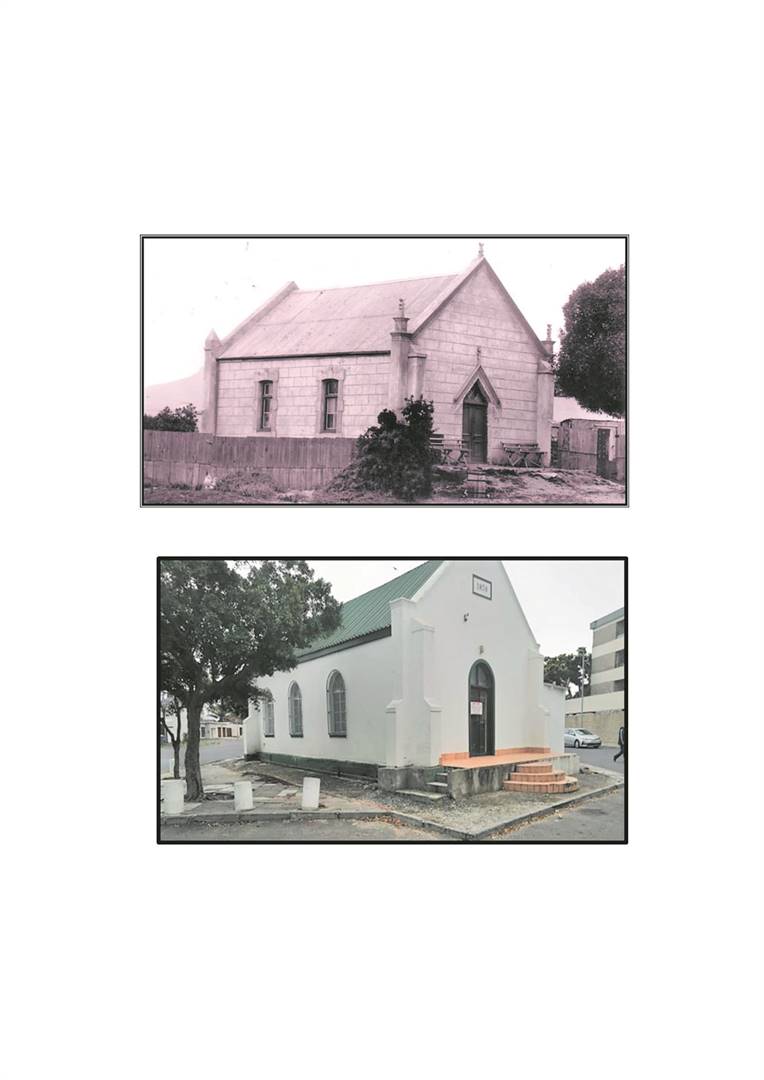
An interesting feature of the founding of this community was that they, along with others, had erected their houses on Crown Land at Mosterd Bay for 60 years. They not only built their houses, but also two masajid to serve their Creator. In 1882, 67 grantees were given legal title to the land they had occupied. Included in the list was the first masjid, the one just behind Shoprite in Strand.
Between 1882 and 1966 four masajid were established in Strand. For fear of duplication, and for the sake of brevity, an attempt is being made here to list the imams who officiated at these places of worship up to 1966, when the Strand Moslem Council was formed.
Based on oral history and documentary evidence, we can at least list 18 imams who served the community from 1838 until 1966. Five imams died in office while serving the community for an average of 44 years. Among the five was the late Imam Ismail Latief, who had served his jama’ah for 50 years. This surely points to a great measure of stability and astute leadership within these jama’ahs.
It becomes evident this community had been spared the issue of conflict over imamate succession.
Imams who officiated at the first masjid
Imam Bazier Latief
According to the late Imam Ismail Latief, his grandfather Imam Basier Latief and others carried rocks from the reef at Mosterd Bay for the foundation of the Market Street Masjid. The late Maulana Yusuf Karaan narrates that Imam Basier Latief was the first imam of this masjid, and that he died in 1879. It is narrated that the Latief imams came from Ambon, Indonesia. With many years of Islamic service, Imam Basier Latief was the driving force behind the erection of the first mosque. Local historians acknowledge that the Market Street Masajid the first place of worship to be built in Strand and is possibly the first erected outside the perimeters of Cape Town. The exact date of the construction of the masjid must still be established, as it was registered as a quitrent grant on 27 October 1882.
Imam Taliep Cassiem (1843-1921)
According to Maulana Karaan and the late Imam Ismail Latief, Imam Taliep Cassiem succeeded Imam Basier Latief. He officiated at the Market Street Masjid from 1879 to 1882.
Imam Cassiem was born in the Bo-Kaap (Vlaeberg) in 1833 and settled at Mosterd Bay in the 1870s, and married Mymona Wanza, the daughter of Oompie Saban Wanza.
One of his daughters, the late Janap Wanza, is the mother of Maulana Karaan. He brought the practice of ratiep to Strand and two of his swords were named “Wag-’n-bietjie” and “Goumaak”.
Imam Basier Latief and his jamaat had illegally erected the Market Street Mosque on Crown Land and, as such, the jamaat had no legal tenure of the ground. This was the case with all the early settlers at Mosterd Bay.
By virtue of the Mosterd Bay Crown Land Act of 1881 the settlers were given legal tenure of the land, but they had to go to the Commissioner’s Office in Stellenbosch to register the land in their name. In October 1882 this registration of the masjid proceeded and the congregation split into two factions, with Imam Cassiem and a considerable number of congregants breaking away to form the third jamaat.
According to the late Imam Ismail Latief, the third jamaat operated from a langgar off Wesley Street, diagonally opposite the old police station, under Imam Cassiem’s leadership. He passed away, aged 88, in 1921 and Mymona died on 14 February 1936.
Imam Jaylanie Baderoen (1849-1927)
Archival documents record him as Lanie Baderoen and indicates he was a cleric born at Mosterd Bay in 1849. His name is actually Jaylanie Baderoen, but he was fondly known as Tata Lanie. Jaylanie is the son of Joseph (Yusuf) and Gaseja Baderoen, born Isaacs.
It is believed the Baderoen family, Imam Basier Latief and his murìds played a prominent role in the erection of the first masjid in Strand.
At age 33 Imam Baderoen was the imam of the Market Street Masjid. In October 1882 he had the masjid and the adjacent house registered as a quitrent grant in his name, viz Baderoen (priest). Oral history cites the manner in which the masjid was registered caused Imam Cassiem to break away and form the third jama’ah.
According to Maulana Karaan, it is believed that Imam Baderoen composed the lagoes (tunes) of the ashrakkal (a litany of praise on our beloved Nabi Muhammad, PBUH). To this day, these tunes resonate in our masjid and homes.
Imam Baderoen was also a fisherman. He married Samma “Bebe Samina” Rhode, the second eldest daughter of Faggedien Rhoda.
From 3 September to 31 October 1918 the name of Imam Baderoen prominently features as an informant of those who died in Strand during the Spanish influenza epidemic. Sadly, his eldest son Darries also succumbed to the flu at age 46.
Imam Baderoen died on 12 November 1927 and his wife died on 6 August 1913.
Imam Mogammad Saeit Baderoen (1879-1943)
Mogammad Saeit Baderoen, also known as Imam Doenie, succeeded his father as imam in 1928 and became a successful businessman in the fishing industry in Strand. The late Hadj Ragmat Baderoen (90) recalled the stables and horse cart of Imam Doenie. The stables were adjacent to where the Light of Islam Masjid now stands in Faure Street.
At the time of his death, the horse cart was replaced by an modern bakkie. Imam Doenie’s second eldest son Gamat (1915-1960) and his grandson Achmat (1945-) continued the fish business, which is still operational.
There is no evidence that Imam Doenie conducted madrassah classes; according to the late Hadj Armien Baderoen, the galiefa at the time was Imam Toyer Bayanudien. Imam Doenie would have performed the same duties as his father.
Imam Doenie died on 28 August 1943 at his residence at 39 Church Street in Strand at aged 64. He was succeeded by his fourth youngest brother, Mogammad Kassiem.
Imam Mogammad Kassiem Baderoen (1886-1949)
Imam Mogammad Kassiem Baderoen carried the nickname of Imam Byman (bee man) because of his perpetual humming, which was a continuous recitation of the Holy Quran.
In his mid-20s, he married Hadj Rokea Simons in roundabout 1910. This imam was multi-talented – he was a harness maker and ran a successful mattress and upholstery business with his sons.
He officiated as imam at the Market Street Masjid from 1943 to 1948. In that same year, he, his family and some murids built the fourth masjid in Strand Halfway.
Imam Mogammad Kassiem died in 1949 and his wife while on Ghadj in Mecca in 1952.
Imam Ebrahim Hercules (1910-1982)
When Imam Mogammad Kassiem moved to the masjid in Strand Halfway in 1949, Imam Ebrahim Hercules was appointed by the Strand Javia Society, the controlling body of the Market Street Masjid at the time. The new imam was known as Imam Breim, a painter by trade. He also owned a café on the corner of Market and Abegglen streets.
Imam Breim married Janap Railoun, the daughter of Abiddudien Railoun. As a painter and hawker, Imam Breim still provided the “cradle to the grave service” to his murids and conducted jumu’ah services with the other imams rotationally.
In 1953, he moved to Worcester for three years and then to Stellenbosch, where he operated a business. Aged 72, Imam Breim died in Stellenbosch in 1982 and his wife died aged 75 in 1989.
The Strand Javia Society then appointed Shaykh Ebrahim Bazier as imam and some alterations were made to the Market Street Masjid during his tenure.
The appointment of imams at this masjid was discontinued after the Strand Javia Society was incorporated into the Strand Moslem Council in 1966.