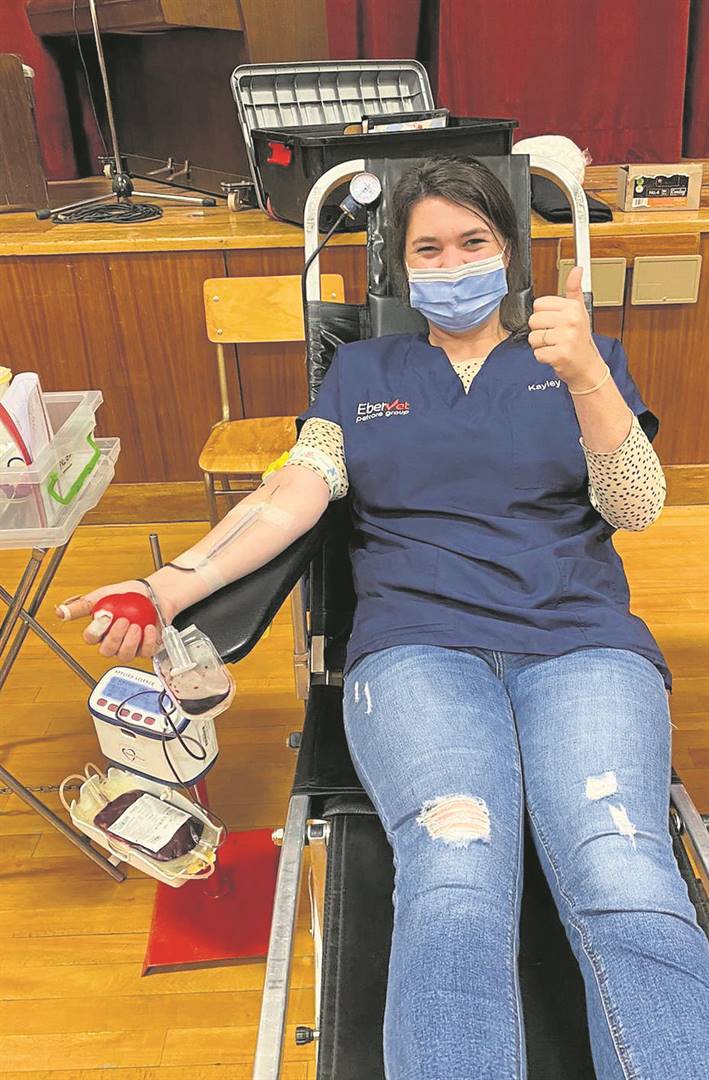

Veterinarians in the Helderberg Basin donated blood to a unique anti-rabies initiative last week, following a steep rise in rabies cases in the Western Cape. This is the first time an initiative of this kind has been seen in the province.
In the past year rabies, last seen in the Cape around 27 years ago, has been detected in four dogs in Khayelitsha, Gordon’s Bay and Strand. A veterinarian working at Cottage Vet in Gordon’s Bay was bitten by a dog which later tested positive for rabies. The vet was immediately treated prophylactically and did not develop symptoms of the disease.
Plasma, a component of blood, is extracted from people who have been vaccinated against rabies and used to create the serum needed to treat those who are bitten. Unfortunately, due to low donor numbers, the serum is often in short supply so veterinary teams from Country Animal Clinic in Somerset West, Cottage Vet and EberVet Pet Clinic in Strand gave blood via the Western Cape Blood Bank.
“We feel we are in a unique and privileged position to help,” said Dr Morné de Wet of Cottage Vet. “We know that rabies is a non-treatable disease and that approximately 60 000 people die from it worldwide each year. More than 95% of these deaths occur in Africa and Asia, most often due to dog bites. Children are the main victims.
“After one of our vets was bitten by a rabid dog last year, all of our vets and staff and our colleagues within the EberVet Petcare Group were then vaccinated as a preventative measure so our blood can now help to protect others.”
Anti-rabies serum is administered along with the first dose of rabies vaccine and must be administered as soon as possible after exposure to be effective. Once clinical symptoms appear there is no effective treatment. Rabies has the highest case-fatality rate of any infectious disease known to man, because there is no proven cure or treatment available once there are signs of an infection.
“We’re calling on all of our colleagues in the veterinary profession to donate blood, to make a difference,” said De Wet. “If proper medical treatment, including serum, is received immediately after exposure rabies infection can be halted before symptoms of the disease are present, and the disease can be prevented.”
In an additional effort to fight rabies, EberVet Pet Clinic in Strand has vaccinated hundreds of animals in impoverished communities at free outreach clinics in the past several months.