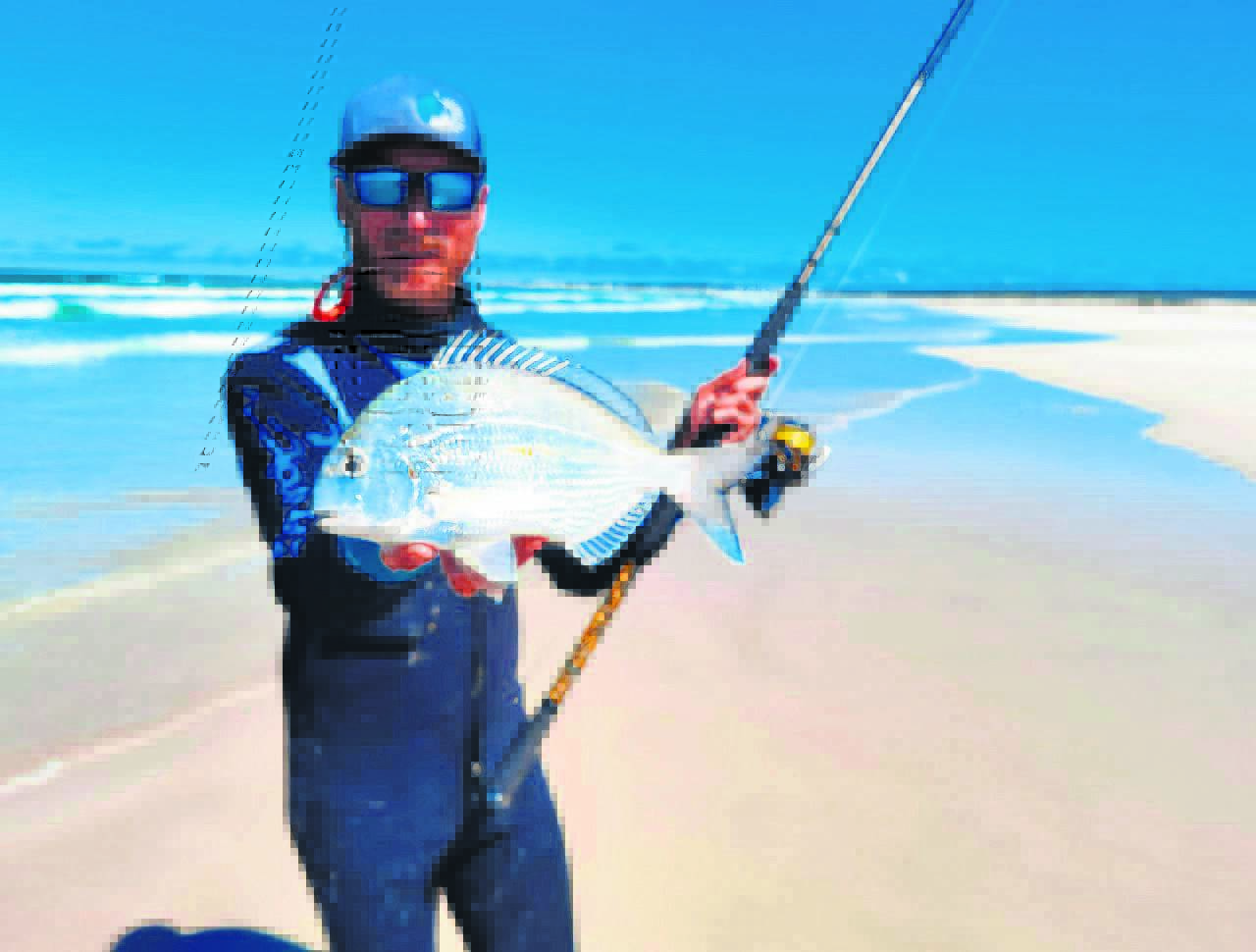

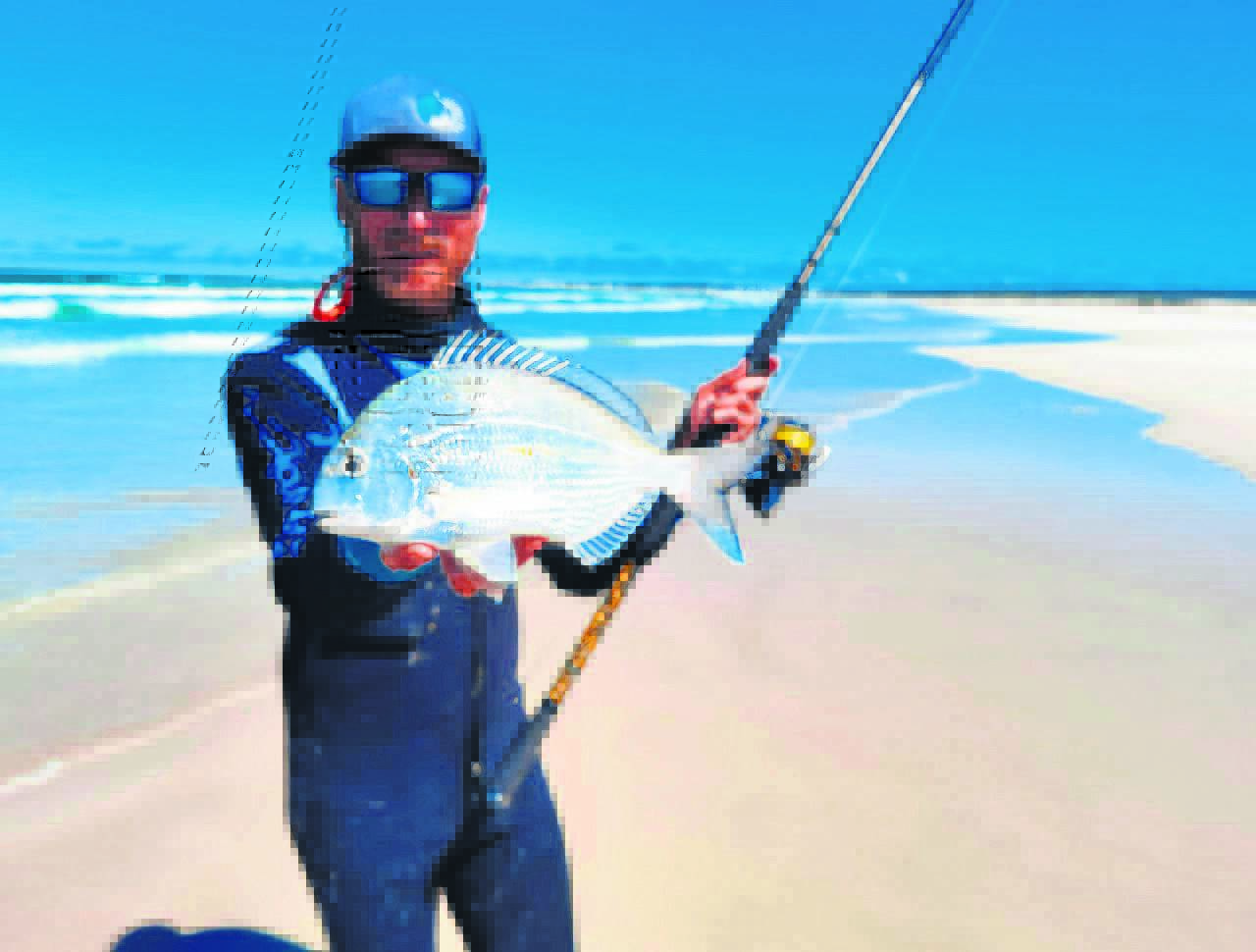
In this week’s column, I would like to focus on marine conservation, specifically speaking about fish handling and fish tagging, and how to look after fish species so they can be released and survive.
It’s important to be prepared if you want to tag and release fish efficiently and effectively, as this is what it takes to ensure a fish’s survival.
Some of the kit you will need to get together to tag fish properly and release them include: cloth; measuring mat or tape; alcohol swabs or spray; (tag) applicator; tags (either A for sharks or D for edibles); and a bucket for water.
When you get onto the beach, before you even wet a line, it is very important to set yourself up correctly. Fill your bucket with water, which is used to rinse your applicator and store your applicator between uses, as it’s easy to loose your applicator especially if the fish are on the bite, so I keep mine in the bucket of water.
The water is also used to rinse the sand off fish and to clean your hands after handling a slimy fish. A cloth is a very handy tool which, firstly, helps you handle your fish. If you do so with a cloth, you can get a good grip, which stops it getting damaged while being carried and also calms the fish down when you put the cloth over its eyes while tagging.
Always wet your cloth before handling a fish, otherwise you will remove the very important protective slime layer off the fish.
A measuring mat is really a great tool. Always ensure it is clean and free of sand, as this allows you to safely wrap the fish. It’s a quick way to measure and it protects the fish against the dry sand.
Never carry a fish by the line, and always ensure you support its body weight. Also, don’t ever drag a fish over a long dry sandy beach or rocks as a fish’s slime layer and scales are very important to its well-being and survival.
The slime protects against infection and the scales against predators and parasites.
Once you have the fish on your mat, cover its eyes with the wet cloth, as this will relax it and allow you a proper grip for the tagging process.
Take the measurements of your fish: for edible species it’s a total and fork-length measurement and for sharks its total, pre-caudal and dorsal to caudal. Make sure your measurements are correct to the millimetre as it ensures proper data when the fish is recaptured.
Now it’s time to shake that applicator clean in your bucket of water. Ensure it’s free of sand and dirt, and give it a quick spray of alcohol to sterilise it as this stops the fish from getting any infection from the previous fish you tagged or kills any bacteria that may be on the applicator.
Now load that all-important tag, double-check your tag number and write it down in your logbook.
I prefer to preload my applicator between fishes and write the details down, so when I do get a fish I’m ready to tag and release it within 30 seconds. Write down the correct measurements and recheck your tag number.
Now for the most important job – getting the tag correctly into the fish. This can be daunting at first, as you may be afraid to hurt or injure the fish.
One you have identified where to place the tag, simply lift a scale, make a small hole in the skin and, with one motion, go in and out. A tag should sit nice and deep in a fish, so it’s solidly tucked under or through the fin rays.
Many species of fish, especially galjoen, will rub themselves against a rock to try and remove the tag, hence the importance of a proper tag.
Work quickly with the fish; it should be out the water for no more than a minute.
Fish tagging recaptures have proven that fish do in fact survive tagging. Some recaptured fish I have caught have already been caught by others three or four times in the past.
V If you are seeking more information about tagging or wish to order a tagging kit, visit www.oritag.org.za.
V If you have any questions or would like to learn more about conservation work, fish tagging and fishing in general, visit us in store at Fishing Republic at 73 Beach Road, Strand. We are located at shop 6 at Helderberg Centre. You can alsocall us on 072 552 4400 or follow @fishingrepublicstore on Facebook and Instagram.