

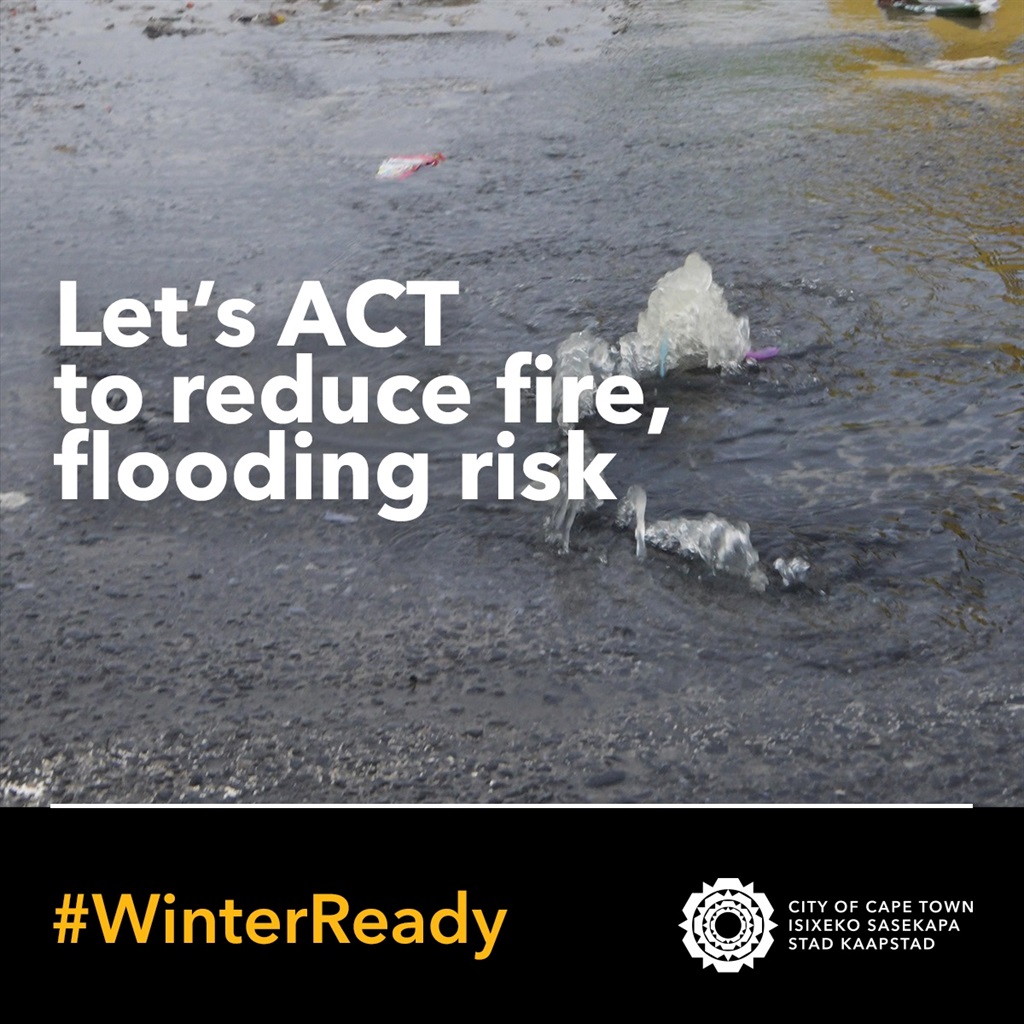
Macassar’s informal settlements are among 46 identified as flood-prone due to location or topography, requiring residents to be moved to higher ground where implementing flood-mitigation measures.
This as part of risk reduction measures overseen by the City of Cape Town’s multi-departmental Winter Task Team in the lead-up to winter, and required responses during the season.
The task team comprises more than 25 City departments and external partners, including the South African Police Service, National Sea Rescue Institute, provincial government and the SPCA.
The work of the task team is coordinated by the City’s Disaster Risk Management Centre (DRMC).
Bi-weekly meetings start in February each year, to keep track of the implementation of risk-mitigation measures.
Other risk-mitigation measures include:. Cleaning and maintenance of critical stormwater infrastructure in high flood-risk areas and removing invasive aquatic and terrestrial plants along key river corridors;. Proactive pruning/maintenance of trees to minimise the risk of falling branches and debris;. Ongoing education and awareness programmes on floods and fires, including practical tips on how to raise floor levels and divert flood waters; and. Service-level agreement with the South African Social Service Agency (Sassa), to provide humanitarian aid to residents in distress and discomfort as a result of flooding and storm damage.
“The City’s risk-reduction measures are augmented each year, based on lessons learnt the previous season, but also factors such as the long-term weather outlook, as provided by the South African Weather Service,” said the City’s Mayoral Committee member for Safety and Security, Alderman JP Smith in a media statement released on Wednesday 26 April. “Last June we experienced record rainfall in a short period of time, resulting in widespread flooding that no amount of risk mitigation measures could have prevented, and would likely have been worse, if not for our preparatory work. Through the winter task team’s efforts the City ensures the different departmental plans are in place to mitigate any heavy weather episodes, and that we are ready and able to assist residents in the event of flooding or other weather-related impacts.”
The task team meets every second week and as winter progresses, meetings are scheduled more frequently as the situation dictates.
“As much as the City is duty-bound to ensure that it has done everything possible to mitigate risks to public health and safety, we cannot do it on our own,” Smith said. “In fact, this is one of many priorities in our city that requires collective action. Your safety and that of your family starts in the home, so please do an assessment of your personal circumstances and environment, and take the appropriate actions to ensure that you are as prepared as can be.” The DRMC advises residents to consider the following:
• Waterproof roofs, clear gutters and remove dead tree branches;
• Dig trenches to direct water away from your home if need be;
• Build your dwelling higher than the average water level in your are;
• Clear out drainage systems;
• Raise the floor level of a structure so it is higher than the natural ground level;
• Raise furniture on bricks to clear from the floor to limit water damage;
• Make sandbags that can be used during emergencies to channel flowing water away from your home; and
• Report blocked drains, intakes and illegal dumping – illegal dumping in the storm water canals and sewers make flooding worse. Ways to make a sandbag:
• Cut off the arms of a long-sleeved top and tie the bottom end to close it.
• Fill up with sand. If you don’t have enough sand, use a mixture of sand and soil.
• Close the top end and place the sandbag outside and inside the door or doorway.
• If you do not have a long-sleeved top, you can use old pillow cases or the legs of long pants filled and tied on either of the open ends or black bags.Winter is also the time when there is an increased risk of structural fires. The DRMC advises the following with regards to minimising the risk of fires:
• Always ensure that cooking fires are extinguished properly;
• Keep a bucket of sand and a bucket of water handy;
• Teach children not to play with matches and lighters;
• Store matches and lighters out of their reach;
• Put out all candles and lamps before going to sleep or leaving home; and
• Be aware of your load shedding schedule. Ensure appliances are switched off, especially at night, so when power is restored these electrical appliances are not switched on. V In the event of flooding, storm or fire related emergencies, residents should phone the City’s Public Emergency Call Centre on 021 480 7700 from a cell phone or 107 from a landline.