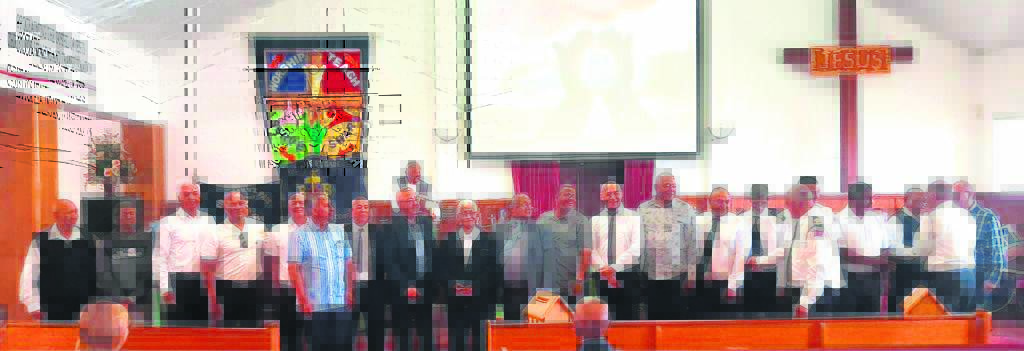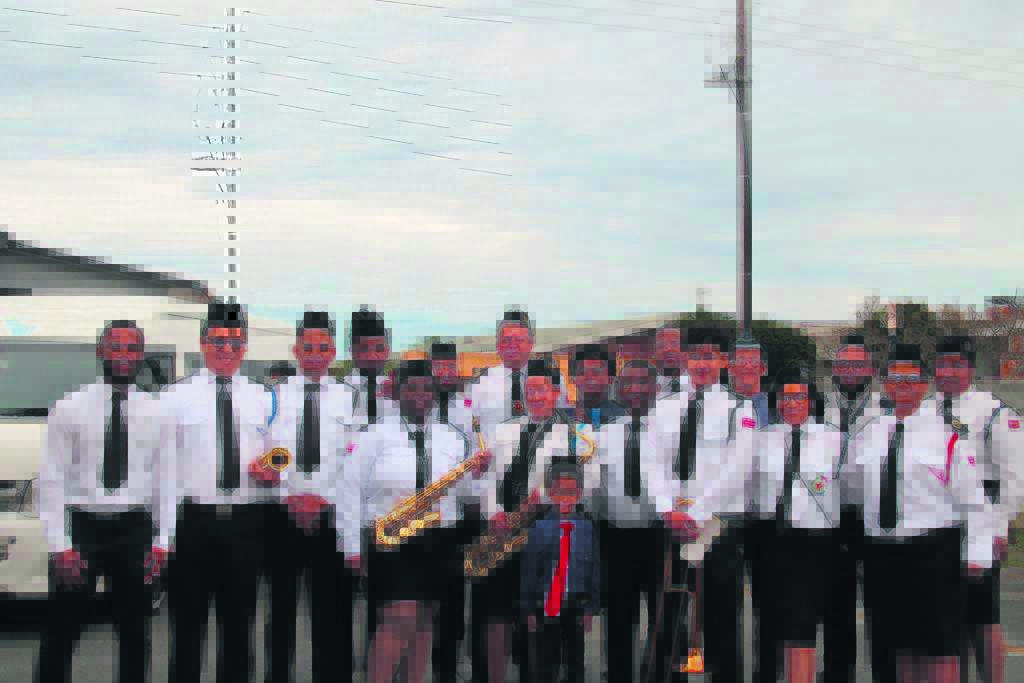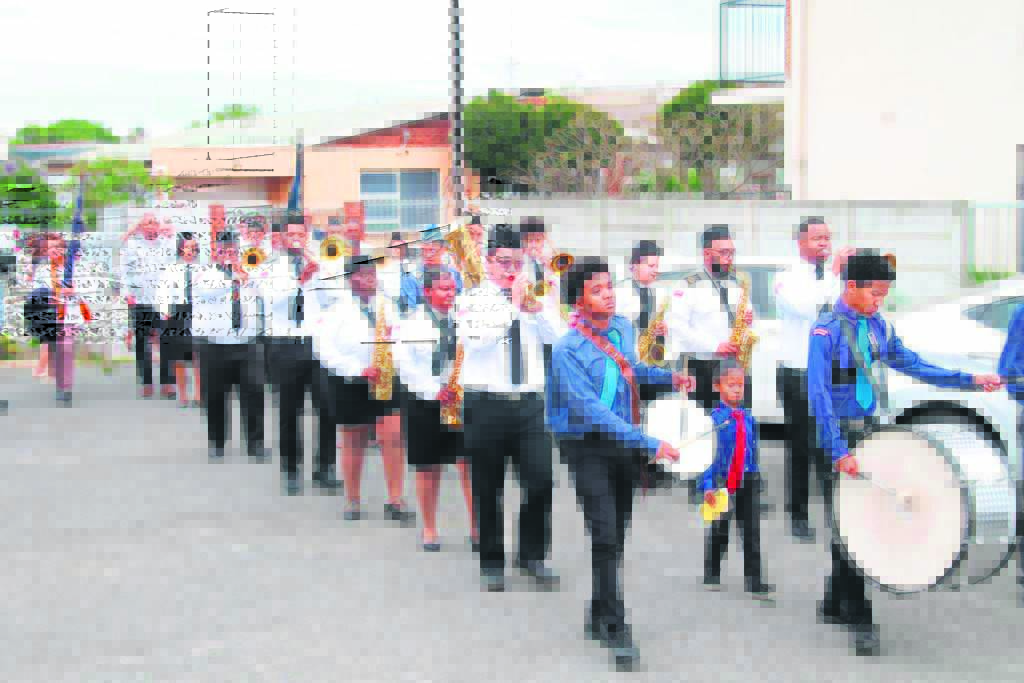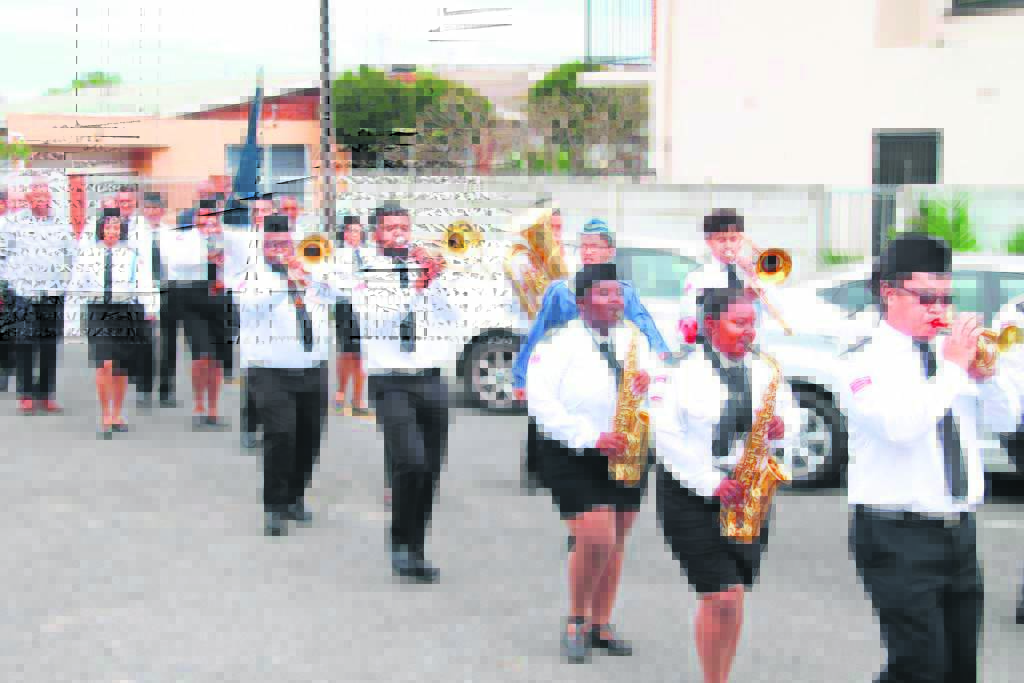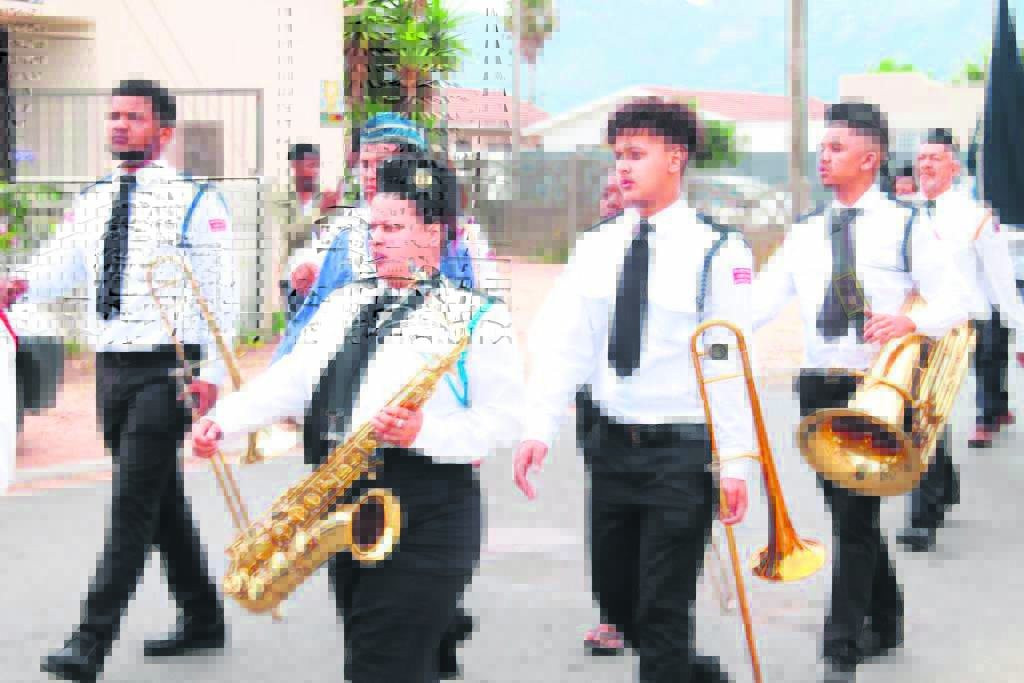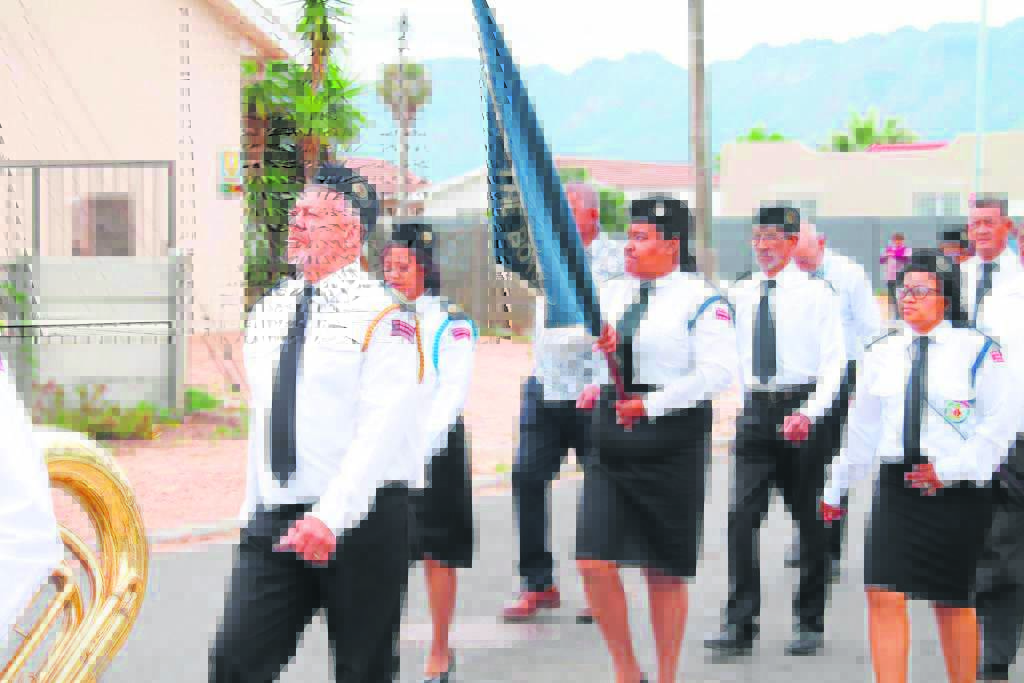

On Sunday (19 November), the Rusthof community enjoyed a spectacular performance from the combined Methodist Church Boys’ Brigade. Participating companies were from Eerste River, Sir Lowry’s Pass and Macassar Methodist churches. This marked the start of the 175th year anniversary, of Methodist witness, in Strand.
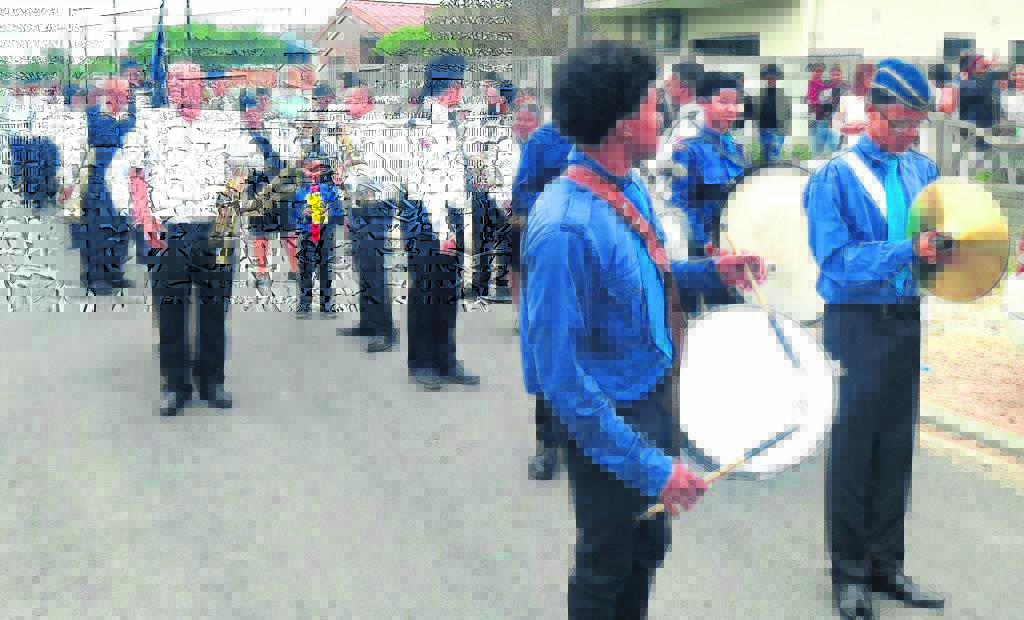
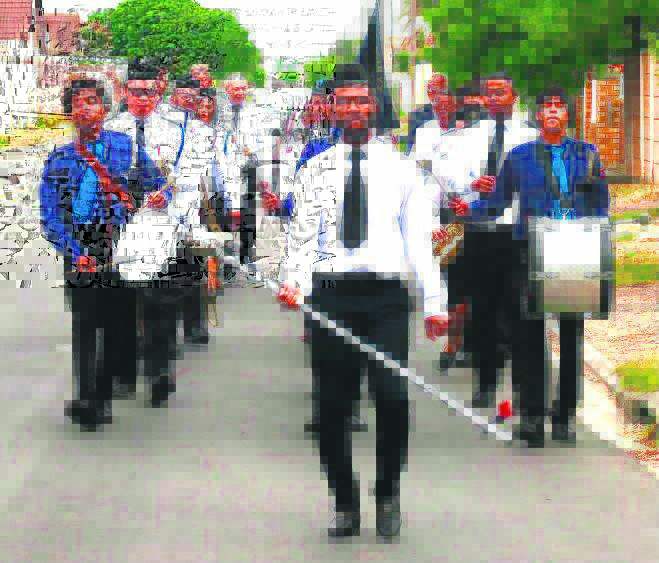
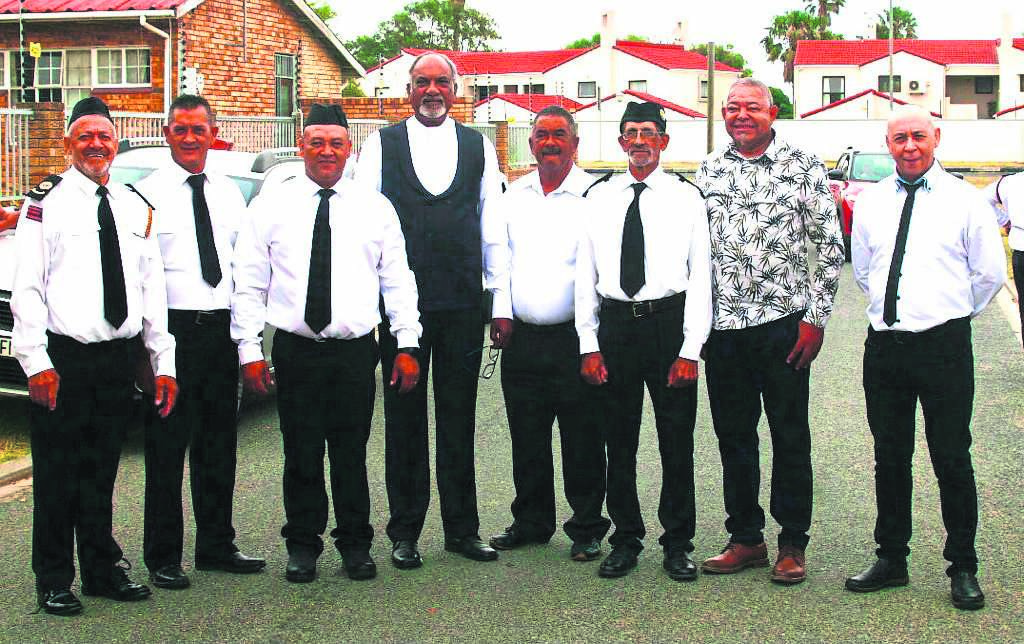
Some past Boys’ Brigade members, many in their older years, joined the parade, which commenced at SenCit Resthaven Home for the Aged in Thomas Street and ended at the Rusthof Methodist Church, on the corner of Broadlands Road and Third Street, where a worship service preceded the march. All members were immaculately dressed in their uniforms. They marched in formation, to the wonderful sounds of their drums and brass instruments.
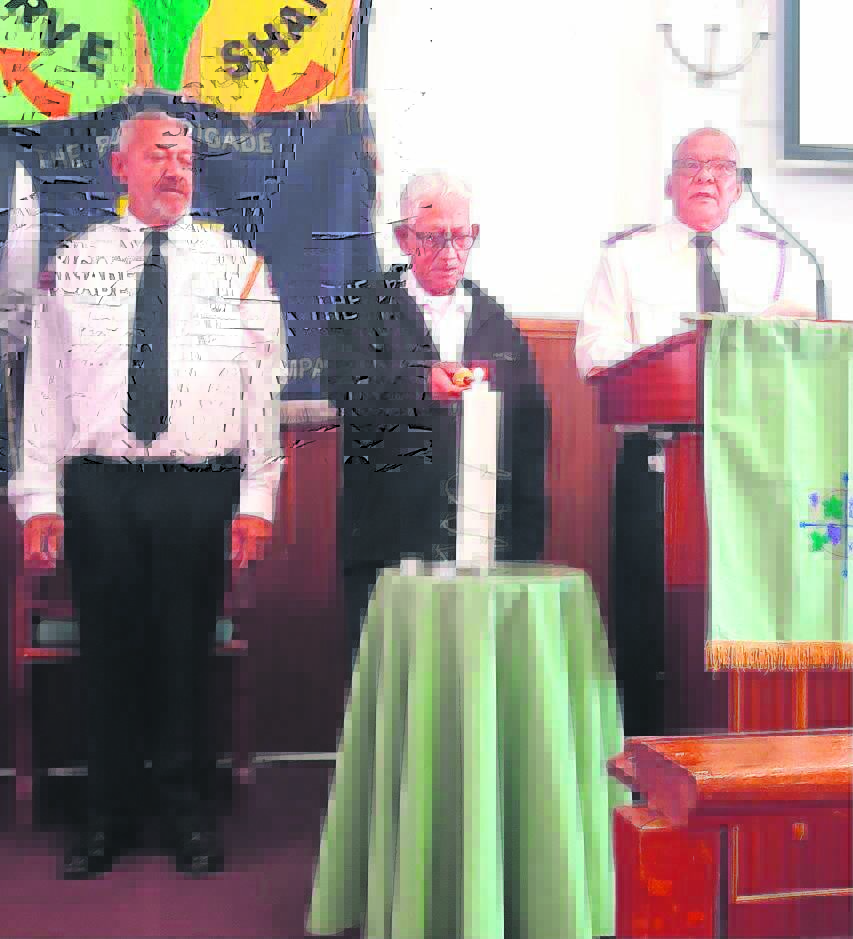
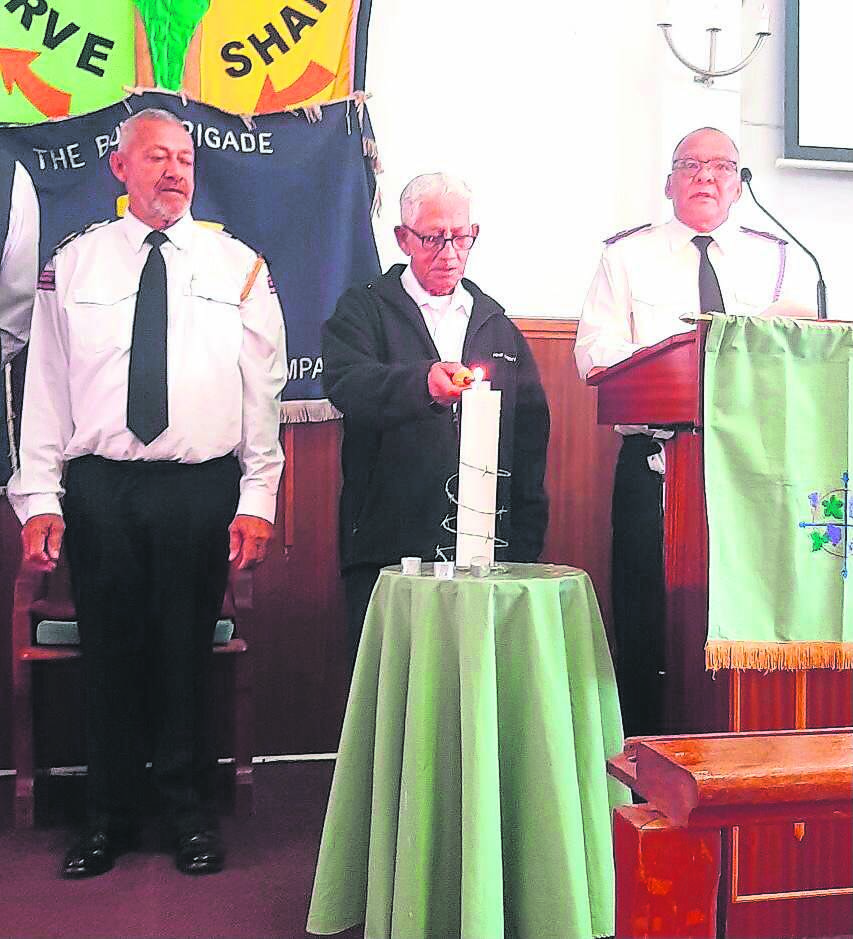
Once again, after a long absence, the congregation enjoyed the Boys’ Brigade protocols. Among these protocols were, the Colour Party March, which is the ceremonial placing of flags at the altar, reciting the creed and motto, lighting of a candle by the oldest member Aubrey Adonis, and the “Last Post” played on a trumpet followed by the memorial prayer, remembering members who have passed on. A special commemorative Boys’ Brigade badge was presented to past members. Senior officials who participated in the worship service were Johnny Williams, president of the Western Cape Boys’ Brigade, and chaplain Gary Ahnie.
At the end of worship, while the congregation sang the old hymn “Onward Christian Soldiers”, Officers retrieved their flags, and in slow march retreated from the sanctuary, to prepare for inspection. Afterwards, in the streets outside the church, the brigades marched in drill formation while filling the air with the sounds of music. Faintly in the distance, drill commands could be heard. When they arrived back at the SenCit, they found elderly residents in their wheelchairs and walkers, eagerly awaiting their arrival. The brigades entertained the residents with jolly Christmas carols.
Our thanks to Craig Williams, member of the Rusthof congregation and former officer of the Strand Methodist 1st Company, for ensuring that all arrangements for this historic commemorative event were meticulously coordinated. We would also like to thank Johnny Williams for arranging for the companies from the other Methodist churches to join us.
Johnny has dedicated 57 years of his life, to the advancement of the Boys’ Brigade. For 32 of these years, he was an integral part of the Strand Methodist Boys’ Brigade at Rusthof, serving as a senior officer before moving to the company in Sir Lowry’s Pass.
As the result of his research at the Boys’ Brigade Archival Museum in Glasgow, Scotland, Johnny shared that the Strand Methodist Boys’ Brigade 1st Company was established in 1898, but unfortunately closed a few years later. Rev Mason formally restarted the company in 1912. This company existed for 90 years, before being discontinued again. While we commemorate this special ministry of the past we also celebrate the commitment of all the leaders who continue God’s mission of offering Christian development to young boys.
In his Master’s thesis entitled “Today’s Boys, Tomorrow’s Men – A Short History of the Boys’ Brigade of Britain, with further reference to the Boy’s Brigade in South Africa (circa 1880s-1980s), 1995”, Dan Adonis writes that the Boys Brigade was founded in Scotland in 1883 and soon expanded throughout the world.
Ministers of the early mission churches introduced it into Natal, South Africa in 1889. It soon spread to other parts of the country. The aim of the Brigade in South Africa, as in Britain, was to offer an alternate Christian lifestyle to young boys, exposed to the evils of society. In addition to Sunday school, the boys received further religious education, and were taught discipline, ethical values and morals.
In Cape Town, Methodist, Congregational and Presbyterian churches started a number of Boys’ Brigade companies. By 1895 around 16 companies, consisting of over 500 boys and 40 officers existed. The congregational minister Reverend Harris started the first brigade for boys of colour which was named “The Black Watch Company.”
In the Helderberg region, the first Boys’ Brigade to be established was at the Strand Methodist church (near Friedman & Cohen). This company comprised both, coloured and white boys, because the congregation had been racially mixed for almost 100 years before separating in 1945.
Apartheid’s separate development policy forced this Methodist congregation to relocate twice before settling in Rusthof, where the Boys Brigade continued its ministry. The Strand Methodist Boys’ Brigade offered young boys spiritual, educational, cultural and physical development for 90 years before its unfortunate disbandment. This was a tragedy because this Methodist company included boys from the Anglican, Dutch Reformed and other churches as well as Muslim boys, who all learnt to work and play together.
At the Rusthof Methodist church the boys had their own upstairs room, where they met every Wednesday evening. In addition to Bible study lessons, the boys also learnt first aid, ambulance work, basic sewing and cooking skills, camping skills as well as how to take care of their uniforms.
Outdoor activity included marching in drill formation and squad movements, which were taught by volunteer military personnel. They played interactive games and practised for athletic sport days, against other companies, which gave them the opportunity to interact with other boys as well as learning how to respect others. In the earlier days cricket was their sport of choice, which later led to the formation of the Strand Methodist Cricket Club.
Parents appreciated the fact that their children were kept off the streets, and had responsible adult supervision. Being a member of the Boy’s Brigade, instilled a deep sense of pride in young boys.
Thursdays were band-practice nights. Adonis writes that in 1901 boys from the Black Watch Company asked Rev Harris if they could learn to play musical instruments, like other brigades did. At first, he was hesitant, but eventually handed out six fifes (similar to a piccolo) and a big drum. The next night, he was amazed to hear the music they played. Later, brass instruments were included in the ensemble. The formation of the Brass Band became an integral part of the Boys’ Brigade. At the Rusthof Methodist church the Brass Band continues its ministry today, despite the fact that the brigades closed down. The Rusthof Society’s Brass Band played during today’s special service.
A question we could ask is, “Is the Boys’ Brigade still relevant today?” Many people feel it is, although some parents do not agree with the military aspect of the Brigades. We will all agree that today boys in South Africa are at risk. They are continually exposed to drugs, vaping, alcohol, illicit sex, bullying and the pressure of becoming involved in gangs, among other evils of society. One of the newer evils of society is child trafficking, which is a threat to all children.
When the Boys’ Brigade was first constituted by William Smith he based it on the Bible verse Hebrews 6:19: “We have this hope as an anchor for the soul, firm and secure (NIV)”. The old hymn, which expresses this, says: “We have an anchor that keeps the soul. Steadfast and true while the billows roll. Fastened to the rock which cannot move. Grounded firm and deep in the Saviour’s love.”
The Boys’ Brigade, which is a religious and social Christian intervention, still offers boys the opportunity to grow into disciplined adulthood through an alternative lifestyle. Although the closure of the Strand Methodist 1st Company meant generations of boys were denied this privilege we give praise and thanks to the Almighty God for the dedication and commitment of so many leaders in the brigades who continue to instil in boys, among other values, the Four Pillars of the Boys’ Brigade: obedience, reverence, discipline and self-respect.