
The City of Cape Town’s Water and Sanitation Directorate has a significant budget of R18 billion for the 2024-’25 financial year, with R5 billion allocated for capital projects, including investments aimed to enhance water and sanitation services across the city, including the Helderberg Basin.
“Water and Sanitation’s 2024-’25 total budget of R18 billion for the upcoming financial year speaks volumes,” said Mayco Member Zahid Badroodien. “Of this, R5 billion is the capital budget and R13 billion is our operating budget. This shows the City is committed to doing the basics better for our communities when it comes to delivering and investing in water and sanitation services.
“This capital budget is more than the previous 2023-’24 financial year, which saw R3,3 billion capital budget spent and invested in water and sanitation services, ultimately to benefit our residents and city.
“Thank you to our residents for contributing to the water and sanitation services. They do so both in behaviour – from being water wise to disposing of their waste correctly, not in our sewers – and by paying their municipal bills. Residents are assured their water tariffs are used to help provide and maintain reliable water and sanitation services in Cape Town for today and years to come.”
The budget in a nutshell
Informal settlements: R38,25 million allocated for new taps and toilets for informal settlements in addition to services already provided.
New water programme (NWP): Surface water currently makes up approximately 98% of drinking water, but by 2040 the City expects groundwater, desalination, and water re-use to account for a full 25% of supply. This is in addition to the removal of alien invasive plant species in catchment areas.
The directorate is bringing online alternative water sources that will serve the growing population, and will work towards implementing the new water projects that include desalination, aquifer abstraction and the Faure New Water Programme. The directorate is set to increase supply by an extra 300 million litres of water from new water sources every day by 2030.
Altogether R445 million has been allocated for major water resilience projects, the bulk being aquifer projects which form part of the NWP.
Wastewater treatment works (WWTWs): Around R2 billion is estimated to be spent on extensions and upgrades at WWTWs over the next financial year. This is planned to increase to R2,4 billion for 2025-’26 financial year.
WWTW extensions will expand the capacity of key facilities including Macassar, which is set for an upgrade from 34 million liters per day (Ml/d) to 80 Ml/d, currently in the design stage.
Sewer overflows: About R1 billion for various projects is allocated to help bolster proactive efforts to assist with preventing sewer overflows, with R154 million on upgrades/refurbishment of sewer pump stations and R385 million on replacing 100 km of sewer pipes.
Communities that will benefit include the Helderberg, with Somerset West and Strand listed among other areas in the metropole.
The directorate has set aside R526 million to tackle sewer spills by upgrading bulk sewers in numerous areas including Gordon’s Bay.
Supplying reliable water to properties: To replace 50 km of water pipes, R224 million has been earmarked.
Communities that will benefit include among others Somerset West and Strand.
Resilience during load shedding: The directorate has allocated R127 million for generators and UPS installations for sewer and water pump stations as well as wastewater treatment plants.
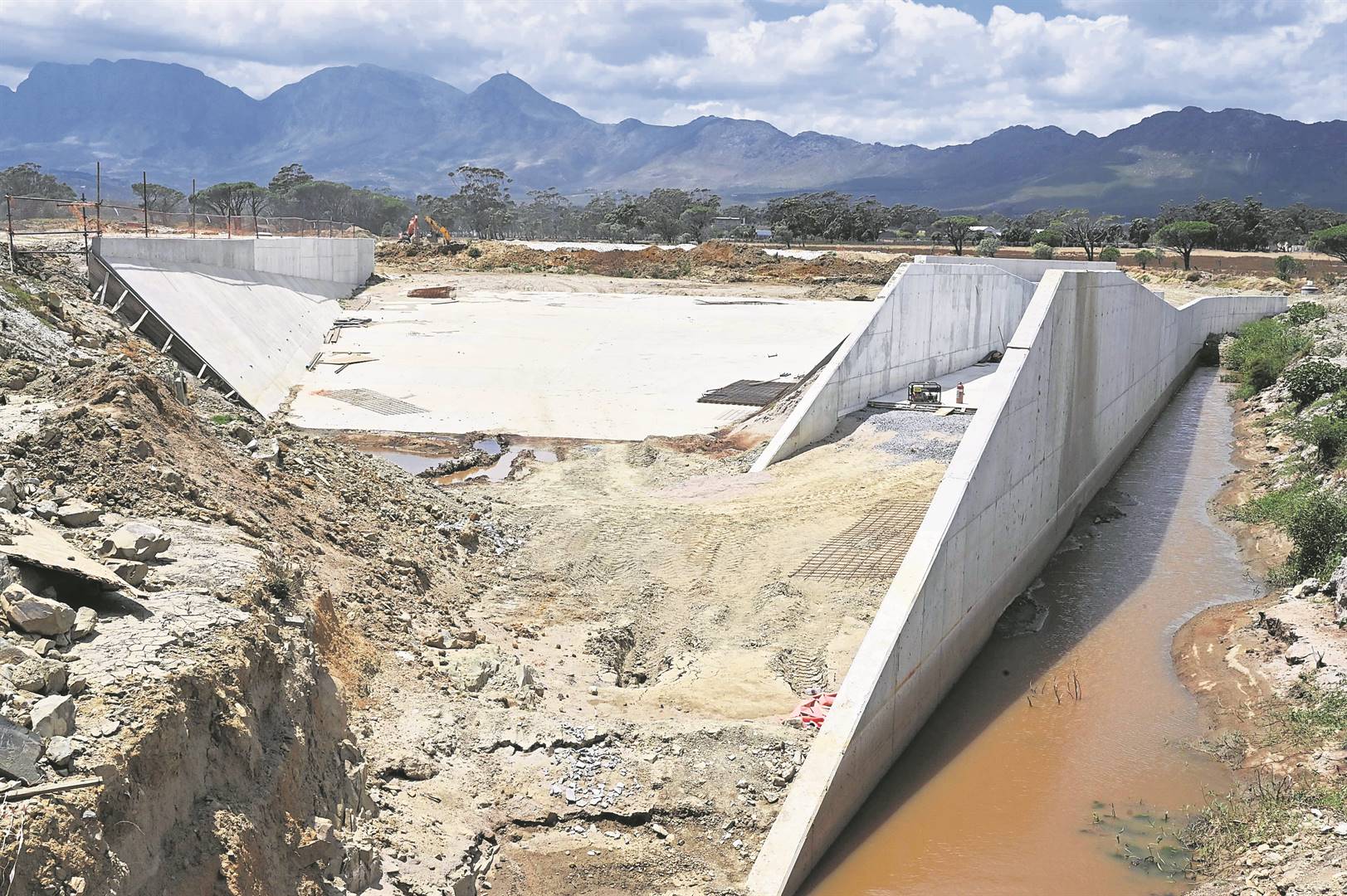
Improving waterways to reduce flooding: The directorate has allocated R110 million to be invested in flood alleviation projects namely the Lourens River, Macassar and Sir Lowry’s Pass River upgrade.
“As we go into a new financial year, these remain key priorities for the City,” said Badroodien, “[and they are] building a water-secure future, delivering clean, reliable drinking water and dignified sanitation services to residents in Cape Town as well as reducing sewer overflows and improving treating wastewater so that we safeguard our environment and improve inland water quality.”