


As the seven-day deadline looms for the organisation March and March’s demand to close foreign-owned spaza shops in Lwandle and Nomzamo, business continues as usual in the townships.
This follows protest action from residents on Friday 29 May, who accompanied the civic organisation from Hlathi Drive in Zola, Nomzamo, before turning into Solomon Street and proceeding down Michael Street. Anti-immigrant chants filled the air as they crossed Onverwacht Road into Lwandle and up Noxolo Street toward the police station.
The protestors handed over a memorandum to Lwandle police, which included a demand for all foreign-owned spaza shops to close within seven days.
During the march, Abigail Nandiloha Matolong, one of the organisers, said communities are overwhelmed by foreign nationals flooding the streets with drugs. Matolong, who is from Summer Greens near Milnerton, became involved with March and March through TikTok.
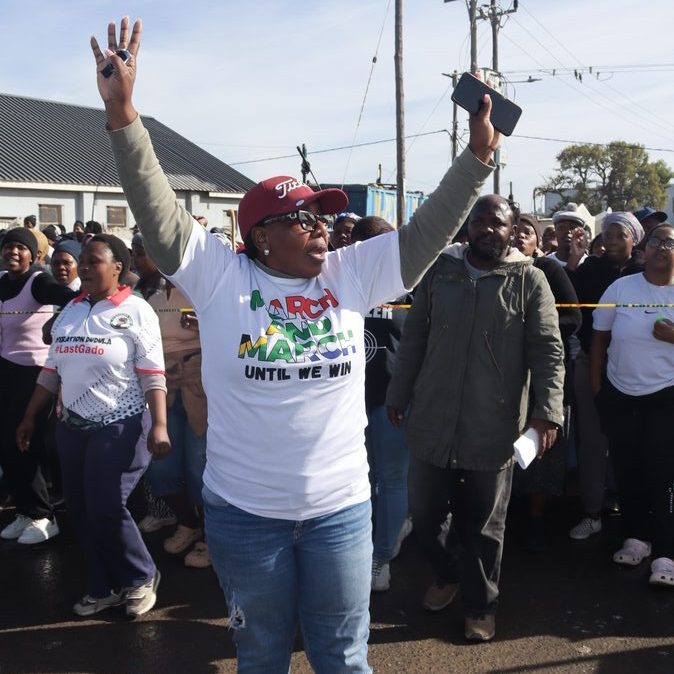
Spearheaded by Jacinta Ngobese-Zuma, March and March is a civic organisation that emerged in KwaZulu-Natal and has since spread to Gauteng and the Western Cape. It condemns undocumented immigration, calling for “illegal” foreigners to leave and the government to tighten migration policies.
Matolong attributes the movement’s rise to the failure of major political parties to protect citizens.
The protest was coordinated via provincial group chats after a Lwandle resident flagged local grievances. Matolong says the march was a call for the removal of all foreign nationals, regardless of their legal documentation status.
She claims they are responsible for drug dealing and human trafficking. She referenced her own neighborhood of Summer Greens, where she claims foreign nationals are buying properties and building illegally without municipal plans.
“So, whether you are documented or not documented, go back to your country so that we can fix ours,” she said.
Although Matolong was unable to detail every demand in the Lwandle memorandum because she did not write it, she highlighted that South African shopkeepers are struggling to survive.
She claims locals do not support South African-owned shops because foreign competitors allegedly buy expired food from wholesalers, alter the dates and sell the stock at much cheaper rates.
She further alleged that locals are afraid to approach the police, claiming officers actively protect foreign nationals and accept “brown envelopes” to overlook illicit activities.
“The police must do it, otherwise we will do it ourselves,” Matolong warned.
Despite these allegations, Matolong claims Lwandle police gave a positive response, requesting a follow-up meeting tomorrow (Thursday 4 June). She believes local officers face the same struggles tracking undocumented individuals in a rapidly expanding area.
Provincial police spokesperson Thembakazi Mpendukana confirmed police were aware of the peaceful march, which included about 500 participants. The official police response, however, made no mention of the memorandum or the corruption allegations.
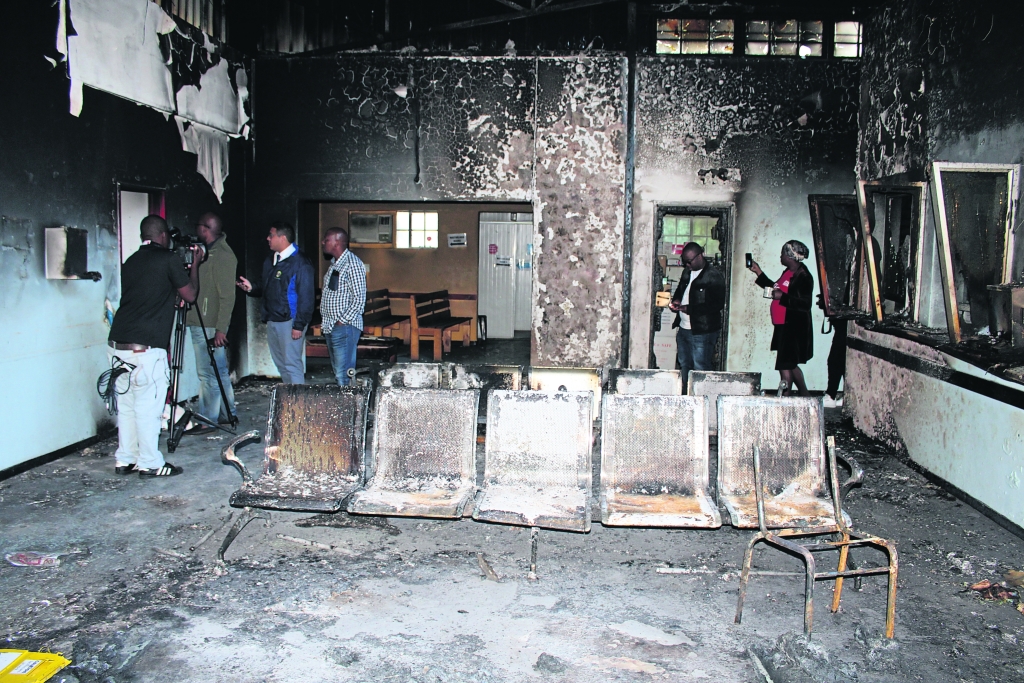
Ward 86 councillor Xolani Diniso agreed residents’ concerns are genuine but urged restraint. “As long as it does not violate others’ rights or destroy property like a few years ago with the clinic,” he said, referencing the 2019 petrol bombing of the Ikhwezi Clinic (“Clinic destroyed by petrol bombing”, DistrictMail & Helderberg Gazette, 6 June 2019).
The City of Cape Town previously stated that during biannual inspections in late 2024, only six out of 118 operating spaza shops in the Helderberg were fined for operating without valid permits (“Strand spaza shops inspected,” 20 November 2024).
While hours, minutes, and seconds tick toward the arbitrary deadline, all spaza shops in the area were operating and attending to customers.
Most shopkeepers declined to speak with DistrictMail & Helderberg Gazette, with one simply noting, “It’s not good”.

You must be logged in to post a comment.