

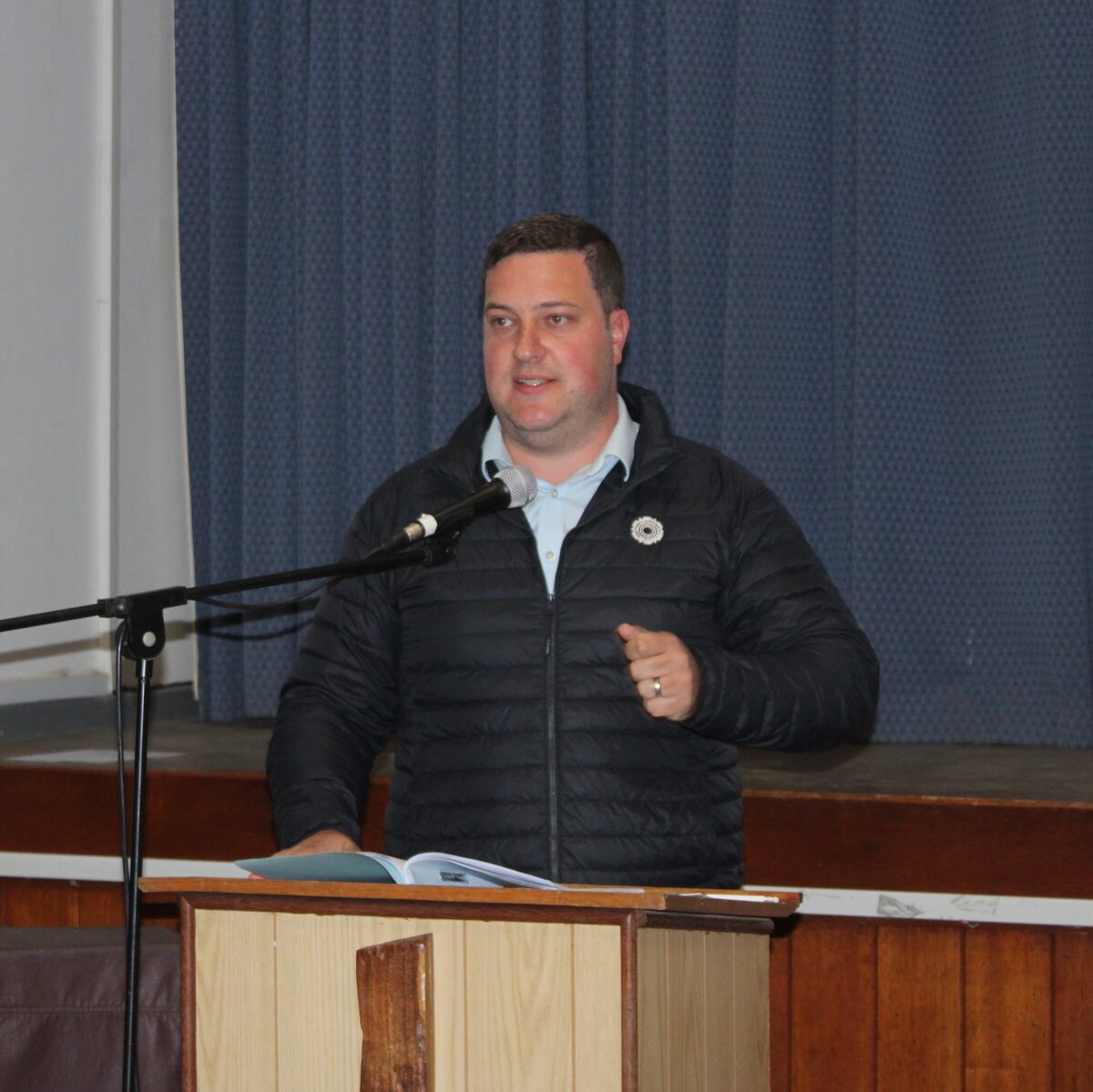
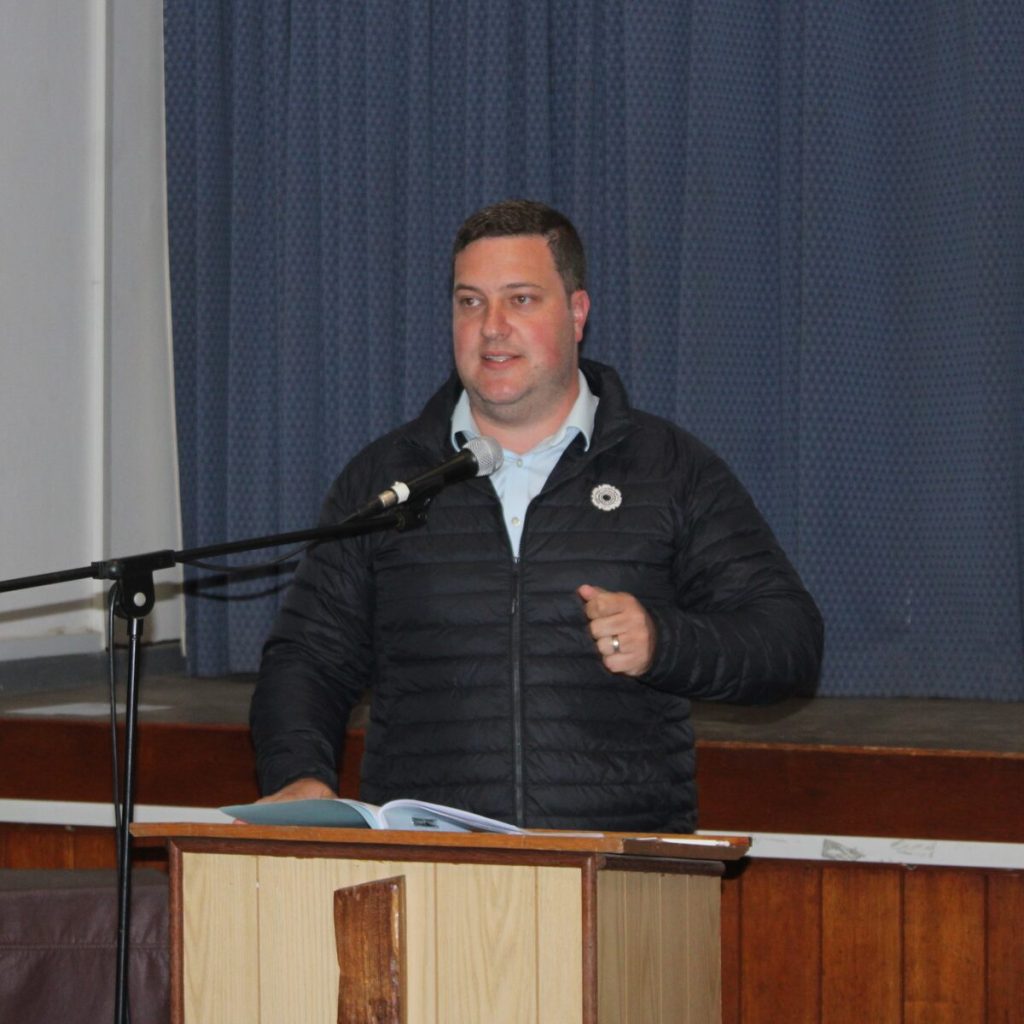
Cape Town Mayor Geordin Hill-Lewis met with a concerned and engaged Strand community on Wednesday evening (15 October) at the Dutch Reformed church in Strand North, where he faced pointed questions on pressing local issues, including infrastructure failure, river and sea pollution, and homelessness.
He responded with an emphatic defence of the City’s massive infrastructure spending and a vision for a safer, economically healthier metropolitan area.
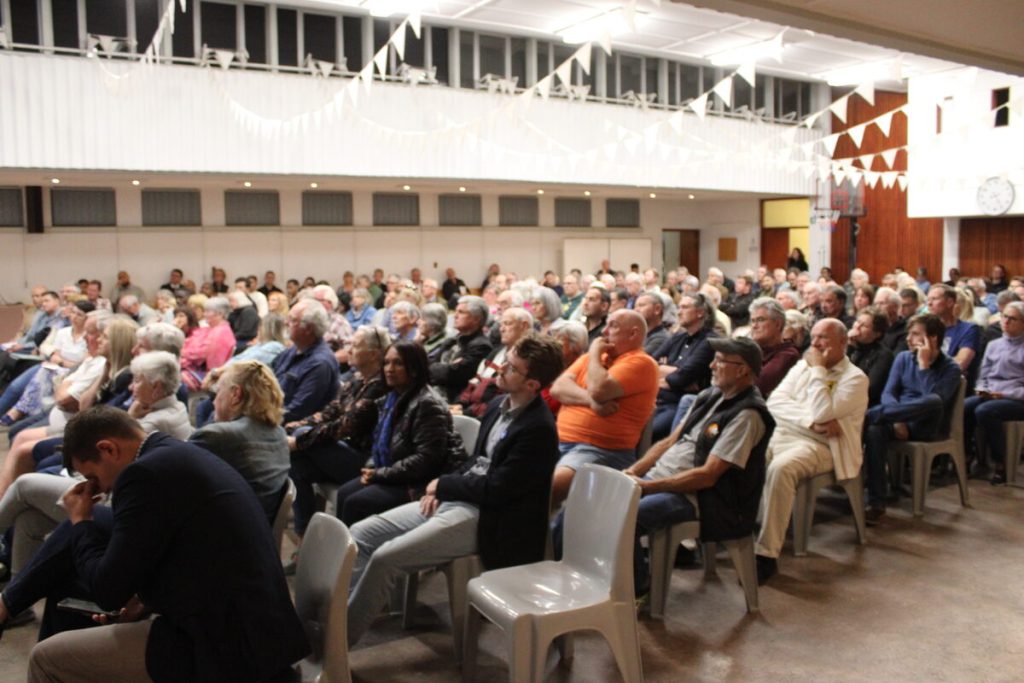
The meeting, organised by the Sectional Title Association Strand (STAS), saw an impressive turnout of more than 150 people, including representatives of the Strand Central Improvement District, Strand Neighbourhood Watch, Strand Ratepayers’ Association, ward councillors and representatives of Afriforum.
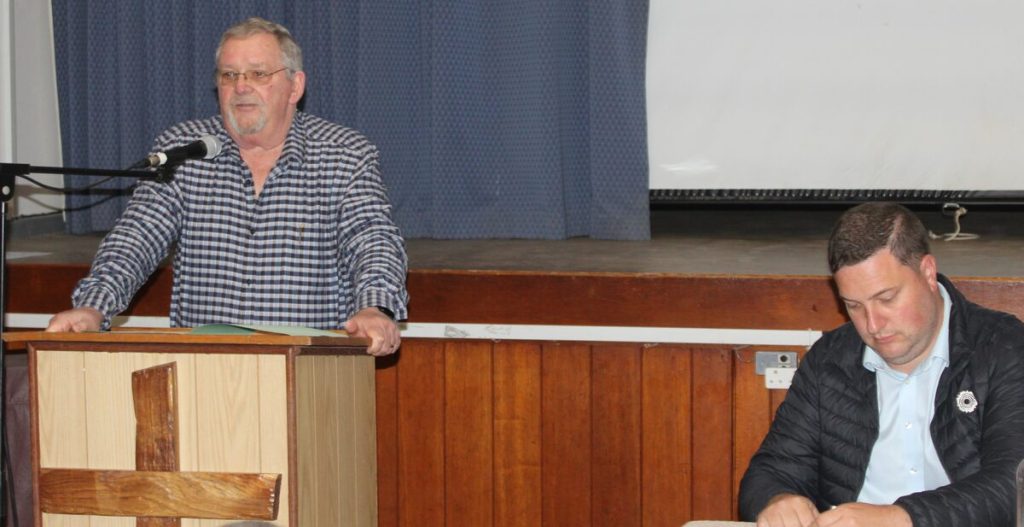
Koos Louw of STAS welcomed the Mayor, stressing the community’s deep investment in local affairs. “We care what happens in Strand and what doesn’t happen,” he said, “and that’s why we are here.” Louw outlined the community’s biggest anxieties, including the growing issues of homelessness and immigrants as well as an increase in crime and service requests, before directly asking the Mayor for his long-term vision.
Hill-Lewis acknowledged the challenges of the Helderberg area, saying he realised early on that the City was “at the start of a spiral”, but had since moved to make “necessary investments that are indisputable.”
He highlighted a massive three-year investment of R4,6 billion specifically for the Helderberg area, underlining this spending is targeted where it is most needed. He cited major infrastructure upgrades, including the completed R4 billion Zandvliet and the upcoming R3 billion Macassar waste-water treatment works (WWTW) upgrades. Current projects also include the upgrades to Trappies Sewer, SLP River upgrade and Gordon’s Bay Rising Main.
“We will not accept infrastructure failure in Cape Town,” Hill-Lewis declared, noting the City’s pipe-replacement programme was now running at 100 km per year.
He said if given another mandate to see his vision for the next 10 years through it would rest on safety, infrastructure capacity and a healthier economy.
The Mayor addressed the safety concern by mentioning investment in hundreds of new Metro Police officers and anti-crime technology. However, in a surprising detail, he noted of all emergency calls the highest volume concerned noise disturbance and disruptive animals, followed by vehicle accidents and traffic violations, with crime ranking lower. A high percentage of domestic-violence incidents was also another major concern for the City.
On the critical issue of homelessness the Mayor pointed to the City’s investment in shelters, claiming it is unparalleled by any other city in the country. He reported an expansion of city homeless shelters by 1 200 beds over the past three years, offering a “dignified alternative” that includes access to social workers, clinics and rehabilitation services.
Tackling the 21% unemployment crisis in Cape Town, the Mayor stated that economic investment is a core focus to ensure the City has a “healthier economy” in a decade’s time.
He also addressed environmental concerns, particularly regarding water quality, stating, “Our spirit and ethos is not to hide away, we tackle these issues head-on.”
The Mayor cited projects on the Lourens and Soet Rivers and the installation of litter interceptors around the city.
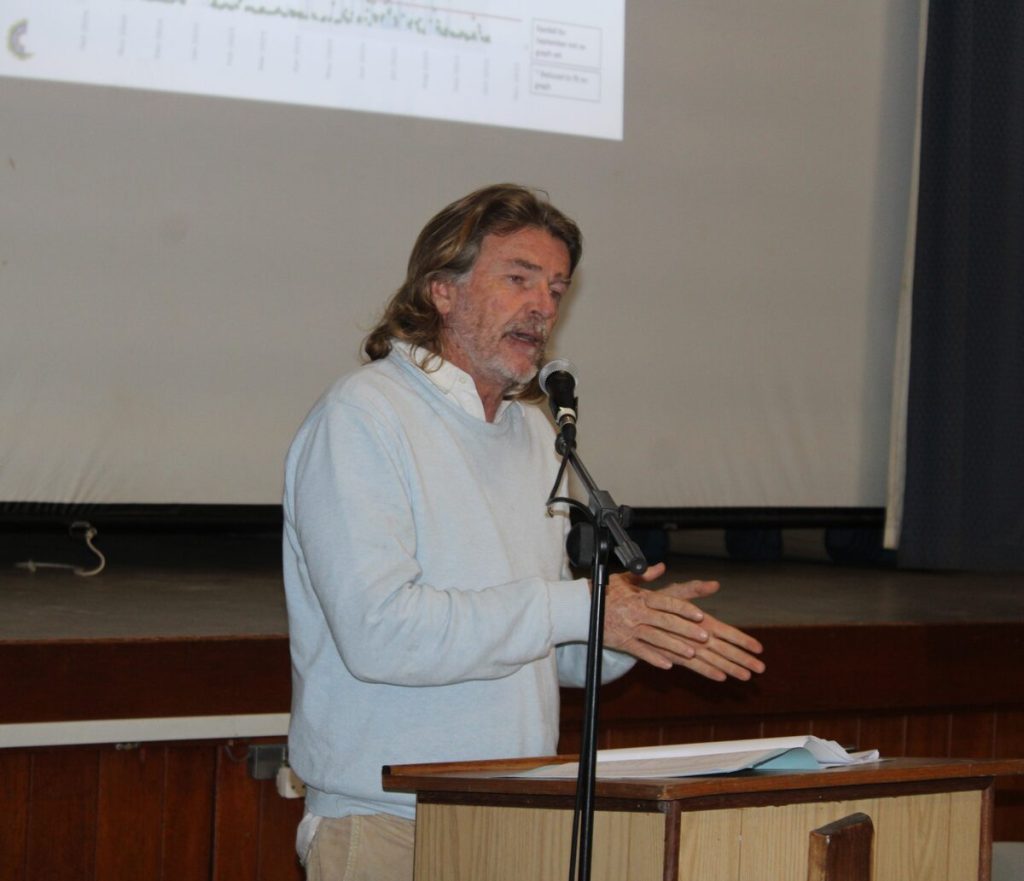
The Q&A session quickly turned to local accountability and specific grievances. A resident argued that consequence management is lacking, lamenting that up to 21% of water is lost due to leaks and that the development budget is too low. The Mayor countered, “we don’t pass the buck, we take responsibility.”
Following three significant floods in three years residents living adjacent to the Lourens River questioned why they were being asked to sign indemnity forms and submit building plans to the City. The Mayor confirmed the policy had previously been passed by Council and assured the public “we are reviewing and looking at removing indemnity clause specifically.”
On traffic congestion and the influx of Europeans “outpricing locals,” the Mayor confirmed investment in public transport, but offered no time line for the N2 highway rerouting. He defended foreign investment, arguing that foreigners were “competing in niche markets and not with locals.”
A resident expressed disappointment over a lack of transparency regarding water quality, the city’s hesitancy to implement a water quality flag system, noting sewage had been flowing over the beach for two weeks. Gregg Oelofse, Head of Coastal Management, intervened, saying results were available online and the City had done its utmost to adhere to compliance.
The Mayor also confirmed Sir Lowry’s Pass housing projects were underway, citing completed housing in Zwelitsha and R84 million allocated for Vlakteplaas.

You must be logged in to post a comment.