

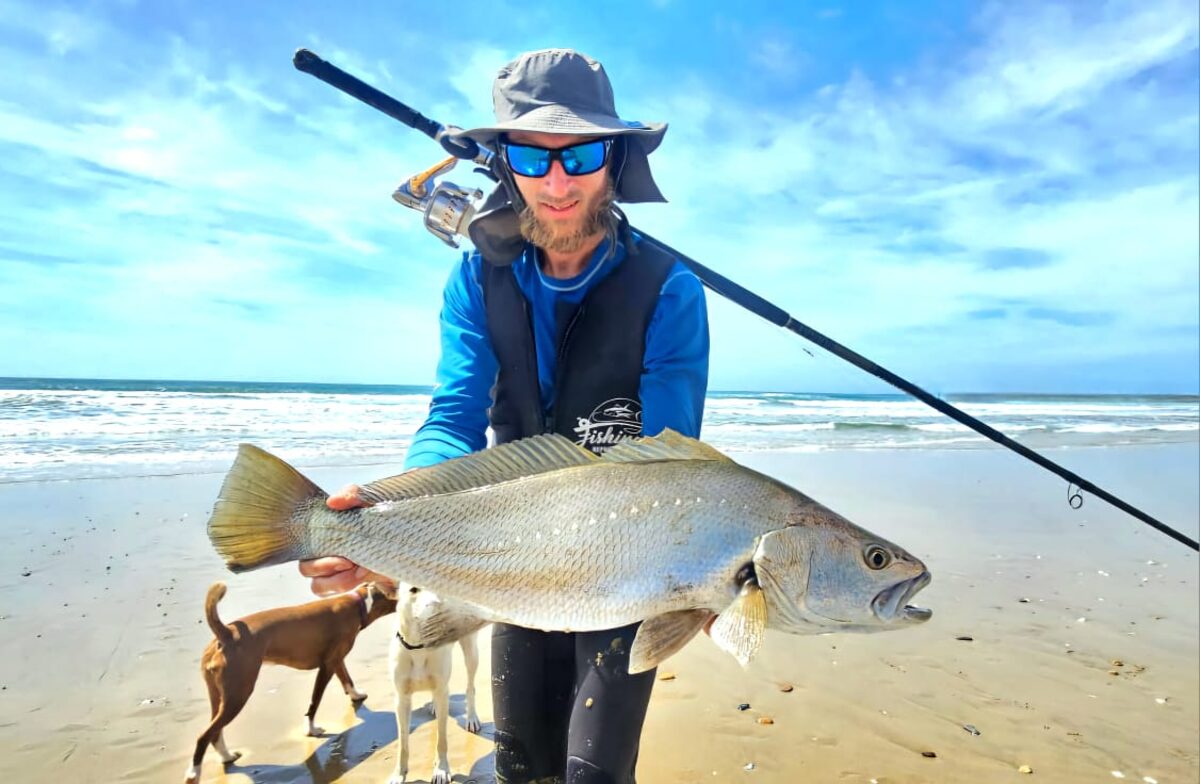
Kob (Argyrosomus japonicus) are one of South Africa’s most iconic inshore gamefish.
False Bay, with its sweeping beaches, rocky reefs and sheltered waters, is prime habitat for targeting them on artificial lures. While bait fishing has long been the traditional method, modern anglers are increasingly turning to paddle tails, spoons, bucktails, stickbaits and slow-pitch jigs, an active, highly rewarding style of fishing that puts you right in the hunt.

Kob are present year-round, but the most reliable lure action is from late Spring through autumn, when baitfish such as mullet mackeral and anchovy gather in the bay.
The last two hours of the pushing tide and first hour of high are prime feeding windows. Kob use these periods to patrol gullies, channels and sandbanks.
On Spring tides the added water movement often sparks a stronger bite. The reefs can be worked more effectively on low tides as you are able to cast into nooks and crannies, which you can’t see on a high. The fish always tend to feed harder once standing on the reefs becomes uncomfortable with the push of the water.
Hotspots in False Bay
• Strandfontein & Macassar Beaches are excellent surf-fishing stretches for working bucktails, jigs and stickbaits.
• Strand and Gordon’s Bay will be your most productive but also more difficult areas to fish due to the rugged reef systems.
Success requires lots and lots and lots of time and effort. Fishing low and slow keeps lures close to the seabed, as kob seldom chase fast-moving prey.
Kob stocks have declined in parts of South Africa due to overfishing and slow growth rates. As responsible anglers conservation is vital. Respect size and bag limits; the minimum legal size is 60 cm (always double-check local regulations).
Release larger breeding fish: big kob are key spawners, so returning them helps sustain the population.
Practise careful catch-and-release; use circle hooks with fishing bait, wet hands before handling, and support the fish horizontally when releasing.
Tagging opportunities: Join tagging programmes such as ORiTAG (Oceanographic Research Institute Tagging Programme). Tagging provides critical data on kob migration, growth and population health. Many False Bay kob recaptures have given valuable insights into their movement patterns.
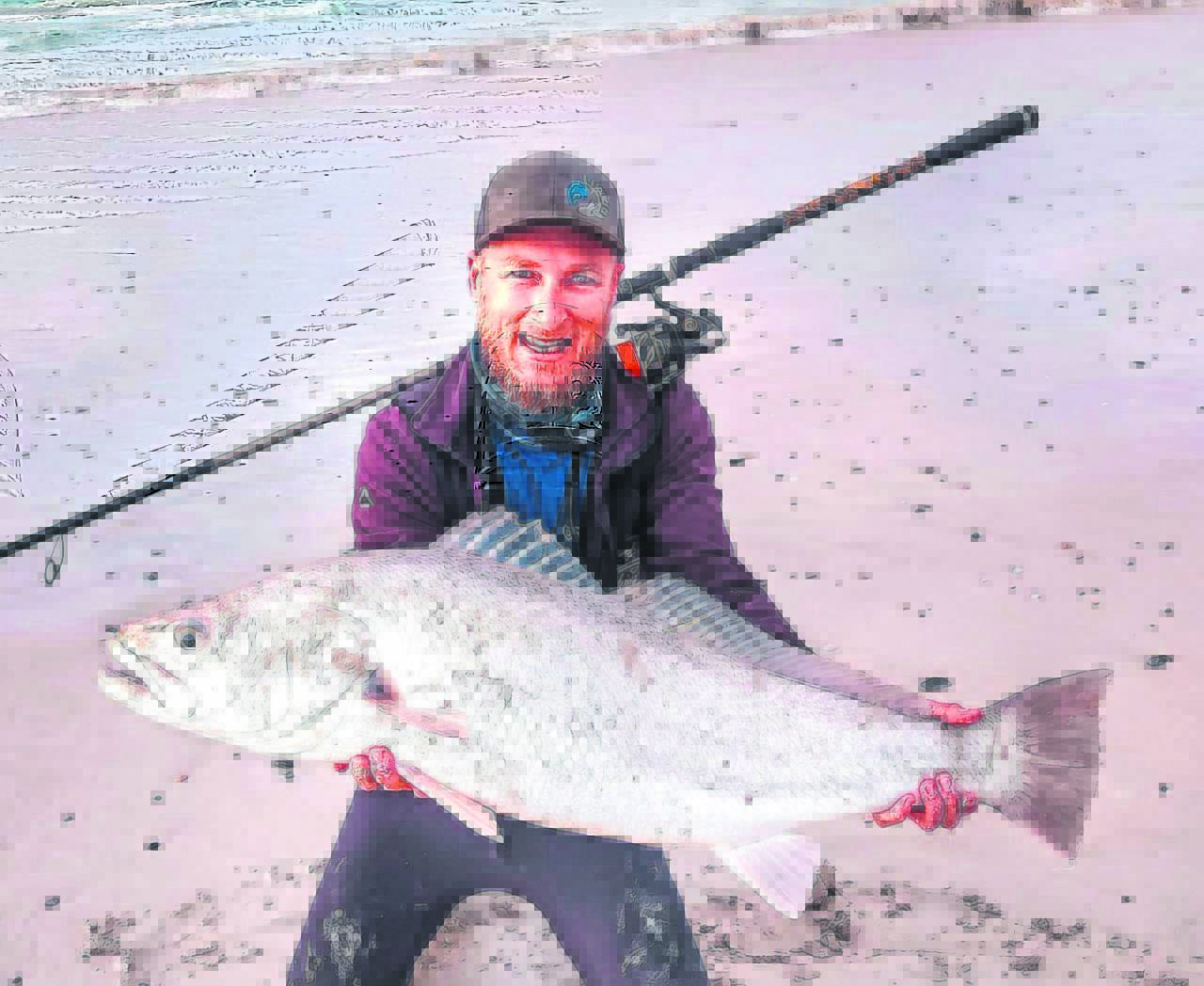
Targeting kob on artificials in False Bay combines timing, tide and technique. With the right wind, the right stage of tide and a slow, bottom-hugging presentation, you stand an excellent chance of connecting with these powerful fish. Equipping yourself with the right tackle ensures you’re prepared for the fight; but equally important is conserving the resource. By releasing big fish and supporting tagging projects anglers can help protect the kob fishery for future generations.
False Bay remains one of the most exciting arenas to experience the heart-stopping thump of a kob inhaling a lure, a moment that keeps anglers coming back season after season.
Please visit us in-store at Fishing Republic, situated at 73 Beach Road, Strand: Shop 6, Helderberg Centre. Alternatively, follow us on social media @fishingrepublicstore or contact us on 072 552 4400.


You must be logged in to post a comment.