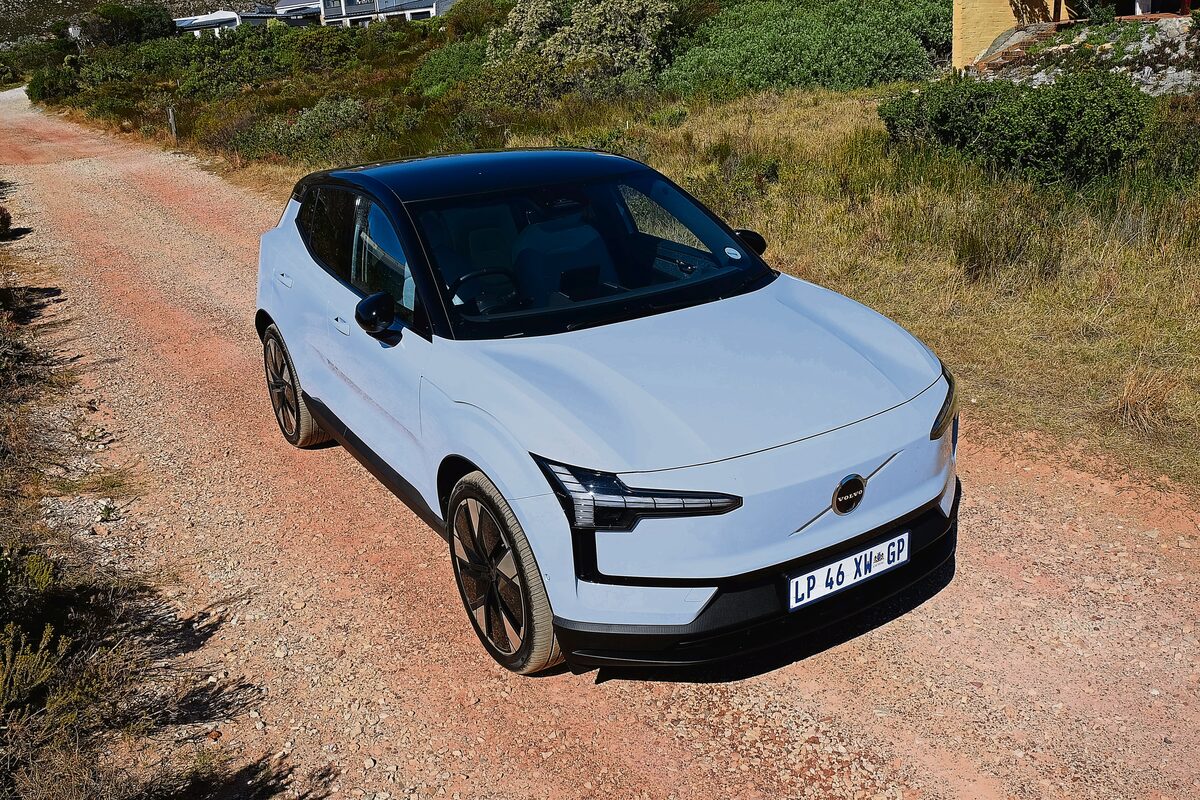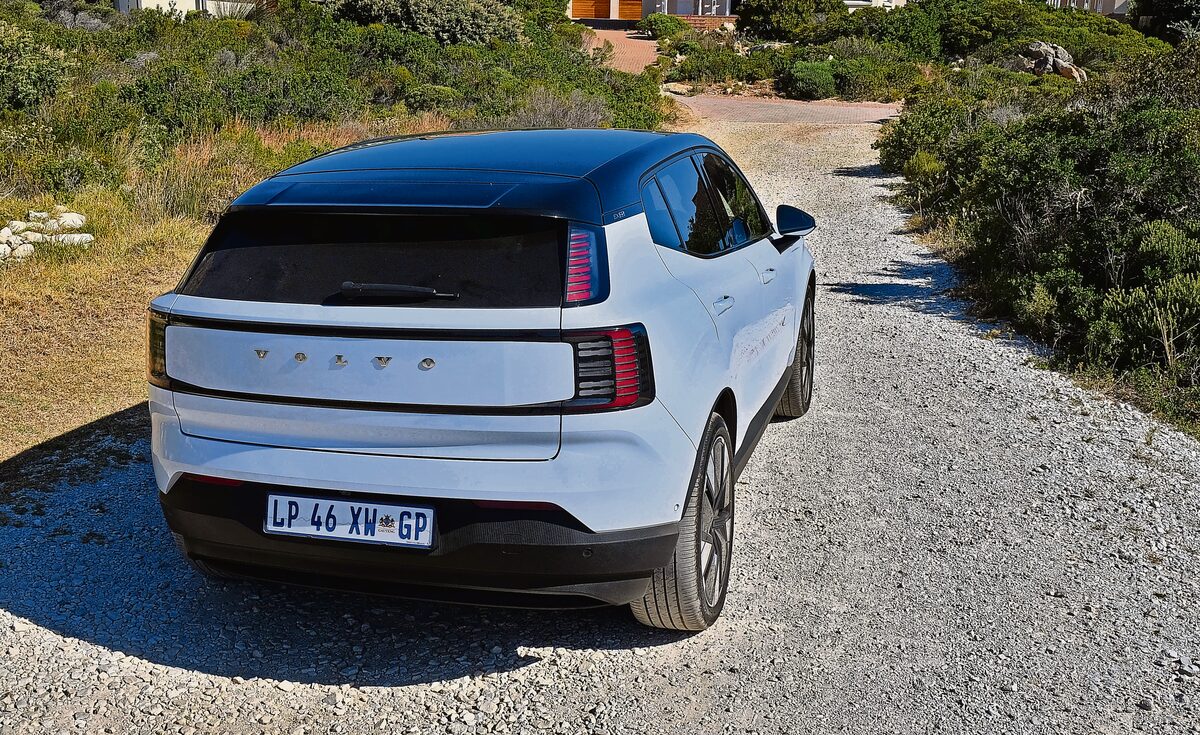

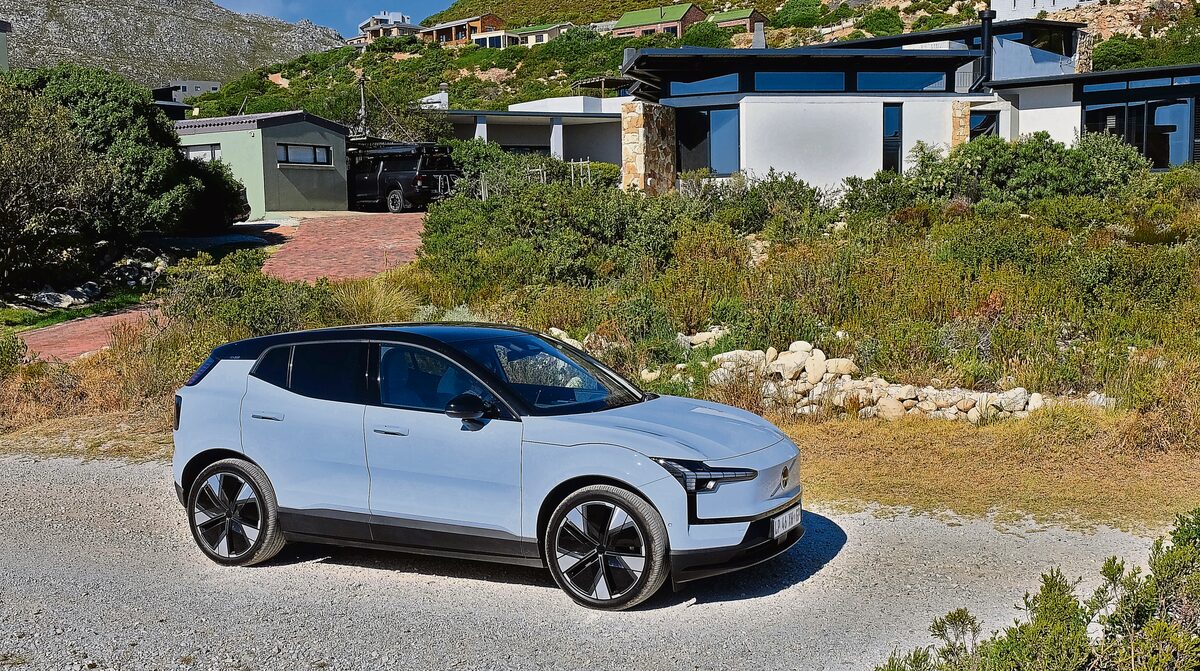
The Volvo EX30 Plus Twin Motor Performance is an amazing little car I had the privilege of driving recently. Volvo has generally made really good cars over the years, even classic cars. Think of the 120 series in the ’60s, some of which were even assembled in Durban.
In the ’70s the 240 was the large family car and later the 440, before the S series in recent years. The classic Volvo SUV is the XC60, built since 2008 and interestingly related to the Land Rover Freelander. The latest version is one of Volvo’s best sellers of all time and top seller at the moment.
In 1976, Volvo developed small battery-powered delivery vehicles, but at the time it was not viable to develop a car. Things changed and in 1992 an electric car was designed, but not produced.
It was only in 2011 that the Volvo C30 Electric saw the light of day. Today Volvo has built eight fully electric cars.
Battery-powered beauty
The EX30, the car we recently drove, is Volvo’s smallest and most affordable electric vehicle. However, at around R1 million it is not cheap, but is one of the top-selling electric cars in Europe.
The first models were delivered in December 2023 and during its first year Volvo sold nearly 100 000 EX30s worldwide.
So what is the EX30?
This model is Volvo’s baby battery-powered (BEV) crossover vehicle. It is positioned below its electric siblings, the C40 and XC40.
It seats four adults in luxurious comfort with all the amenities and has a decent boot. The ride height is higher than a normal car, but it is not an off-road vehicle. It is rather a super rapidly (some would say stupidly fast) accelerating, decently priced sporty four-seat (raised hatchback) car – considering what you get.
It is a beauty, both inside and out. I could not fault it, but some older people may find a few of the interior finishes a little… sudden.
The EX30 line-up consists of single-motor, rear-wheel-drive- and dual-motor, all-wheel-drive variants. The standard single-motor version produces 200 kWh/343 Nm, has a 51 kWh lithium-ion phosphate battery and a claimed range of 343 km (based on the WLTP cycle). It is also available in Single Motor Extended Range guise, with a 69-kWh battery and a stated range of 480 km.
The range-topping Twin Motor Performance derivatives (available in Plus and Ultra trim grades) have peak outputs of 315 kWh/543 Nm, a stated range of 460 km and a claimed zero to 100 km/h time of 3,6 seconds. That means the all-wheel-drive battery-electric two-motor version is the most powerful and fastest-accelerating new car priced under R1 million on the local market.
I would not let a new driver behind the wheel of a Twin Motor car as the acceleration is actually dangerously rapid, quicker than many super cars costing millions – 3,6 seconds to 100 km/h. The normal EX30 does zero to 100 km/h in 5,3 seconds, which is plenty fast enough in reality.
It is a great-looking car. The lines and proportions are just so right – to me anyway.
The cabin is typically “Scandi” and Volvo, minimalist and beautifully crafted. There are four interior options. It has a Harmon Kardon sound bar system in the top-spec models, which is almost too powerful with a full deep bass. Decor panels are of recycled materials, yet the cabin has a premium yet distinctly Volvo ambience.
What I did not like was the lack of a small instrument cluster behind the steering wheel and most controls are via the large touch screen. You have to glance to your left to see the instruments.
The seats are highly adjustable and seriously comfortable. Although I liked, nay loved, the squared-off steering wheel, some reviewers have not approved. There is a large Google-powered touchscreen in the centre of the dash through which you control the functions of the car, many of which can be done by saying “Hey Google” and telling her what you want, for example switching on the radio or aircon.
Driver’s delight
The key fob is button-free, so if you want to unlock the car manually you must hold the key on a specific spot on the B-pillar. Normally it triggers unlocking at about 5 m.
Knee room at the back is average, better suited to children for the long road. There are loads of nooks and crannies in the cabin, but the storage bin in the front is almost silly and boot space fairly average.
This car is a pleasure to drive, especially on a long and winding road. With around 400 km and rapid charging my range anxiety has all but dissipated.
The EX30 is the first battery car I can recommend without a ton of reservations. For example, I used 18% of its power on a spirited drive along Clarence Drive to Rooiels and back. Driving normally, I reckon I would have used 15% or less quite easily.
My trip used 12,42 units, so R86,94 total cost of energy. I did a quick top up earlier at the charge point at Somerset Mall and bought 6,6 kWh in 7:36 minutes, charging at a rate of 45,6 kWh and at a cost of R7/kWh. In the Helderberg there are six charging stations, although not all are rapid chargers.
Ashley Oldfield of cars.co.za reckons it is the best EV on our roads. He recommends the single motor-plus or extended range model. I can’t really argue with him, because as a package, the EX 30’s performance, styling, build quality, and technology are unmatched in our market at its price point.
Prices start at R835 500 for the Core, R968 400 for the plus and tops out at R1 080 200 for the Ultra. I think the Plus hits the sweet spot as the extra torque of the Ultra is not essential, but the safety and other kit on the Plus is worth it.
Other cars in this bracket include the cheaper but plainer Ora 03 from GWM, Mercedes-Benz EQA and marginally bigger BMW iX1. The EX30 feels and looks like the most complete design.
The all-new Volvo electric vehicle gets a home-charging Wallbox plus installation included in the price. You will also receive two years of free public charging and three years of in-car data. The XC30 has a three-year factory warranty and extended battery warranty valid for eight years or 160 000 km.