
As the Western Cape endures another punishing dry summer season, with many communities already living under stringent water restrictions, a proven technology is emerging as the region’s most reliable defence against water scarcity: desalination.
With dam levels hovering at precarious levels and climate scientists warning of increasingly volatile rainfall patterns, municipalities across the province are turning to seawater as an inexhaustible water source that could safeguard communities and economies from the devastating impacts of prolonged dry spells.
The Mossel Bay success story
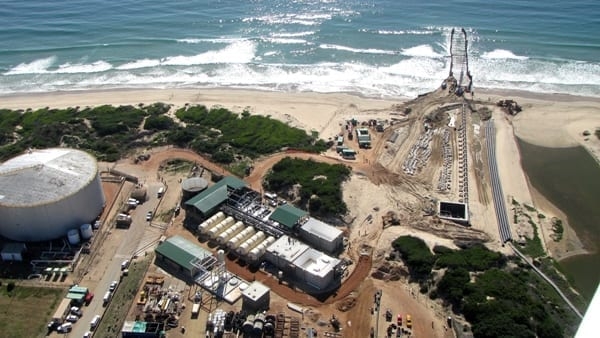
In Mossel Bay, where dam levels currently sit at 66% and residents face active water restrictions, a desalination plant commissioned in 2011 has become the municipality’s lifeline. The R200-million facility, capable of producing 10 megalitres of water daily, provides nearly 45% of the town’s total water consumption of approximately 23 megalitres per day.
During this financial year alone, the plant has been strategically activated when needed – operating for three weeks in July 2025 and approximately three days in December 2025 – demonstrating the value of having diversified water infrastructure ready to deploy at critical moments.
“What the Mossel Bay Municipality has achieved with this desalination plant is precisely the kind of forward-thinking governance we need across the Western Cape,” said Dirk Wessels, DA Western Cape Spokesperson on Infrastructure, speaking after a briefing to the Provincial Parliament’s Standing Committee on Infrastructure on Monday.
“Parts of our province are in the grip of a drought, and communities are living under water restrictions. This plant is a water safety net that allows residents to meet their daily needs and keep the economy going without interruption.”
Why desalination matters now
Desalination plants offer several crucial advantages during water crises:
- Climate independence: Unlike dam-fed systems that rely on increasingly unreliable rainfall, desalination provides a drought-proof water source that remains available regardless of weather patterns.
- Economic continuity: By maintaining water supply during restrictions, desalination helps businesses operate normally, protecting jobs and economic activity.
- Rapid response: Plants can be activated quickly when dam levels drop, providing immediate relief without waiting for rain.
- Long-term security: As climate change intensifies, desalination provides permanent infrastructure that strengthens municipal resilience for decades to come.
- Strategic flexibility: Plants don’t need to run continuously – they can be activated strategically when needed, as Mossel Bay has demonstrated, managing operational costs while maintaining security.
Cape Town’s ambitious vision
Building on the lessons from Mossel Bay and the near-disaster of the 2017-2018 Day Zero crisis, Cape Town is now planning the province’s most ambitious desalination project to date.
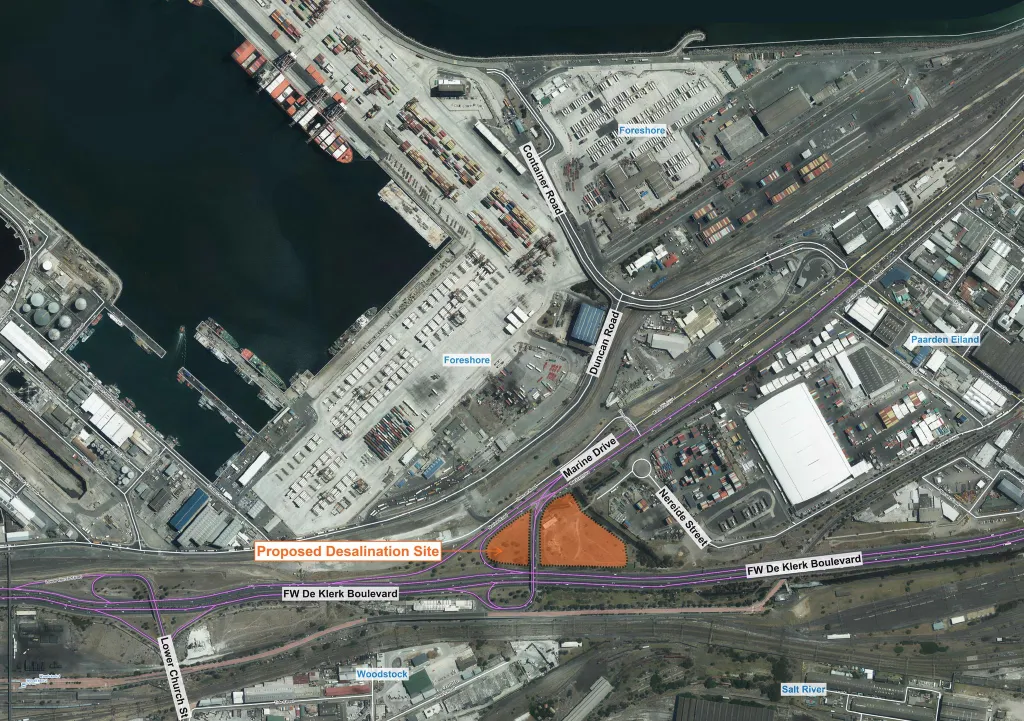
The City of Cape Town has approved plans for a permanent R5-billion desalination facility at Paarden Eiland, strategically located in the harbour area of Cape Town. Construction is expected to begin in 2026, with the plant targeted to be operational by 2030.
The Paarden Eiland plant will be a game-changer for the metro, capable of producing between 50 and 70 million litres of drinking water per day – enough to supply a significant portion of the city’s needs and provide critical security for the CBD and surrounding developments.
Unlike temporary desalination solutions rushed into service during the Day Zero crisis, the new plant will incorporate cutting-edge technology and environmental safeguards:
- Advanced reverse osmosis systems with energy recovery devices to minimize power consumption
- Sophisticated pre-treatment and post-treatment processes, including possible UV oxidation
- Risk-based water quality monitoring that includes emerging contaminants
- Blending of desalinated water with surface water supplies and re-mineralisation for taste and stability
- Environmental impact assessments to minimize harm to marine ecosystems
The Paarden Eiland location was specifically chosen for its proximity to existing water and electricity infrastructure, reducing connection costs and construction complexity. The harbour setting is also expected to have a lower environmental impact compared to other potential sites.
A blueprint for the future
The contrast between crisis and preparation is stark. During the Day Zero emergency, Cape Town scrambled to install temporary desalination units at great expense and environmental cost. Now, with permanent infrastructure planned, the city is building long-term resilience that will serve future generations.
“The Mossel Bay Municipality’s approach, using the plant strategically when needed and ensuring it remains well-maintained, serves as a blueprint for other municipalities across the province for innovative climate adaptation and long-term water security planning,” Wessels stated.
As the Western Cape confronts the reality of climate change and water scarcity, desalination is no longer a luxury or last resort – it’s becoming an essential component of responsible water management. While not without challenges, including energy costs and environmental considerations, the technology offers a reliable safety net that can mean the difference between crisis and continuity.
ALSO READ: Western Cape unveils ambitious R1-trillion water security plan to prevent future “Day Zero” crisis



You must be logged in to post a comment.