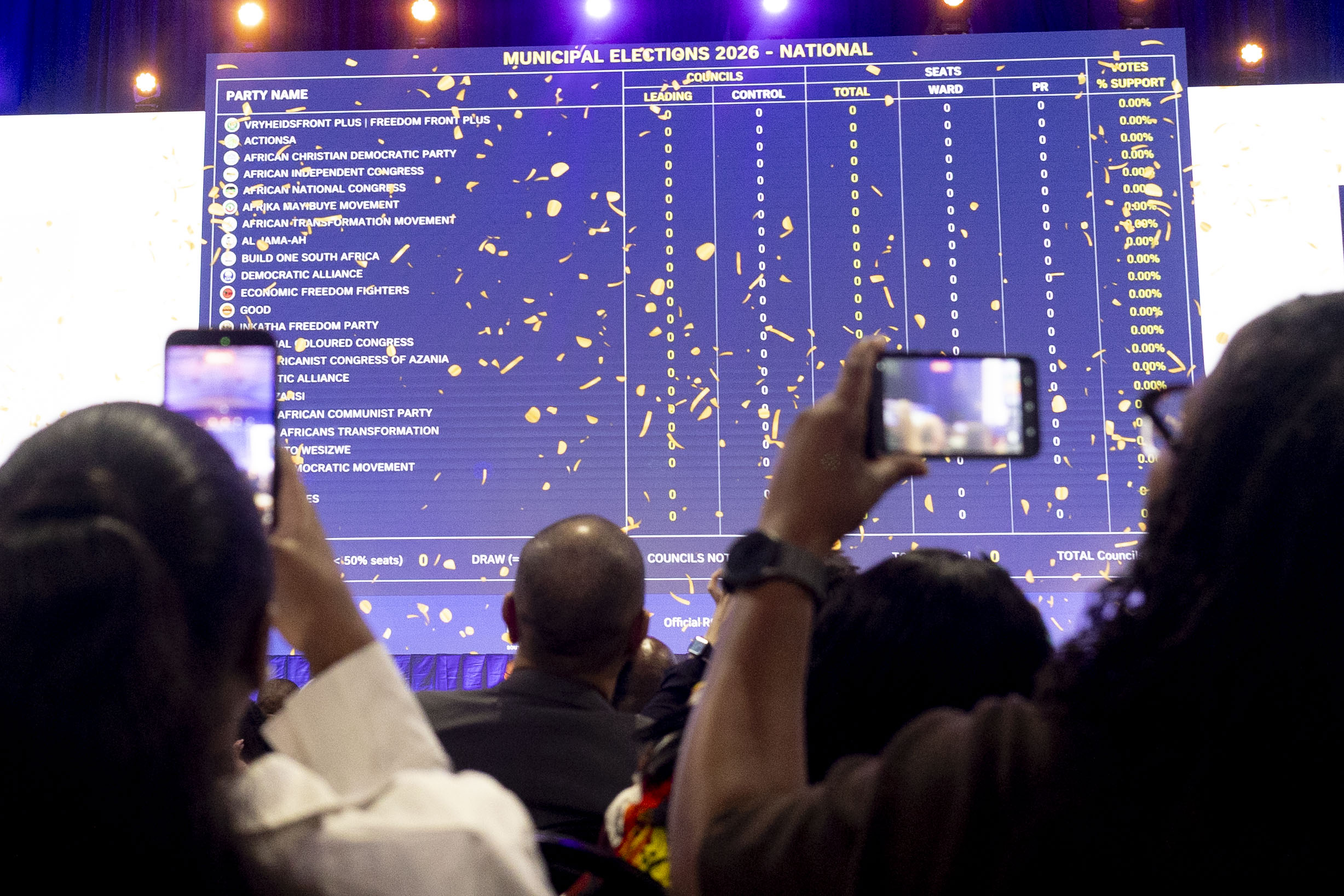

The political battle for control of Johannesburg is taking an interesting turn, with the Democratic Alliance (DA) building a significant lead over its political rivals in the first preliminary results.
According to the latest available data from The Outlier, based on Electoral Commission (IEC) results, the DA has secured 47% of the proportional votes after about 5% of voting districts have been processed.
ActionSA stood at 15.3%, followed by the ANC with 14.9%. The city has a total of 135 wards and 270 council seats being contested in the election.
Although it is still very early in the counting process, the figures point to a possible major political setback for the ANC in the country’s economic hub.
The ANC secured 33.6% of votes in Johannesburg in the 2021 municipal election, whilst the DA received 26.1%.
The final result will determine whether the DA can maintain its lead and whether the party will have enough support to control the city.
Zille’s challenge to the ANC
Helen Zille, the DA’s mayoral candidate for Johannesburg, has focused her campaign on restoring the city’s infrastructure, better financial management and improving basic service delivery.
The ANC’s current mayor, Dada Morero, has meanwhile also expressed confidence in the party’s ability to retain the city.
However, the ANC’s decision not to announce a single official mayoral candidate as the face of its campaign before the election has raised questions about the party’s strategy.
The party indicated that several candidates are being considered and that a final decision on the mayor will be made after the election.
ALSO READ: DA and ActionSA in neck-and-neck race in Tshwane
Water, power and refuse remain Johannesburg’s biggest headache
Behind the political battle lies a city struggling with serious service delivery problems.
Johannesburg residents have increasingly expressed their frustration over prolonged water outages, power problems, poor road conditions and irregular refuse removal.
According to reports, Johannesburg has an infrastructure backlog of approximately R220 billion, whilst about a quarter of the water the city purchases is lost due to leaks.
The city has also dealt with numerous mayoral changes and political instability over the past decade.
These problems have made the election an important referendum on local service delivery.
The early results suggest that Johannesburg’s political future may take a new direction. Whether this will also mean a new beginning for residents’ service delivery will only become clear with time.
ALSO READ: Cape Town Mayor Geordin Hill-Lewis welcomes DA’s projected 58% vote share as results trickle in