

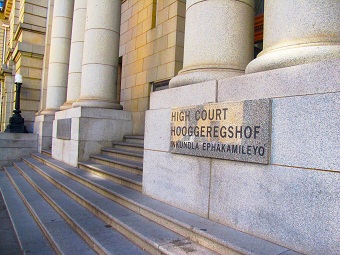
The Democratic Alliance has begun a constitutional challenge to the Expropriation Act in the Western Cape High Court, arguing the legislation threatens property ownership and was passed through a flawed parliamentary process.
The case, which starts in the Western Cape High Court in Cape Town today, is expected to run until Friday and represents one of the most significant legal battles over property rights in South Africa’s democratic history. The DA is joined by civil rights organisation AfriForum and the Institute of Race Relations in challenging different aspects of the Act.
The Expropriation Act, signed into law by President Cyril Ramaphosa in January 2025, allows the state to take land from private owners without paying compensation under specific circumstances. Although signed more than 18 months ago, the Act has not yet come into force and the old 1975 expropriation law remains in effect.
What the Act means for property owners
The legislation establishes a framework for government to expropriate property for public purposes or in the public interest. Its most controversial provision is Section 12(3), which permits “nil compensation” – meaning zero payment – when expropriating land if this is deemed “just and equitable”.
The nil compensation provision applies only to land, not other property types such as intellectual property or movable assets. The Act identifies five scenarios where nil compensation may be considered:
Land held purely for speculation, where the owner is not using it and hopes only to benefit from rising market value; abandoned land where the owner has failed to exercise control despite remaining the registered owner; unused state-owned land that was originally acquired at no cost; land where the current market value equals or is less than state subsidies already provided for its purchase and improvement; and property that poses a physical health or safety risk.
Why the court challenge?
DA leader Geordin Hill-Lewis says the party is challenging the Act on two main grounds. Firstly, the DA argues the parliamentary process was defective because four provincial delegates’ mandates to vote for the bill in the National Council of Provinces were signed by legislature speakers rather than adopted by the legislatures themselves, violating constitutional procedures.
Secondly, the DA claims Section 19 of the Act, which sets deadlines for challenging expropriation disputes in court, is circular and irrational because the notice meant to trigger the deadline can only be issued after a court has already ruled.
“The right to own property is fundamental to freedom, dignity and economic opportunity,” Hill-Lewis said in a statement released on Sunday. “No government should be given vague and sweeping powers to take what belongs to South Africans without compensation.”
The DA argues the Act will discourage investment, make it harder for businesses and farmers to obtain credit, and leave ordinary people poorer. “Expropriation without compensation will not create one new job, build one new home or place one additional title deed in the hands of a South African family,” Hill-Lewis said.
AfriForum and the Institute of Race Relations are challenging the Act on different grounds, arguing the nil compensation provisions are incompatible with Section 25 of the Constitution, which requires just and equitable compensation when property is expropriated.
The case has exposed divisions within the Government of National Unity, with the DA and ANC taking opposing positions despite governing together. The respondents in the case include President Ramaphosa, Public Works and Infrastructure Minister Dean Macpherson – who is himself a DA member – the Speaker of the National Assembly and the Chairperson of the National Council of Provinces.
Fifteen grassroots organisations representing landless people, housing justice movements and mining-affected communities have been admitted as friends of the court. The Economic Freedom Fighters, which has long advocated for expropriation without compensation, is also intervening in support of the Act.
ALSO READ: IRR warns of “battles to come” following Ramaphosa’s Expropriation Act admissions


