

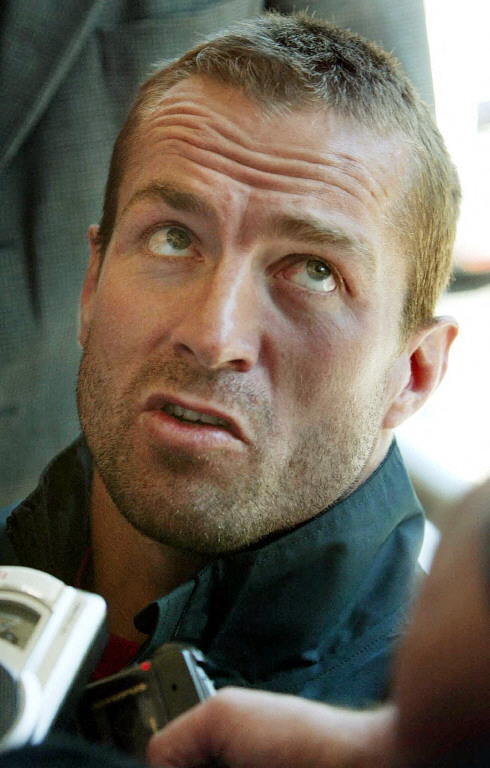
When Corné Krige speaks, South African rugby listens. And right now, the former Springbok captain is asking the question everyone’s thinking but few dare voice. Is SA Rugby’s Champions Cup exit strategy genuinely about player welfare, or just a convenient cover for balancing the books?
The debate ignited last Thursday when SA Rugby president Mark Alexander dropped a bombshell at the governing body’s AGM in Cape Town, confirming that a July workshop will review all competitions involving South African teams. Within hours, it became abundantly clear which tournament sits squarely in the crosshairs, the European Rugby Champions Cup.
Alexander’s stated reasoning centred on player workload, and on paper, it’s difficult to mount a counter-argument.
“We generate our income from participating in tournaments. Participation is important, but our players are overworked,” Alexander declared.
“We have to make tough decisions as an organisation, and we will do that over the next month or two. It has to be done in the best interests of our players.”
Springboks are indeed being flogged relentlessly through 11-month seasons that leave precious little time for recovery, rehabilitation or, heaven forbid, an actual off-season. The physical and mental toll is undeniable.
But Krige, never one to mince words during his playing days and equally forthright in retirement, has issued a challenge to SA Rugby, show us this is genuinely about the players, not the bottom line.
Player welfare? Krige’s on board
“I think if it’s for player welfare, then I think it’s a really good thing because there is one hell of a lot of rugby around,” Krige told KickOff.com.
“All the guys are playing pretty much throughout the whole year, so if it’s for player welfare, 100% agree.”
That’s unequivocal support, but only if the motivation is pure. The moment financial considerations become the primary driver, Krige’s backing evaporates faster than morning mist at Newlands.
“If it’s to save a bit of money and then put that into the SA Cup and Currie Cup, then I don’t think it’s a great idea at all.
“I think those competitions have to look after themselves, but I’m all for player welfare.”
There’s the rub. Krige is essentially demanding transparency from SA Rugby. Are we protecting our players from burnout, or are we retreating from Europe because the financial model doesn’t stack up?
The backlash builds
Alexander’s announcement hasn’t exactly been met with universal acclaim. Far from it.
Sharks owner Marco Masotti fired the first warning shot, making it crystal clear he won’t keep covering losses if SA Rugby pulls the plug on European competition. Given the Sharks’ significant investment in infrastructure and playing personnel specifically to compete in the United Rugby Championship and Champions Cup, Masotti’s stance is hardly surprising.
Then came Victor Matfield, the legendary Springbok lock whose opinion carries immense weight. Matfield labelled the potential withdrawal “really sad” and delivered a reminder that seems to have been overlooked in the debate: the Champions Cup is the best club competition in world rugby.
Also Read: “Chickens have come home to roost,” says Schalk Burger Snr in criticism of SA Rugby management
That’s not hyperbole. The intensity, quality and prestige of European rugby’s premier tournament is unmatched. The Bulls’ run to the semi-finals in 2023 captivated South African audiences and proved Matfield’s point emphatically.
Even former England flyhalf Andy Goode weighed in from across the hemisphere, suggesting South African rugby has painted itself into a corner.
The numbers don’t lie
At the heart of this debate lies an uncomfortable truth. South African rugby’s professional landscape has become congested to the point of unsustainability.
The Springboks compete internationally for around seven months annually. Add domestic commitments in the United Rugby Championship (September to June), the Champions Cup (December to May), and attempts to revitalise the Currie Cup, and you’ve got a calendar that would make even the most robust athlete wince.
Player welfare isn’t just a buzzword, it’s a genuine crisis waiting to happen.
Alexander’s concerns aren’t fabricated. The problem is whether the proposed solution addresses the right issue.
Follow the money
Here’s where Krige’s scepticism gains traction. Pulling out of the Champions Cup would undoubtedly reduce costs, travel expenses alone for trips to France, Ireland and England run into millions, but it would also sacrifice exposure, prestige and the development opportunities that come from testing yourselves against Europe’s elite week in, week out.
If the savings are redirected into propping up struggling domestic competitions like the SA Cup and Currie Cup, are we genuinely solving a player welfare problem, or merely rearranging the deckchairs whilst maintaining an equally congested calendar?
The Currie Cup, once South African rugby’s jewel in the crown, has been diminished to near-irrelevance in the professional era. Attendances have plummeted and broadcast interest waned.
Simply throwing Champions Cup money at the Currie Cup won’t magically restore its lustre.
The European conundrum
South African teams’ participation in European competitions was meant to be a win-win scenario. Access to Northern Hemisphere rugby would elevate standards, provide crucial financial stability, and keep top talent from bolting overseas.
The United Rugby Championship has largely delivered on that promise. But the Champions Cup adds another layer of fixtures, travel and physical demands that compound an already stretched system.
Herein lies the dilemma, you can’t have it both ways. If South African rugby wants to compete in Europe, the workload comes with the territory. If player welfare is genuinely the priority, then fixture congestion must be addressed holistically, not just by ditching one tournament whilst maintaining everything else.
That means hard conversations about the Springbok schedule, domestic competitions, and whether the current model is sustainable long-term.

